

The approach to Skukuza Airport offers what few arrivals can match: a bird’s-eye view of elephants crossing dusty plains, the silver thread of the Sabie River winding through ancient bushveld, and the sprawling wilderness of Kruger National Park unfolding beneath the wings.
For travellers descending towards this unique airstrip, the safari begins long before touchdown.
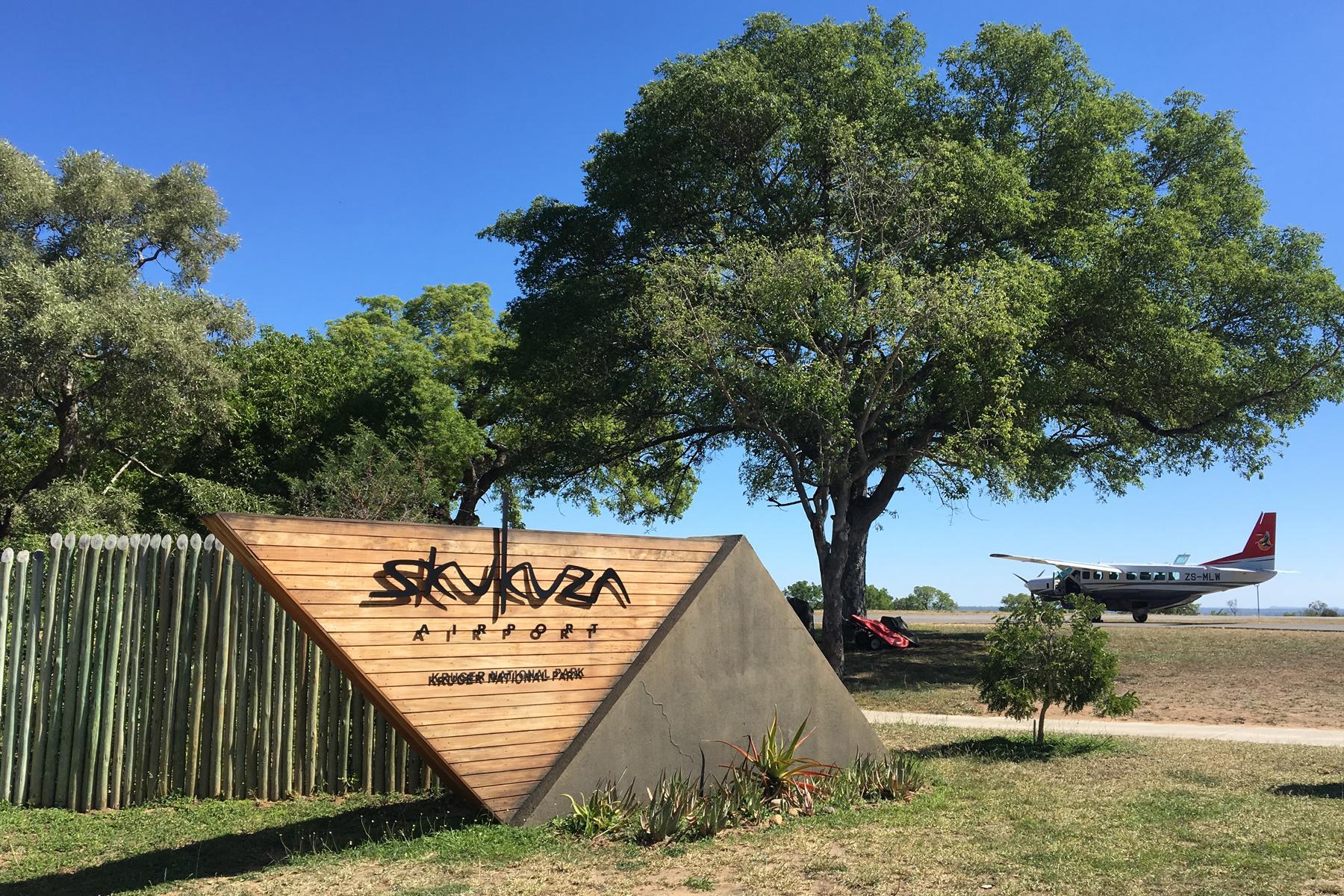
Skukuza Airport, set within the Kruger National Park, has once again been recognised as the most beautiful airport in the world by Forbes, a distinction first awarded in 2018 and recently highlighted by luxury train lodge Kruger Shalati in a celebratory Instagram post.
The accolade reflects something rarely found in modern air travel: an arrival point that feels inseparable from its destination.
From the moment passengers step onto the tarmac, Skukuza defies conventional airport design. There are no sterile corridors or flickering fluorescent lights. Instead, a thatched roof shelters warm timber finishes and open-plan spaces that frame uninterrupted views of the surrounding Lowveld.
A life-sized rhino replica stands inside the terminal, a fitting welcome to one of the world’s most important conservation areas. Wooden signs and neutral tones echo the colours of the veld outside, creating what Forbes described as a “luxury spa vibe” rather than a typical transit hub.
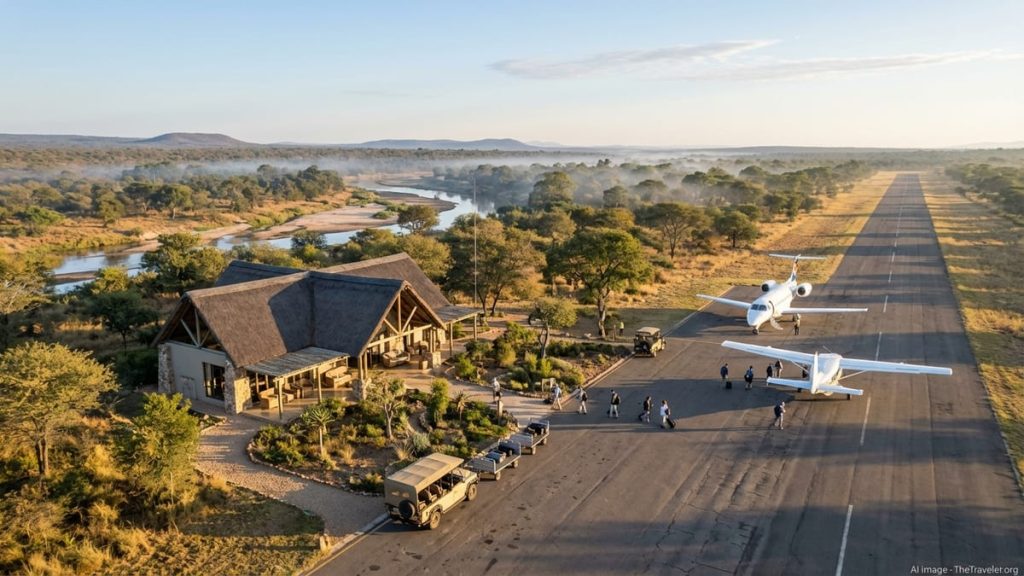
The airport was designed by Johannesburg-based agency Grey Africa, which drew inspiration directly from the African landscape. Colour, texture and form were chosen to ensure the building sits quietly within its environment, an extension of the bush rather than an intrusion upon it.
Skukuza Airport handles up to 400 passengers daily across approximately 20 flights, operating between 09:00 and 15:00. Regional carrier Airlink currently runs the only scheduled services, with direct flights from Johannesburg, Cape Town and Durban.
The flight from Johannesburg takes just 40 minutes, with passengers often spotting wildlife through the windows as they descend over the park.
Charter planes also use the airstrip, serving the network of private lodges and SANParks rest camps that surround the airport.
For those planning to explore by road, Avis and Europcar operate rental services from the terminal. A gift shop and café serve passengers in the departure lounge, and arriving travellers pay the standard conservation fee at a dedicated stand, just as they would when entering the park by vehicle.
Skukuza’s runway first opened in 1959, but the airport was reimagined and reopened just over a decade ago as part of a public-private partnership between SANParks and Skukuza Airport Management Company, owned by Lion Sands and Airlink.
The reopening aimed to reduce the reliance on the two-hour road transfer from Nelspruit, making Kruger more accessible to international visitors. The airport lies close to Skukuza main camp, the administrative headquarters of Kruger National Park, and the adjoining Sabi Sand conservancy.
In an era of uniform terminals and impersonal design, Skukuza Airport offers something different. It reminds travellers that the journey can be as memorable as the destination, particularly when that destination is one of Africa’s greatest natural treasures.
As passengers collect their bags beneath the thatched roof and step out into the dry heat of the Lowveld, the transition is complete. The safari has begun, and the first sighting may already be visible from the terminal window.


You must be logged in to post a comment.