


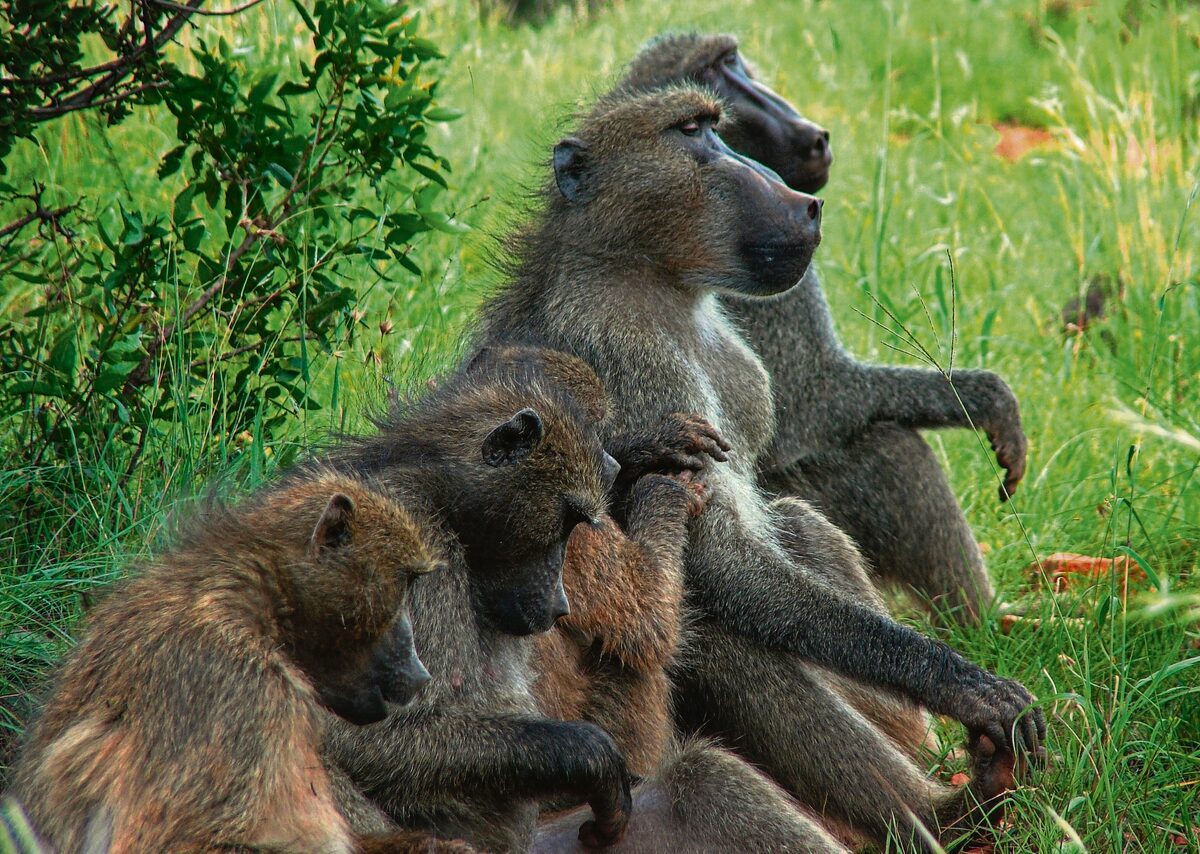
CAPE TOWN – The Western Cape High Court has dismissed a legal challenge against the Cape Peninsula Baboon Safety Management Plan (CPBSMP) for Cape Town’s Chacma baboon population, despite fierce opposition from animal rights groups.
The Cape Peninsula Baboon Management Joint Task Team (CPBMJTT), which oversees implementation and operation, welcomed yesterday’s judgment, which rejected an application by the Liberty Fighters Network and Reyno de Beer seeking to block key aspects regarding the implementation of the Action Plan, for managing Chacma baboon populations on the Peninsula.
The matter was argued in court on Thursday 19 February
The CPBMJTT comprises three authorities — CapeNature, SANParks and the City of Cape Town — responsible for developing and implementing the baboon-management programme in the peninsula.
Last month the City confirmed the planning and development of the sanctuary for the primates were underway.
Court delivers judgment
The judge described the application as “fatally flawed” and “it has been brought by applicants who have no standing in terms of section 38 of the Constitution.”
The judgment reportedly stated applicants had “failed the test of convincing the court that it is acting in the public interest” and “failed to set out what rights they seek to protect” and opting to bring this application before the urgent court constituted “an abuse of process”.
The court affirmed that SANParks, CapeNature and the City of Cape Town had a constitutional and statutory mandate to implement the baboon-management strategy.
Management-plan details
The Action Plan, approved by all three authorities in November 2025, aims to establish “a healthy, well-managed, sustainable, free-ranging baboon population with minimal human interference, overlap and conflict.”
However, the plan acknowledges limits to sustainable baboon populations in the peninsula, stating “baboons should not live in or use agricultural or urban areas.”
The strategy prioritises minimising time baboons spend in human-dominated environments to prevent habituation.
Opposition mounts
Animal-rights activists strongly oppose the plan, with Animal Survival International (ASI) collecting more than 16 000 signatures on a petition reportedly rejected by Cape Town Mayor Geordin Hill-Lewis, said ASI executive director David Barritt
“According to Geordin Hill-Lewis he doesn’t have the authority to do so. The issue he faces is that the City cannot separate itself from the fact that it is using taxpayers’ money to implement a plan that is fundamentally cruel and essentially a zoo, a place where wild animals are taken and exhibited for money. How can he then tell 16 000 people it’s not his problem?”
Barritt condemned the plan as “fundamentally cruel”, arguing that confinement would “rob baboons of freedom to forage, disperse and maintain complex social bonds, while sterilisation would destabilise troop hierarchies.
“The organisation advocates alternative solutions, including universal deployment of baboon-proof bins, securing refuse collection areas, strict enforcement of feeding prohibitions, strengthened ranger programmes, strategic fencing and public-education campaigns.
“According to the CPBSMP, the Seaforth troop will be relocated to a ‘trail enclosure of 1,5 hectares’ on a purpose-built baboon sanctuary on private land on Plateau Road by February 2026. The plan states each baboon will be sedated and physically examined before relocation. A veterinarian will assess the animals and provide appropriate sterilisation or contraception as breeding in the sanctuary will not be permitted. No baboon will also be released back into the wild from the sanctuary.”
ALSO READ: Cape Peninsula baboon sanctuary plans met with activist concerns
Scientific rationale
The CPBMJTT maintains that baboons in urban areas experience “poor outcomes in terms of health and welfare,” leading to habituation, dietary changes, increased injuries and deaths, and greater disease risks. The plan emphasises baboons remain “a valuable and integral part of natural ecology and biodiversity,” deserving of conservation efforts, but requires “constant management” due to ecological constraints.
Ongoing controversy
Cape Peninsula Community Coalition representative Sandie MacDonald noted the coalition couldn’t comment on the specific judgment, but reiterated concerns raised in November last year, regarding the action plan.
This will be regularly reviewed to ensure the actions, assessments and outcomes are in line with regulatory requirements, strategic direction, emerging trends and new knowledge.
The next formal review will take place in 2030.
The full Cape Peninsula Baboon Management Action Plan 2025 is available for public review.

