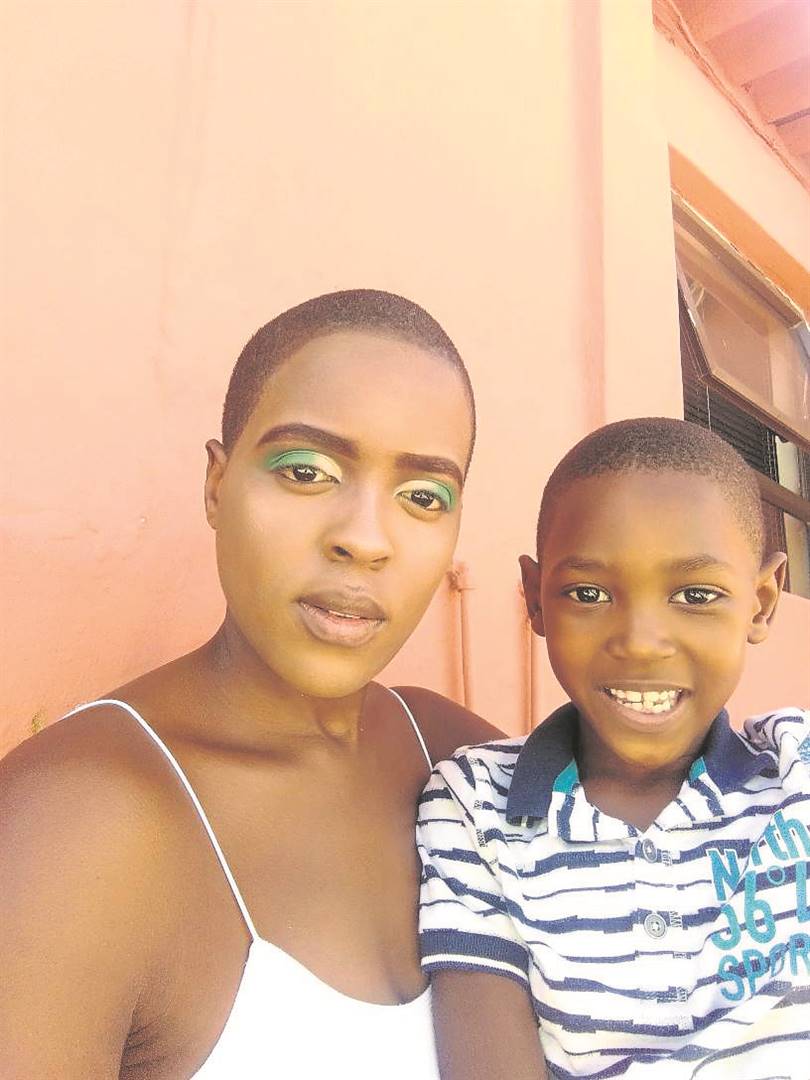
With Autism Awareness Month kicking off at the beginning of April, a young mom and her son who is on the spectrum are grateful for his life.
Bukhobethu (Bukho) Soyizwaphi, who will soon celebrate his ninth birthday, was diagnosed with autism spectrum disorder at two years old.
“I knew there was something wrong with him from when he was a baby,” his mother, Liziwe Soyizwaphi, says.
Her dad always bought magazines and one day she came across an article in Drum magazine and showed him and said: “I think Bukho has this.”
As the boy developed over the years the young mother noticed some “strange” habits.
“From when he was younger he loved feeling a person’s skin and was thoroughly amused by people’s toes, but he has since outgrown the habit.”
When the time came for the little boy to go to school the family enrolled him at Lifestyle Christian Academy and by the second day the school informed his parents it suspected there is something wrong with him.
“On the first day of school, he didn’t say anything, but we were oblivious because everyone thought he was just shy.”
His teachers at the time encouraged the Soyizwaphi family to consult a psychologist, because they noticed that he did not sit still and was not responding to instructions given to him.
“We did indeed consult a psychologist and were referred to the Neurodiversity Centre, which was where he was diagnosed at two and a half years old.”
According to his mother, little Bukho uttered a few words when he was a year old, but did not attempt to do so any further until recently.
She said: “When we received the news that he is autistic and non-verbal we were not shocked because we were convinced there was something wrong with him.”
The family, which comprises Soyizwaphi’s mother, father and twin sister, adapted to the change smoothly.
“At first it was frustrating because Bukho was very emotional. He would cry for hours on end, and because he couldn’t verbalise what he wanted it made things worse.”
However, with the support of her entire family things have gotten much better.
“I am very fortunate to have an autistic child who does not get overwhelmed by people,” Soyizwaphi said. “On the contrary, he does extremely well in crowds.”
She says as he grows older the boy is able to calm himself down using various means.
“When he was younger he used to blink quite fast when he was overwhelmed or angry, but has since developed new techniques, such as humming and clapping his hands.”
Things took a turn for the better when Soyizwaphi’s twin sister gave birth to her daughter.
“As young as she is I think she plays an integral part in Bukho’s development.”
An obstacle they had to overcome was potty training.
“I don’t know if Bukho saw his niece had stopped using diapers, but there was rapid development since she was potty trained. He can now use the toilet independently.”
His niece has also taught him what to do when he wants to drink water.
“Bukho is especially interested in the food making process. He stands next to me every day when I make food and watches attentively which ingredients I use to make different dishes. This excites me a lot, because now I know that he also has an interest.”
Bukho is currently enrolled at the Sean Kelly Centre, but will soon have to go to a proper school.
According to the mother, the young boy has been on the waiting list at Langerugskool for about four years now.
The message Soyizwaphi has for other mothers with autistic children is to treat them as normally as possible.
Langerugskool was approached for comment and referred the publication to the Western Cape Education Department. A statement from the WCED will be published once it is received.