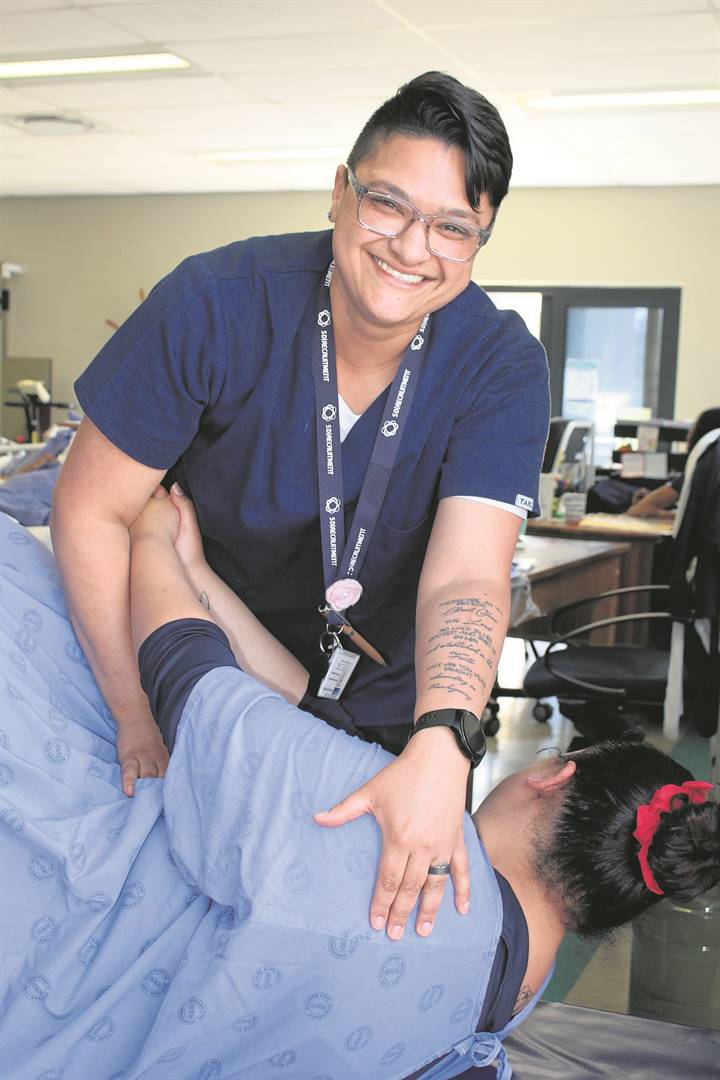
People as young as 26 years are having strokes, and as part of Stroke Awareness Week (25 – 31 October) healthcare workers call on adults to explicitly explain to young children that your life is on the line when you use drugs, smoke, drink alcohol or follow a poor diet.
Marissa Bezuidenhout heads up the Physiotherapy team at Worcester Hospital and is very concerned about the number of stroke patients treated there who are younger than 56 years. Data she collected between April and June this year revealed that the average age of the 79 patients treated at the hospital for strokes during this time, was 56. For 21 of them it was their second or third stroke. The data also shows that 40 of the stroke patients were smokers, 35 abused alcohol and 11 used drugs. Most of the stroke patients had chronic conditions like diabetes, high blood pressure and cholesterol, but 11 of them were not taking their medication to manage these conditions. “It is sad when you think this could have been prevented,” says Bezuidenhout.
She explains that, in simple terms, a stroke is when there is a disturbance in the blood flow in your brain due to a blockage, or a burst blood vessel in your brain. Depending on the part of the brain that was affected, you could suddenly experience weakness in the arm and leg on one side of your body, or difficulty in seeing or speaking, or experience drooping on one side of your face. If you experience signs like these, go to the hospital immediately.
Marissa has seen young people having major strokes that caused severe disability, and she is very concerned that patients do not make the link between lifestyle choices and their health. Starting to educate children of primary school age about the dangers of using drugs and the like, is one way to turn this around. “It is too late to start teaching them about this in high school. I know of eight-year-olds that can access alcohol without anyone asking questions,” she says.
“I had a stroke patient who said he smoked 60 cigarettes a day. When I told him he needs to stop smoking, because this was a huge factor that contributed to him having his stroke, he could not make the link between his actions and the consequences.”
After realising that she treated younger and younger stroke patients, she started digging to determine why this could be happening, so that it could be addressed. She developed a tool for her team that collects data such as the patient’s age, hereditary conditions, the use of alcohol and drugs, and smoking.
“This data needs to start a conversation. It is data from just one hospital. This challenge is beyond health and what healthcare workers can do in a hospital or clinic,” says Bezuidenhout. “We need everyone to start educating children sooner, and to be clear about the consequences of our actions.”