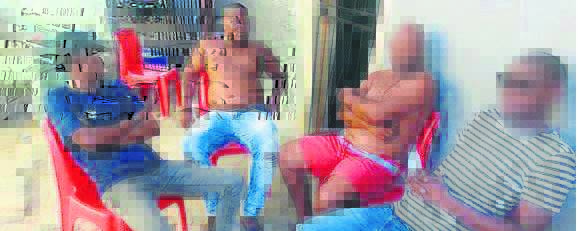
WORCESTER – On 28 August, Acting Deputy Judge President Andre le Grange sentenced Ndyebo “Gero” Dotwana (32) to 25 years in prison for the murder of Worcester jeweller Charl Munnik. Dotwana, who maintained his innocence throughout the trial, was found guilty of aggravated robbery, murder, and illegal possession of an unlicensed firearm. He received a concurrent 25 year sentence for murder and 10 years each for the other charges.
Charl Munnik, a well-known jeweller and businessman in Worcester, was tragically killed on 29 January 2021. The violent robbery at his High Street shop resulted in his death during a shoot out with the robbers. On the day of the crime, Luyanda Lonzi and Sicelo Mase entered Munnik’s Jewellery Shop under the pretence of inquiring about a broken watch. After being assisted, Mase and Lonzi pulled out firearms, threatening the employees. Awonke Ziqu and an unknown male then entered the shop and stole jewellery valued at R60 000. Munnik, armed with his licensed firearm, entered the shop from a side door, leading to a shoot out that ended with his death. The suspects fled the scene.
The investigation, spearheaded by Warrant Officer Michael Pretorius with support from colleagues, identified Dotwana as the mastermind behind the robbery. Dotwana and Lonzi were arrested initially, while Mase and Ziqu were apprehended on 9 February 2021 in Lentegeur with Munnik’s firearm. The unknown accomplice was later identified but was killed in an unrelated incident in Khayelitsha.
The trial, which commenced on 5 August 2024, also saw the sentencing of Dotwana’s co-accused. Luyanda Lonzi, Sicelo Mase, and Awonke Ziqu all pleaded guilty and were each sentenced to 25 years direct imprisonment for their roles in the crime.
Dotwana’s defence attorney, Carlo Viljoen, announced plans to appeal the conviction, citing the accused’s claim of innocence and lack of presence at the scene. In his remarks, Acting Deputy Judge President Andre le Grange emphasised the significance of remorse in the court and the principle of common purpose, stating, “these are serious crimes and you showed no remorse and smiled throughout the trial. This court has beyond reasonable doubt heard that you knew that this crime would happen and were part of it; the concept of common purpose underpins the responsibility each accused holds for the actions carried out during this heinous crime.
“Despite individual roles, all were equally accountable for the violent outcome that claimed Charl Munnik’s life. Common purpose denotes that even if one does not directly carry out the act or are not present on the scene, the collective intention to commit the crime binds all participants to its consequences.”