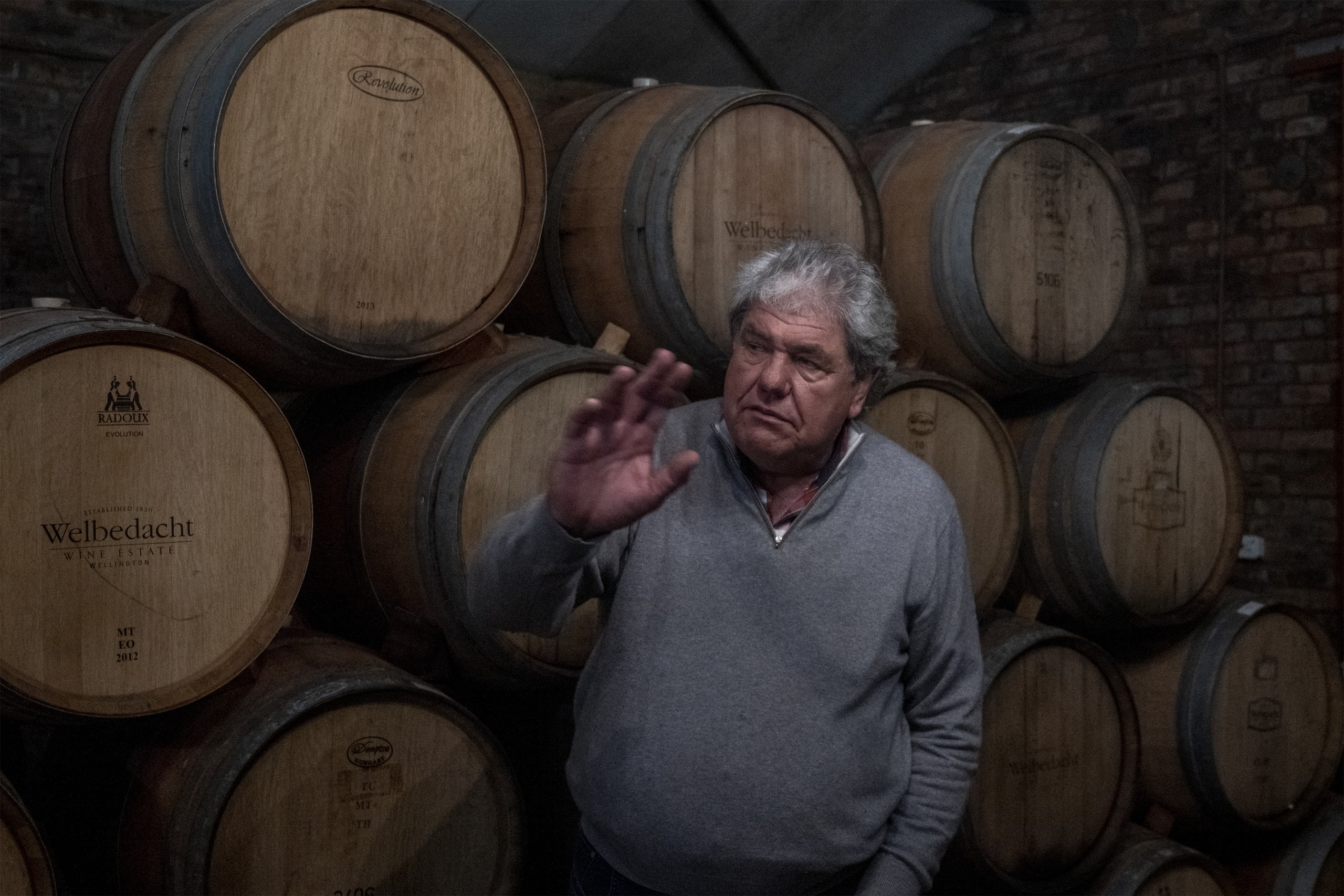
The decision to bring all professional rugby teams under a single Stormers brand has not gone down well with one of the Western Province rugby union’s most distinguished former players.
Schalk Burger Snr, who wore the cherished WP jersey with pride across two separate stints between 1977 and 1987, has delivered a scathing assessment of the decision to rebrand all professional teams under the Stormers banner, warning that 143 years of tradition are being sacrificed on the altar of commercial expediency by administrators who “feel nothing for tradition”.
The controversial restructure means rugby supporters will no longer see a Western Province team competing in the Currie Cup. Instead, they will watch the Stormers XXIII, whilst the Stormers Bolts will represent the union in the national U20 competition. The blue and white hoops, the jersey that legends like Danie Craven, Flappie Lochner, and Carel du Plessis made famous, will effectively disappear from competitive rugby.
For many, it is not just a rebrand, it is an erasure of identity.
Disappointment: Burger questions transparency
Speaking to KickOff Rugby, Burger did not just express disappointment, he challenged the very legitimacy of the decision, questioning whether the clubs that technically own the Western Province Rugby Union were even consulted.
“The club member constitutes the club. The clubs constitute the provinces,” Burger explained, outlining rugby’s traditional bottom-up governance structure.
“So now all of a sudden we’ve got these useless Presidents Councils and stuff sitting at the top at SA Rugby taking decisions down, when the way rugby is constituted is from the bottom up.
“So did all the clubs take this decision? That’s my first question. Not one saying this is in best practice. Where do you get best practices as a top-down type of thing?”
It’s a fundamental challenge to the decision-making process, one rooted in Burger’s extensive experience across every facet of South African rugby. The 1994 SA Rugby Hall of Fame inductee isn’t just a former player; he’s a commissioner who worked on the major commercialisation of SA Rugby, giving him unique insight into both the amateur structures and professional realities.
“The members are the clubs. The clubs technically control the union, which is Western Province, and the unions control SA Rugby,” he continued. “This bull%&t in South Africa that SA Rugby is trying to control the unions, it’s the other way around.”
Branding: Stormers have no shares in the union
Burger also highlighted a crucial point that cuts to the heart of the rebrand’s legitimacy: the Western Province Rugby Union owns 24% of the Stormers (Pty) Ltd, not the other way around. The professional franchise is a commercial entity partially owned by the union, yet now the amateur union is effectively disappearing into the franchise’s branding.
“Western Province is a union. In other words, are you going to tell me the Western Province Rugby Union is now becoming the Stormers Union? Is the union’s name going to be the Stormers?” Burger asked. “The Stormers (Pty) Ltd doesn’t own a share in the Western Province Rugby Union. The Western Province Rugby Union owns 24% of the Stormers, not vice versa.
“Western Province belongs to the clubs. Have the clubs approved? And if they have, then so be it. But it’s a sad day.”
Boland region: the school rugby conundrum
Perhaps the most complex aspect of the rebrand involves school rugby, particularly the thorny issue of Boland schools feeding into Western Province rather than their own union. Burger suggested that if Western Province no longer exists as a playing entity, schools in Paarl and Stellenbosch should logically revert to Boland.
“Look at the schools in Paarl and Stellenbosch, playing Western Province, but then other schools playing Boland,” he said, highlighting a divide that exists across geographical boundaries.
“And there’s a boundary, a geographical boundary, which was determined what [area] is Boland, so all the other sports, cricket, hockey, tennis, netball, athletics, it’s all Boland.
“So the schools now must come across and play provincially for Boland and get rid of Western Province because there’s nothing more to play for. Everybody was saying the tradition of Western Province is why the schools must stay there. Play against your traditional schools there. But play for Boland then. Be provincially Boland. That’s the correct thing to do.”
It is a provocative suggestion, but one grounded in logical consistency. If Western Province no longer exists as a competitive entity, what exactly are Boland-based schools affiliated to? The argument that tradition keeps schools like Paarl Boys’ High and Paul Roos Gymnasium aligned with WP falls flat when that very tradition is being dismantled.
Commercialisation: Administrators feel nothing for tradition
All amateur rugby teams under the Western Province Rugby Football Union will continue to play under the Western Province brand. KickOff Rugby reported.
Professional franchises have become the primary revenue generators and player development pathways, making them the de facto face of provincial rugby. The Currie Cup, once South Africa’s premier competition, now serves largely as a secondary tournament beneath the United Rugby Championship (URC).
From a commercial perspective, consolidating all branding under the Stormers banner makes sense. It creates a unified identity, streamlines marketing efforts, and potentially strengthens the franchise brand by removing the confusing dual identity that has existed since professionalism arrived in 1995.
“We are sitting with a new wave of administrators there who feel nothing for tradition,” Burger lamented, and in those words lies the fundamental divide that no amount of commercial justification can bridge.