


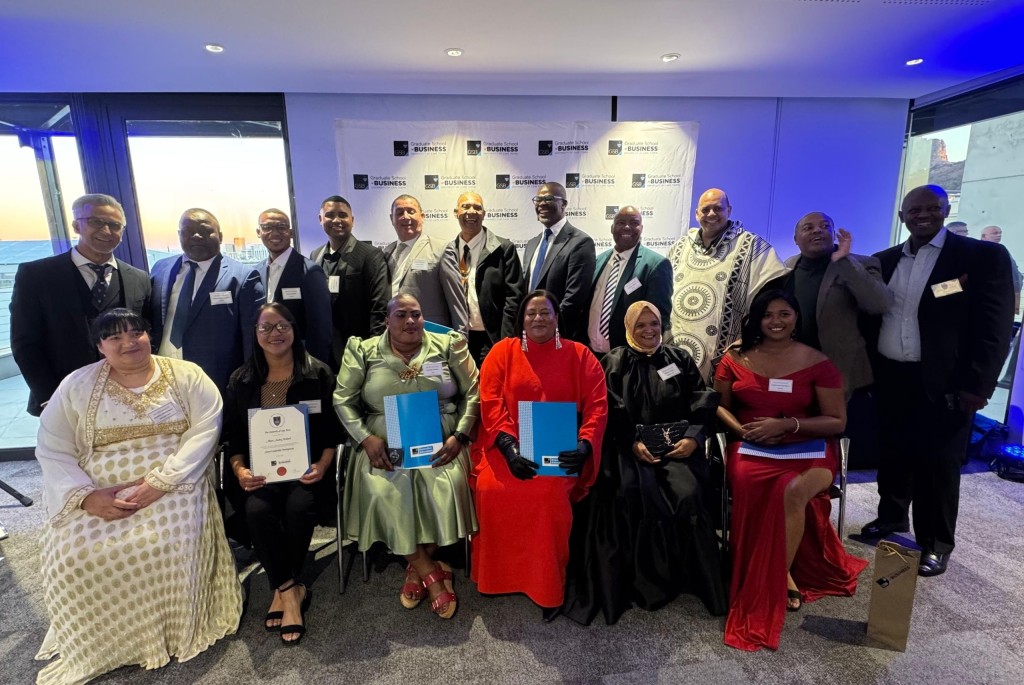
CAPE TOWN – Fourteen minibus taxi leaders made history this week as the first cohort to graduate from a groundbreaking executive leadership programme designed to professionalise South Africa’s most vital transport sector.
The Western Cape Minibus Taxi Executive Leadership Programme, delivered at the University of Cape Town Graduate School of Business (UCT GSB), represents a watershed moment for an industry that carries 80% of the province’s daily commuters but has long struggled with informality and operational challenges.
Isaac Sileku, provincial minister for Mobility, hailed the graduation as evidence that the province’s ambitious vision for sector transformation is becoming reality.
“Moving from the taxi rank to the graduation stage is more than a personal achievement; it shows progress in professionalising the minibus taxi industry in the Western Cape,” Sileku told graduates.
“Real change happens when leaders raise standards from within. You demonstrate that the sector has the leadership, knowledge and vision to transform itself. When you lead well, the province moves with dignity.”
ALSO READ: Western Cape minister unveils revolutionary programme to transform taxi sector
Backbone of provincial economy
The six-month programme, launched by Sileku in October 2025, combines academic rigour with practical, community-based projects. Delivered through a partnership between UCT GSB and Resolve and Change Systems (RACS), it aims to equip industry leaders with skills in ethical leadership, innovation and long-term sustainability.
Minibus taxis form the backbone of the Western Cape’s economy and transport network, yet the sector faces persistent challenges including informal operations and safety concerns. The programme represents a shift from top-down regulation to industry-led transformation.
Jodie Martin, head of GSB executive development, emphasised the collaborative approach: “Through partnerships with RACS and Santaco Western Cape, we are helping to close skills gaps, strengthen collaboration, and support transformation in the minibus taxi industry.”
Change welcomed
Besuthu Ndungane, chairperson of Santaco Western Cape, described such programmes as essential for building “a more professional, united, and future-ready industry”.
“By investing in leadership today, we are strengthening a sector that serves and uplifts our communities,” Ndungane said.
Craig Arendse, CEO of RACS, said graduates would serve as “catalysts for a more efficient public transport system in the Western Cape”.
Ready for transformation
The programme’s impact was evident in graduate testimonials. Alison Portland from the Eden Region reflected: “Leadership is not just about results; it’s about building trust, thinking ahead, and empowering others.”
Mziwamatolo Nombila from Codeta highlighted crisis management skills: “I’ve learned how to lead in times of crisis and make decisions that support effective negotiation.”
Sulaiman Brenner from Two Oceans Region expressed determination to drive change: “I want to take what I’ve learned back to the industry and help change how we do business every day.”
The graduation marks a pivotal shift from policy development to practical implementation, with the future of provincial mobility now resting in the hands of leaders committed to transforming the industry from within.



You must be logged in to post a comment.