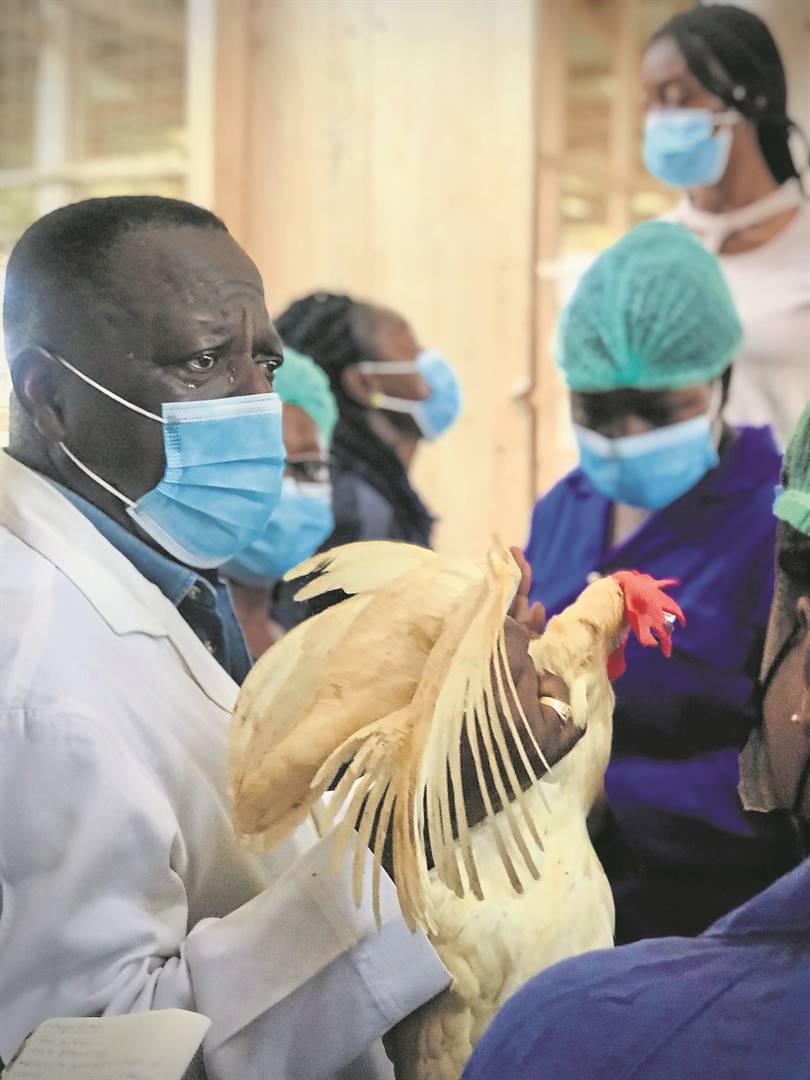
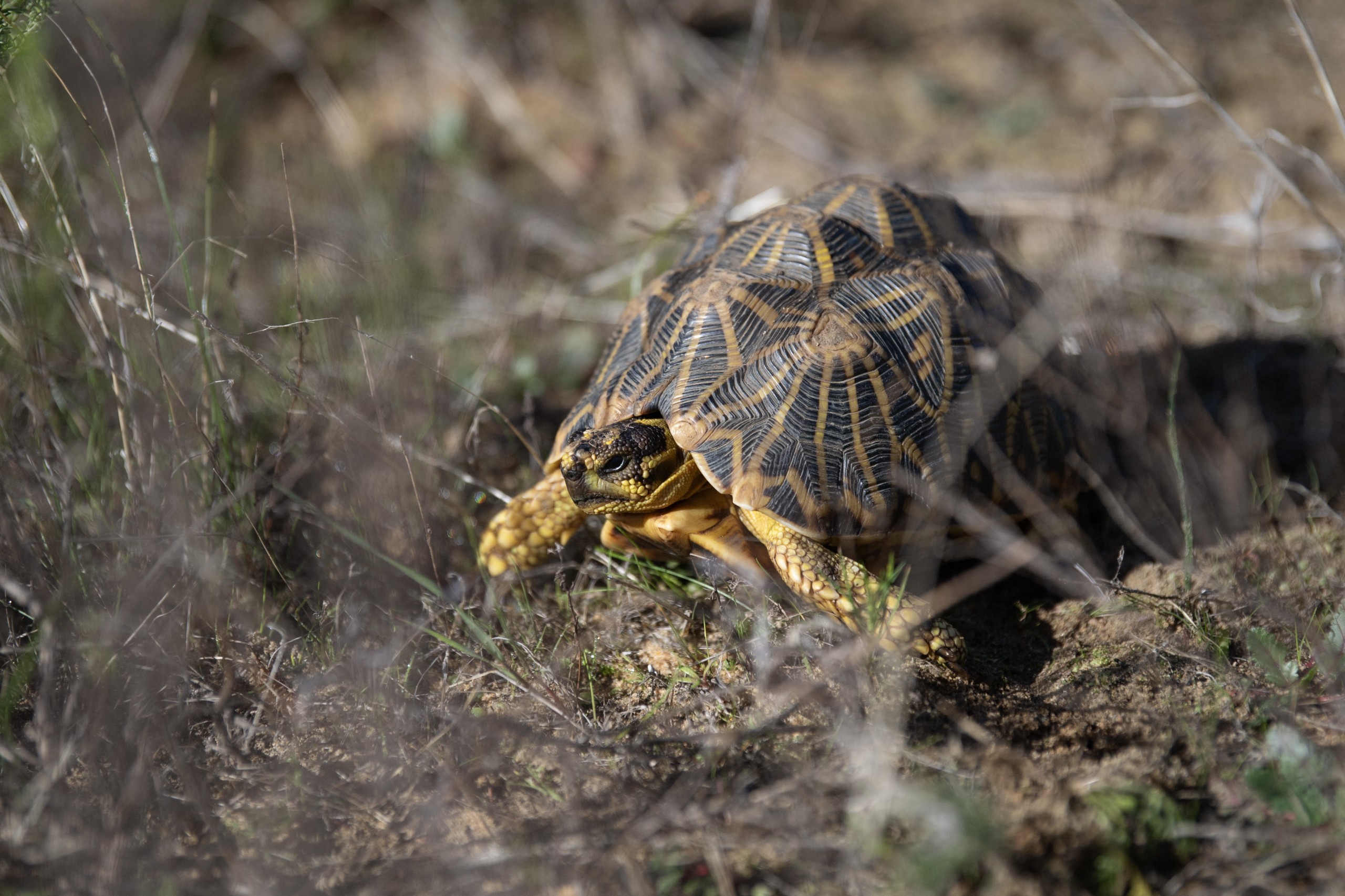
On 21 October 2023, guests at the West Coast Fossil Park were entertained and informed by Professor Mike Bruton, a well-known scientist and science educator from Cape Town, in a most interesting talk about South Africa’s strangest animals.
He defined strange as “out of the ordinary”, “unfamiliar”, “differing from the normal building plan of its group”, “showing unusual behaviour” or “having a different lifestyle”. Bruton first trawled through many of the strange invertebrate animals – those without backbones – that live in South Africa and described their unusual characteristics. After careful consideration he suggested the following invertebrates are the strangest: sea pen, sea cucumber, velvet worm, fish-eating spider, honeybee, mantis shrimp, barnacle, nudibranch, octopus and sea urchin.
He then trawled through the backboned animals of South Africa – fishes, frogs, reptiles, birds and mammals – and suggested the strangest are the hagfish, five-gilled stingray, coelacanth, bullfrog, platanna, sea snake, leatherback turtle, ostrich, free-tailed bat, elephant, right whale and pangolin.
Bruton then chose the “quarter-finalists”, the eight strangest animals with and without backbones: sea urchin, velvet worm, octopus, coelacanth, sea snake, free-tailed bat, pangolin and elephant, and the four ‘semi-finalists’: velvet worm, coelacanth, pangolin and elephant.
After careful consideration, the velvet worm and pangolin were chosen as the two ‘finalists’, with the pangolin narrowly winning the race to be crowned as our strangest animal! Amongst many other unusual characteristics, it is the only mammal with scales.
In conclusion, Mike outlined the reasons why animals are “strange”, including frozen in evolutionary time, the development of novel feeding and breeding behaviours, acquiring special powers of defence, attack and camouflage, adaptations to unusual habitats and the adoption of novel lifestyles.
He also pointed out that many non-human animals have acquired abilities that humans do not have, including sight without eyes, nerve coordination without brains, production of ultrasonic sounds, ability to navigate using the earth’s magnetic field, echolocation, flight without machines, electro-reception and electro-generation, trinocular vision, regrowth of lost organs, external digestion of food, and light production without electricity.
Bruton also pointed out that, sadly, the survival of many of our strangest animals is threatened as they possess characteristics that make them vulnerable to extinction, including being highly specialised, high in the food pyramid, partners in dependencies, living in complex communities, rare, with narrow habitat preferences, and high parental investment in a few young.
The talk revealed that, although South Africa does not have animals as strange as the platypus, axolotl, kangaroo and narwal, it does have some very strange animals. Overall, the talk opened the audience’s eyes to the incredible variety of animal life on the planet, but also to the fact that some of the most interesting animals are threatened with extinction due to the harmful actions of humankind.
For more information on South Africa’s strangest animals, and the reasons they were selected to be competitors in this strangest of competitions, read Bruton’s book, Curious Notions. Reflections of an Imagineer (Footprint Press, 2021).