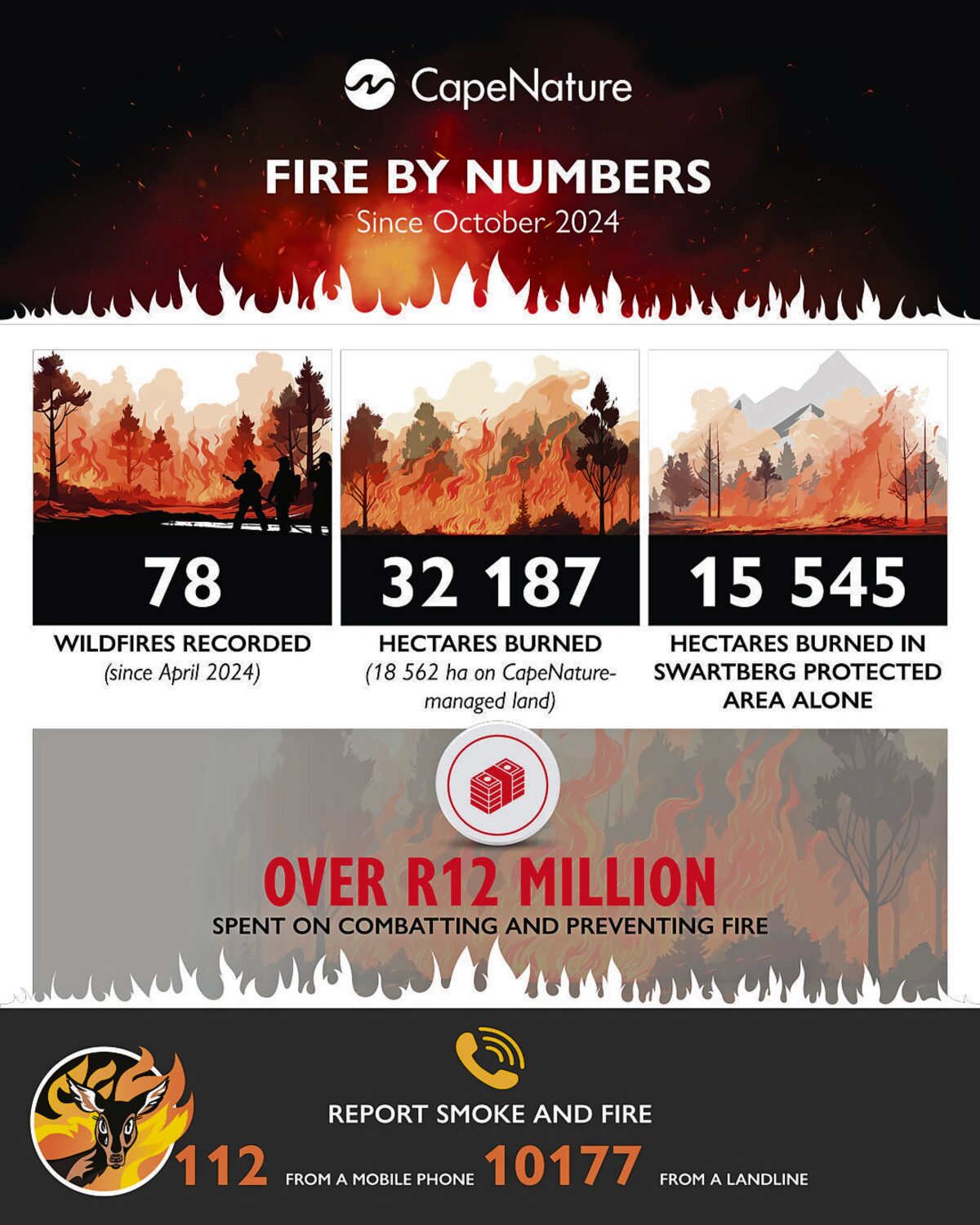
The Western Cape has been in the throes of a sustained fire season, with 32 187 ha of land burnt from October 2024 to the end of February 2025.
According to Petro van Rhyn of CapeNature the entity-managed reserves have borne the brunt, with nearly 19 000 ha affected, while private lands and mountain-catchment areas have also suffered extensive damage.
A press release from Cape Nature stated that since April 2024 there have been 78 fires recorded, and emergency teams have battled flames across some of the province’s most ecologically-sensitive areas. “Although CapeNature has exceeded the number of fires it had in the 2023-’24 fire season, there has been a reduction in overall hectares burnt with 78 000 ha burnt in the previous year.”
Van Rhyn said CapeNature had spent more than R12 million on combating and preventing fire. “While some fires are attributed to natural causes, others were linked to human activity, which includes near-misses in plantation areas and controlled burns that escalated. Increased public awareness and adherence to fire-safety regulations, particularly during the dry summer months when the risk of wildfires is highest, are critical to wildfire prevention.”
Western Cape Minister of Local Government, Environmental Affairs and Development Planning Anton Bredell said: “Residents and visitors to provincial reserves should remain vigilant and report any signs of fire immediately. CapeNature is also working on long-term strategies to improve fire management, which includes fuel load reduction and community education programmes.”
Bredell added that firefighting teams from CapeNature, District Municipalities, Volunteer Wildfire Services, private landowners and other stakeholders were at the forefront of fire suppression efforts. “These teams have worked tirelessly to contain the flames, often in challenging terrain and under extreme weather conditions.”
He said that the Cape’s unique biodiversity, including its fynbos ecosystems, is highly susceptible to fire damage. “While fire is a natural part of these ecosystems the increasing frequency and intensity pose a significant threat to the environment. The focus remains on containment and prevention for the rest of April. March has already seen a further five fires, and long-term forecasts show minimal rain and relatively high temperatures.”