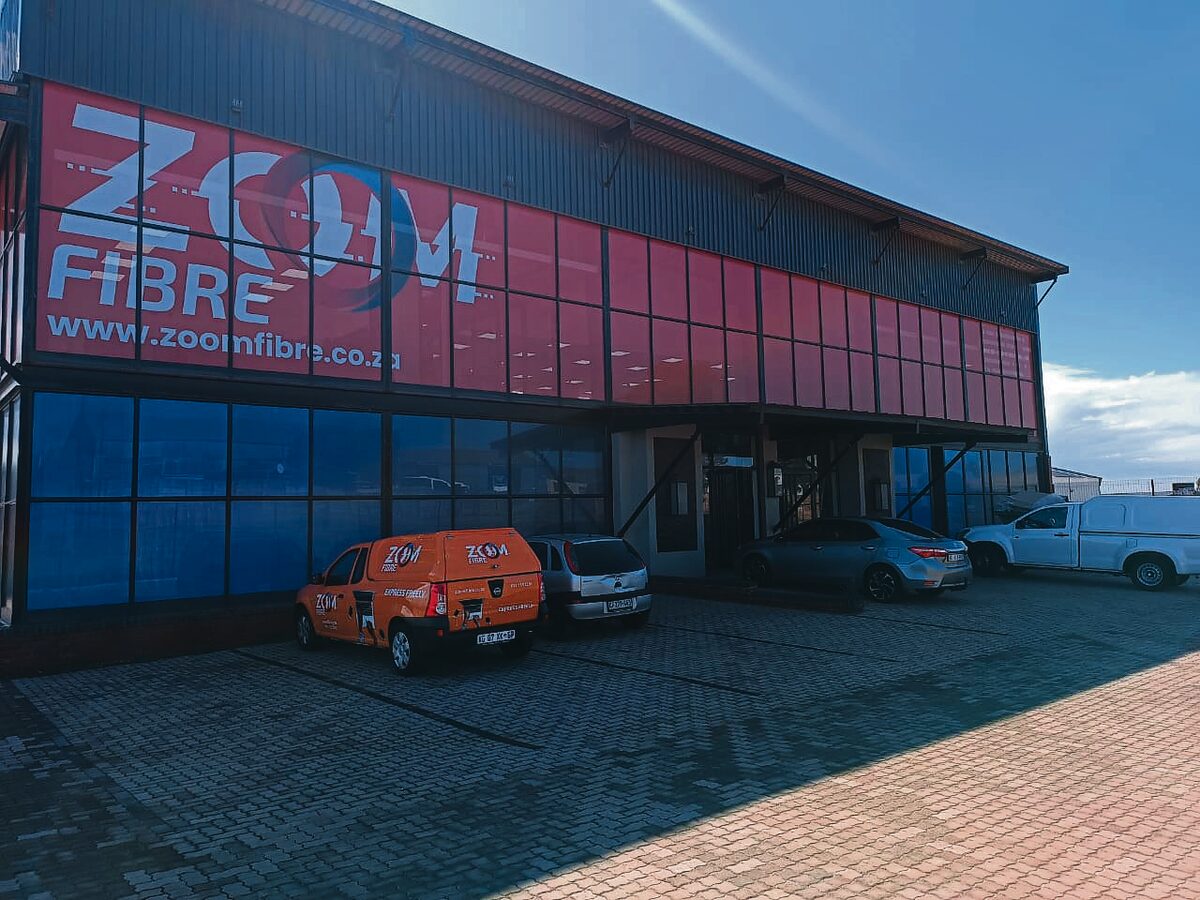
Increased broadband connectivity has a meaningful and direct impact on the economic prospects of individuals, communities and countries at large. This according to Mohammed Manjra, Chief Executive Officer at Zoom Fibre.
Zoom Fibre and the Saldanha Bay Municipality (SBM) are in the process of providing fibre in the municipal area.
Through the SBM Smart City project the municipality has partnered with Zoom Fibre and Amoeba TSC to make sure residents have easy internet access.
Manjra says there is a degree of cynicism in South Africa around the concept of smart cities, but that’s because talk is cheap.
He believes the proof of the pudding is in the eating.
In this case the project covers 2 000 km² of land and fibre has been deployed to every one of the 44 000 ratepayers in the municipality.
This means that everyone will have access to the internet, whether they are high, medium or low earners.
However, Manjra says, this is just the beginning, and this is where providing access to connectivity becomes exciting and where potential is limited only by imagination.
Once the fibre is down one can start overlaying various platforms and smart technologies aimed at real, agile and speedy service delivery.
The benefit in the next five to 10 years will be game changing he says.
“The entire Saldanha Bay Municipality will have access to connectivity, and every street corner will have a security camera and every citizen access to fast, reliable internet and a means to engage directly with their municipality.”
This speaks to another observation by the World Economic Forum’s report on how better connectivity can improve Africa’s economies: it allows for more direct interaction between citizens and governments, according to Zoom Fibre.
They aim to provide access to connectivity for the ‘missing middle’. “We must be bold and proudly disrupt the status quo,” Manjra says.
“The return on investment may take a tad longer, but the reward of real digital inclusion will be life-changing for millions.”
According to Statistics SA’s General Household Survey, released last December, which found that roughly 8,3% of all households in South Africa had access to the internet via copper or fibre.
The same survey found almost two thirds of South Africans access the internet via a mobile connection.
This means although residents in the lower bracket of income still want and need internet access – the missing middle.
“Consider the well-documented missing middle in our tertiary education system,” he says, “There’s a large cohort that is not wealthy enough to pay for its own education, but not poor enough to benefit from government assistance.
“The household missing middle has a huge appetite for fast, stable internet connectivity, but doesn’t flash the buying power of higher-income areas, and so it has had to make do with less. However, underestimate this segment at your own peril!”
An encounter with a young man drove this point home, and gave Zoom Fibre a shot in the arm of the belief that the next-best everything – scientists, engineers, entrepreneurs – will come from the missing middle and poorer communities desperate to be connected with the world and given the opportunity to spread their wings, like their wealthier counterparts in more upmarket suburbs.
For details on the project visit www.sbm.gov.za/baobab-fibre-project/