

As The Rocky Horror Picture Show celebrates its 50th anniversary this year, it’s the perfect moment to look back at how a low-budget film became one of the most enduring cultural phenomena in cinema history. From its humble beginnings to its global impact, this commemorative article explores the legacy of the movie that taught generations of viewers to “do the Time Warp.”
What began as an experimental theater production in a small London venue would eventually become the longest-running theatrical release in film history.
Richard O’Brien, a struggling actor in the early 1970s, created “The Rocky Horror Show” during a particularly cold winter when he was unemployed. Drawing inspiration from science fiction B-movies, horror films, and rock and roll, O’Brien crafted something truly unique.
The stage production opened at London’s Royal Court Theatre Upstairs in 1973, and quickly developed a devoted following. Its success caught the attention of 20th Century Fox producer Lou Adler, who saw its potential for the screen. With O’Brien’s involvement and Jim Sharman directing, the film adaptation began production in 1974 with a modest budget of about $1.4 million.
WATCH:
The film featured several performers who would go on to incredible careers. Susan Sarandon, who played the innocent Janet Weiss, was relatively unknown at the time. While she had appeared in a few films, “Rocky Horror” represented one of her first significant roles before her career would skyrocket with films like “Thelma & Louise” and her Academy Award-winning performance in “Dead Man Walking.”
Barry Bostwick, who portrayed Brad Majors, was primarily known for his Broadway work, having won a Tony Award for “The Robber Bridegroom” shortly before filming “Rocky Horror.”
Perhaps most memorably, the production featured Meat Loaf in the role of Eddie, the ill-fated ex-delivery boy. His brief but explosive performance showcased his powerful vocals just before he would achieve massive success with his album “Bat Out of Hell,” which became one of the best-selling records of all time.
At the center of it all was Tim Curry’s unforgettable performance as Dr. Frank-N-Furter. Curry had originated the role on stage and brought his magnetic charisma to the screen version. His entrance down the elevator in fishnet stockings, corset, and full makeup remains one of cinema’s most iconic moments.
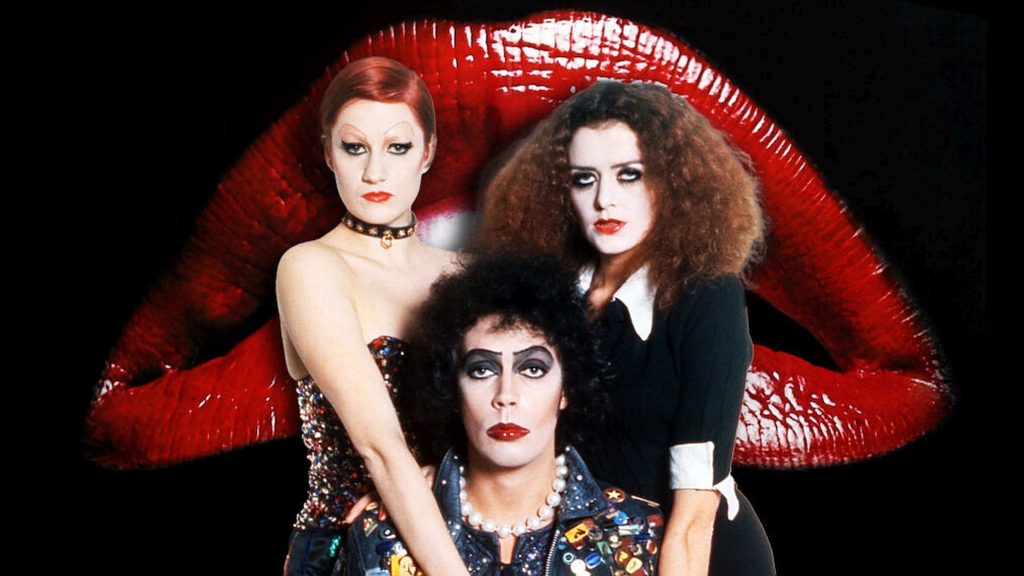
What many don’t know is that Curry was so dedicated to the role that he lived in character throughout much of the filming, often staying in Frank’s voice and mannerisms between takes. His performance was so convincing that after filming wrapped, he struggled to shake off Frank’s distinctive accent, which lingered for months afterward.
The role would both make Curry’s career and, in some ways, pigeonhole him, though he would go on to remarkable performances in films like “Clue,” “Legend,” and as Pennywise in the television adaptation of Stephen King’s “It.”
Beyond creating the show, Richard O’Brien appeared in the film as Riff Raff, the mysterious handyman. O’Brien’s own experiences as a gender-nonconforming person informed much of the show’s themes of sexual liberation and identity. He would later describe himself as transgender or third gender, making the show’s exploration of fluidity decades ahead of its time.
O’Brien’s creative vision extended beyond just the story—he wrote the music and lyrics for songs that would become cultural touchstones, from “The Time Warp” to “Sweet Transvestite” and “Touch-a, Touch-a, Touch-a, Touch Me.”
When “The Rocky Horror Picture Show” premiered on 26 September 1975, it was met with mixed reviews and poor box office performance. Critics were baffled by its bizarre blend of horror, science fiction, and musical comedy. It seemed destined for obscurity.
Everything changed when the Waverly Theater in New York began midnight screenings in 1976. Audiences began returning repeatedly, developing call-back lines, bringing props, and dressing as characters. What started as a failed film had transformed into an interactive theatrical experience unlike anything before it.
The film’s international reception varied dramatically, nowhere more strikingly than in South Africa. Under the apartheid regime’s conservative censorship laws, the film initially received a strict restriction allowing no viewers between the ages of two to 21 years old to watch The Rocky Horror Picture Show. After just one week in cinemas, the government banned the film entirely, deeming its themes of sexual liberation and gender fluidity too subversive.
South African audiences wouldn’t legally experience the film until nearly a decade later when restrictions began to loosen. When it finally returned, it helped introduce a generation of South Africans to ideas that challenged the rigid moral framework of the apartheid regime.
From screen to stage and back again
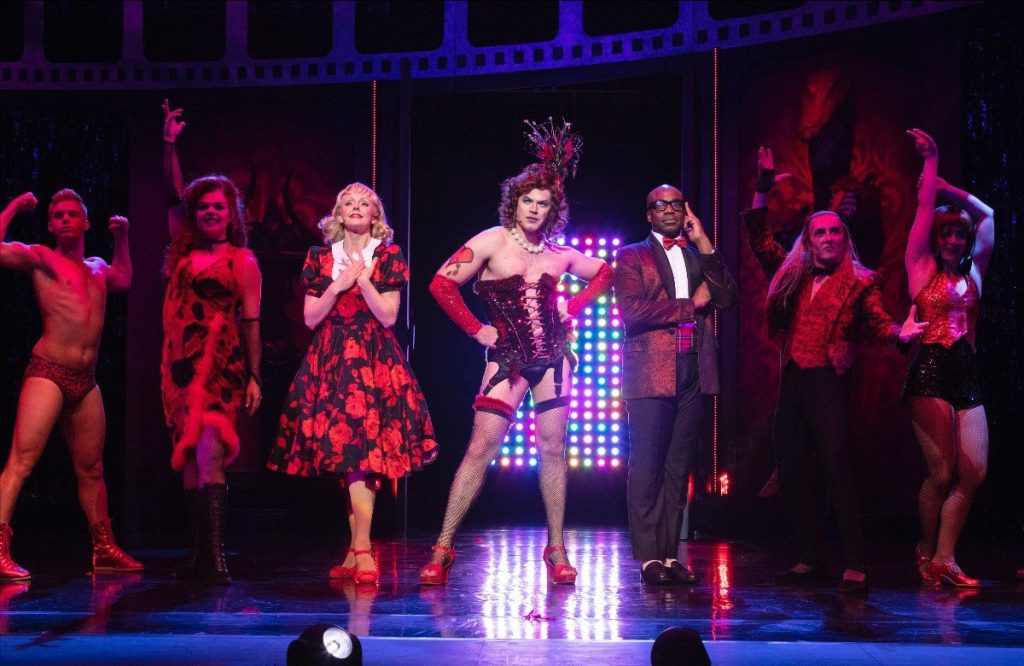
While the film was building its cult following, the stage version continued to thrive. Productions have been mounted in over 30 countries and translated into more than 20 languages. Its longevity is remarkable – the original London production ran until 1980, but various revivals have kept it alive, including its ongoing run at London’s Piccadilly Theatre.
The stage show continues to attract notable performers. Anthony Head, Russell Crowe, and even Tim Curry himself (in various roles) have appeared in productions around the world.
Fifty years after its release, “The Rocky Horror Picture Show” maintains a unique place in cultural history. It holds the record as the longest-running theatrical release in film history, having never completely left theaters since its midnight screening debut. Weekly screenings still occur in cities worldwide, with fans dressing up and participating in the familiar rituals.
- Currently, a stage production of The Rocky Horror Picture Show is running at the Elizabeth Sneddon Theatre in Durban. For information and bookings, click here.


You must be logged in to post a comment.