

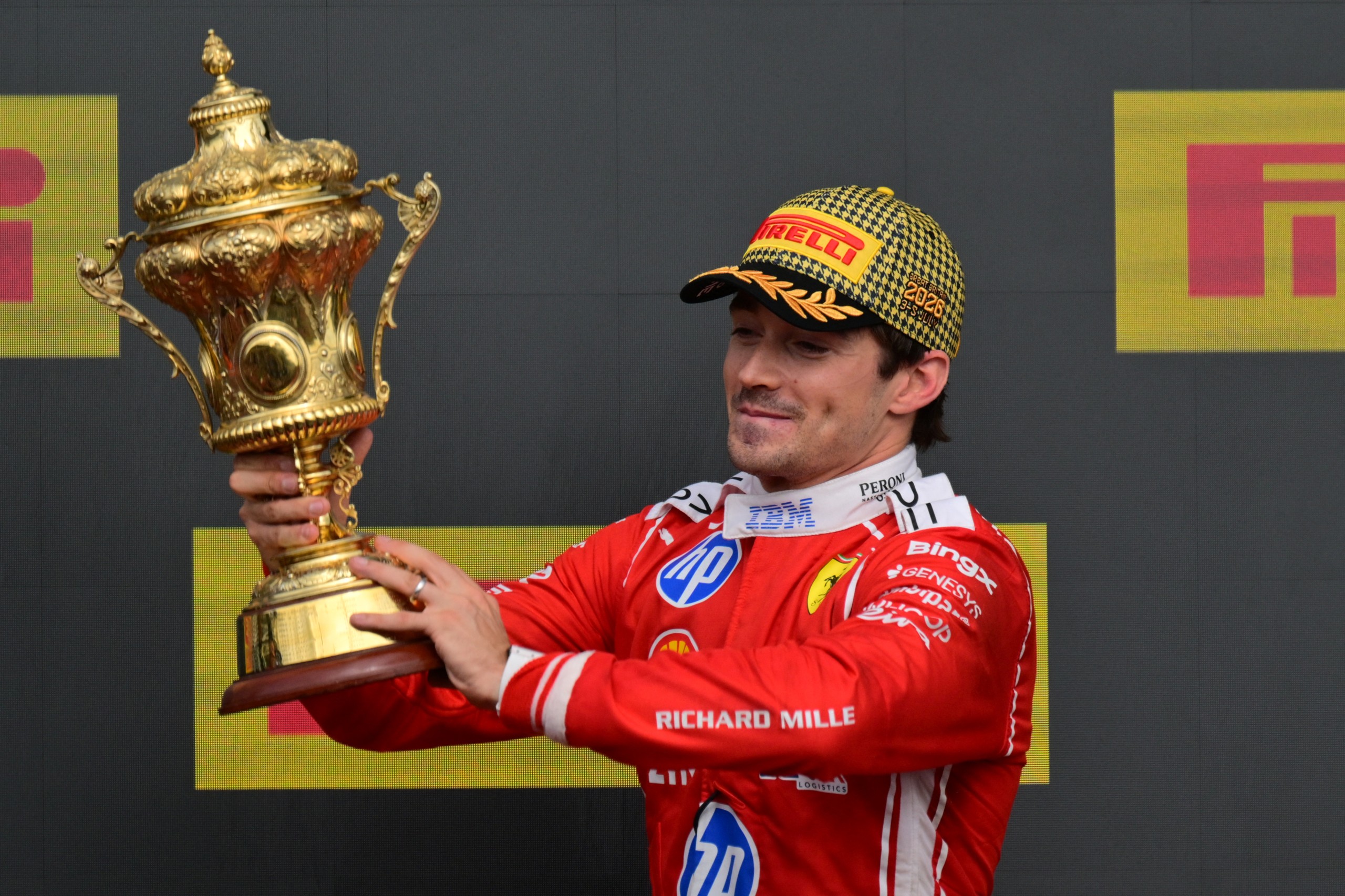
A sell out crowd of 175 000 spectators left Silverstone on Sunday feeling short-changed after race officials opted to end the British Grand Prix under safety car conditions rather than risk a final-lap showdown.
Ferrari’s Charles Leclerc claimed victory, but the race’s conclusion sparked fresh debate about Formula One’s safety car regulations and whether the sport’s rulebook should allow for more spectacular finishes.
The decision to keep the safety car deployed until the chequered flag denied fans an anticipated battle between Leclerc, his Ferrari teammate Lewis Hamilton, and Mercedes driver George Russell. Hamilton, racing in front of his home crowd, had been fighting for either second place or possibly a record 10th British Grand Prix victory.
Rules followed despite disappointment
Race control’s decision came after six laps of safety car running whilst Max Verstappen’s stricken Red Bull was recovered from the Stowe corner. Under current regulations, lapped cars must be waved through to unlap themselves, after which one additional lap is required before racing can resume.
With the recovery process completing on the final lap, officials had no choice but to end the race under caution. A brief software glitch that suggested the safety car would withdraw was overruled within nine seconds.
The incident drew inevitable comparisons to the controversial 2021 Abu Dhabi Grand Prix, where then-race director Michael Masi misinterpreted safety car regulations. On that occasion, Masi allowed racing to resume on the final lap, enabling Verstappen to overtake Hamilton and claim his first world championship. Masi subsequently lost his position over the decision.
Mercedes team principal Toto Wolff, who led protests against the 2021 decision, acknowledged the irony of Sunday’s outcome.
“I would have preferred for this to happen in ’21. That was more important,” Wolff said. “It’s good that the regulations have been followed if sometimes it doesn’t give the most exciting final. But this is a sport. And the show follows sport, not the other way around.”
Hamilton appeared philosophical about missing out on another potential last-lap thriller.
Ferrari’s surprising pace
Beyond the controversial finish, Ferrari’s performance raised eyebrows throughout the paddock. The victory marked the team’s second win in three races, with both drivers now having stood on the top step of the podium.
“This weekend was a particularly big surprise for the whole team,” Leclerc said. “Not the win today, just the overall performance. We were a lot faster than we expected to be so we need to analyse it.”
When asked whether Ferrari could now compete consistently with Mercedes, Leclerc remained cautious. “It’s too early to say.”
Hamilton, who finished third behind Russell, described the result as “special” for the team at a circuit where Ferrari had not expected to excel. The team had believed their straight-line speed and power output were inferior to their rivals.
Reliability emerges as key factor
Ferrari’s success owed much to consistent reliability whilst their rivals faltered. Both Mercedes and Red Bull saw one driver each fail to score points, whilst McLaren struggled to find the pace that had served them well at Silverstone in previous seasons.
Russell benefited from the late safety car to claim second place and his first podium finish at his home race, despite nursing a slow puncture earlier in the afternoon.
His Mercedes teammate and championship leader Kimi Antonelli endured a disappointing afternoon, finishing outside the points for the second time since a run of five consecutive victories elevated him to the top of the standings. A bodywork failure ruined his race, three weeks after an electrical problem forced his retirement in Spain.
Verstappen’s crash left him cursing his Red Bull’s handling characteristics, fuelling speculation about his future with the team.
With teams locked in an intense development race, reliability could prove decisive as the season progresses.
ALSO READ: Ferrari make history as Leclerc triumphs in British Grand Prix at Silverstone

