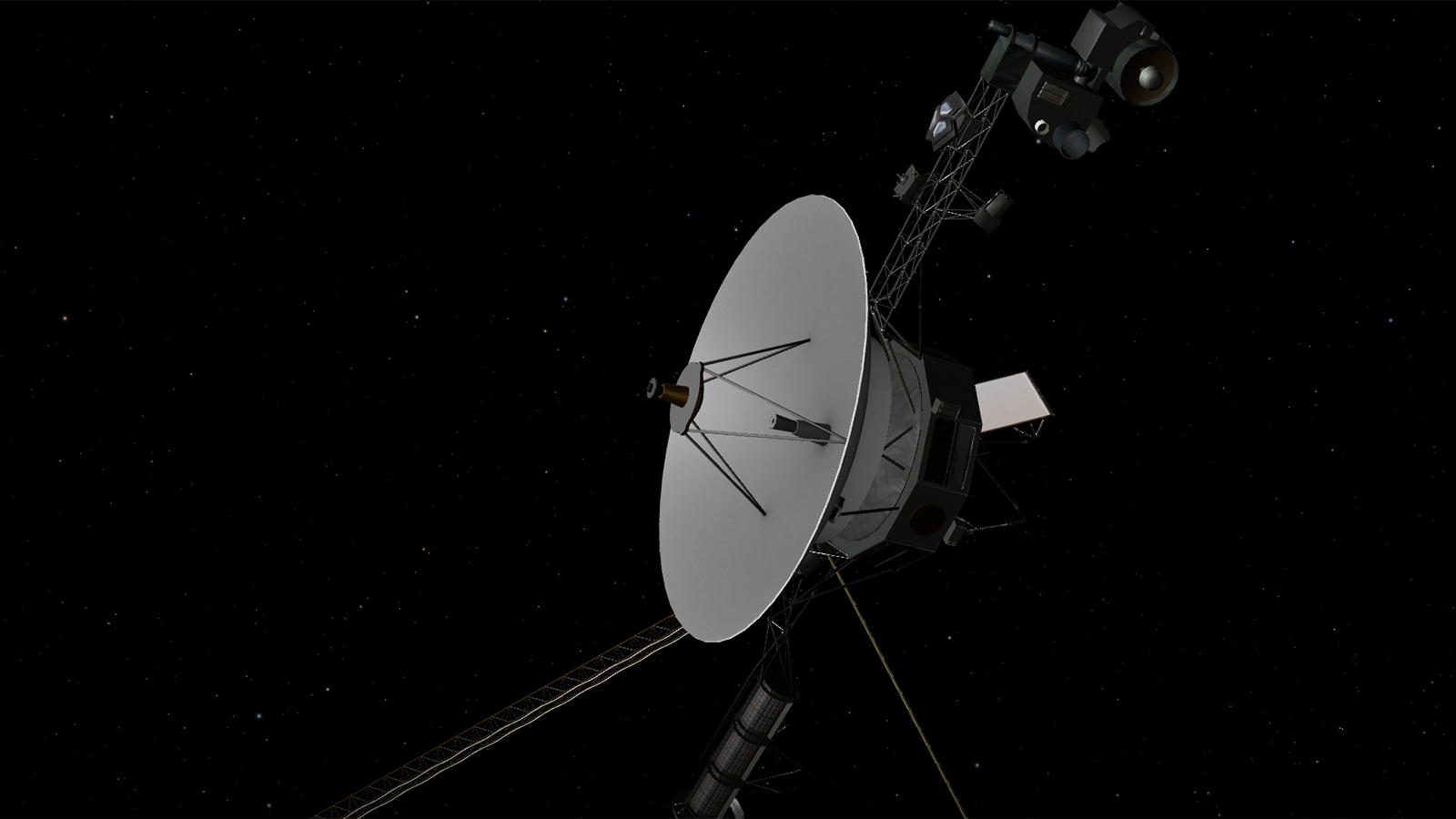
NASA’s Voyager 1 probe reached a distance of one light-day from Earth on Wednesday, nearly 50 years after it left the planet.
The spacecraft is already the most distant object built by humans. It is now about 26 billion kilometers away, the US space agency said. That is how far light travels in 24 hours.
NASA scientist Tiffany Kataria said the milestone shows how vast space is.
“So much of what we dream about is travelling to other stellar systems,” she told AFP.
“And it took Voyager 1 nearly 50 years to get to just the edge of our own solar system, let alone to only a light-day.”
She said many exoplanetary systems are at least several light-years away.
A day’s wait for every message
A message from Earth takes about 24 hours to reach Voyager 1. The ground teams then wait just as long for a reply.
Voyager 1 and its twin, Voyager 2, launched in 1977. They are the only spacecraft to reach interstellar space, the region beyond our solar system, and both are still exploring it.
Each carries a “Golden Record”, a 30 cm gold-plated copper disk meant to tell the story of our world to extraterrestrials.
Probe still sends back data
Teams have switched off some of Voyager 1’s equipment, including its cameras, to save power. The probe still studies unseen phenomena such as magnetic fields, Kataria said.
Its data helps researchers like her study “the gas, the dust and other material that exists between stars, between our Sun and other stars”.
Discoveries closer to home
Between them, the two probes also explored the outer solar system and its giant planets: Jupiter, Saturn, Uranus and Neptune. Voyager 1’s images of Jupiter first revealed rings around the gas giant. They also helped scientists understand the “really extreme vortices and weather that take place in the atmosphere”, Kataria said.
“You could find so many things that both of these spacecraft have really enabled in our understanding.”
ALSO READ: NASA delays moon mission over frigid weather