There’s no playbook for what the Lions have endured. No tactical briefing that prepares you for losing a teammate the day before a European fixture. No coaches’ manual with a chapter on navigating grief whilst thousands of kilometres from home, still expected to front up and play rugby.
Also read: Lions to honour Hyron Andrews in La Rochelle clash
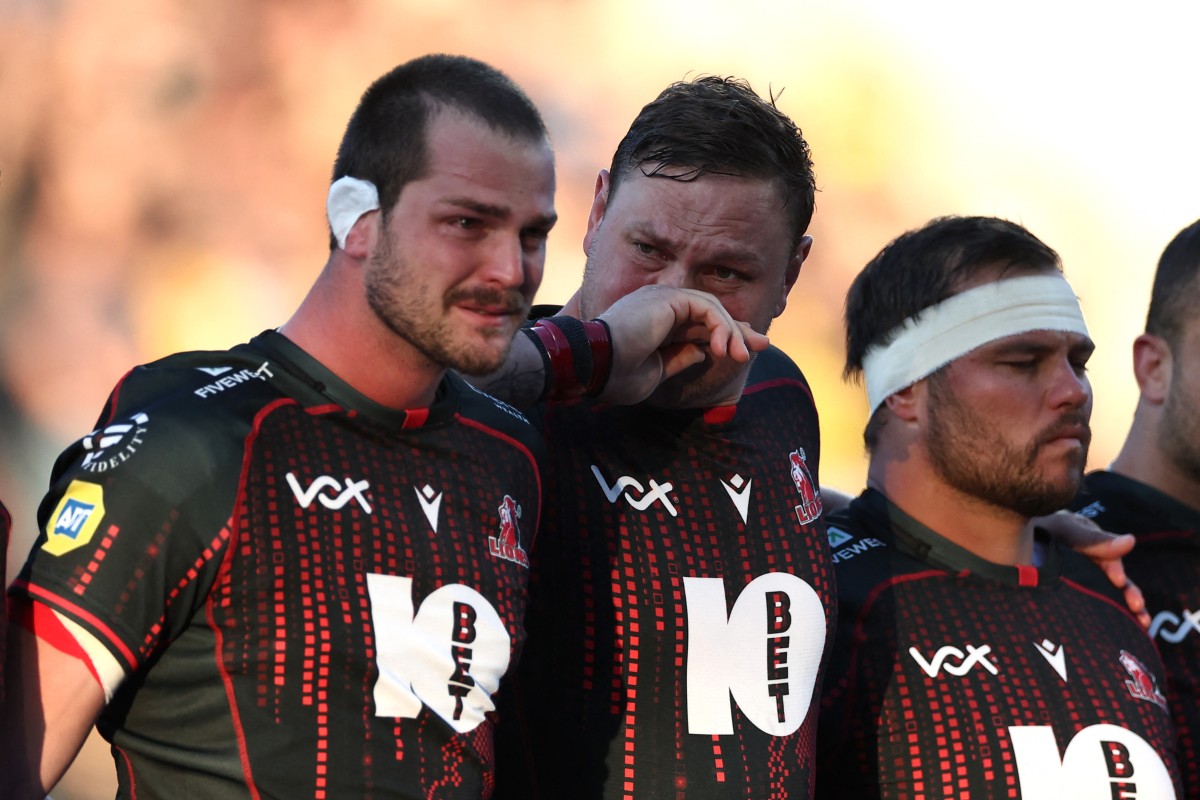
Yet that’s precisely the impossible situation the Johannesburg franchise faced when lock Hyron Andrews died last Friday, just hours before their Champions Cup clash against La Rochelle. The match went ahead. The tour continued. And a squad of professional athletes found themselves grappling with emotions no amount of training can prepare you for.
Lions assistant coach Julian Redelinghuys offered a raw, honest glimpse into the chaos on Tuesday, speaking to KickOff.com about a week that redefined what it means to be a team.
“We’ve been saying this since it happened… there’s no manual for this,” Redelinghuys admitted. “We don’t know how the players are going to respond. We can only do what we can to support the guys as much as we can and do what we think will be best for the weekend.”
Unprecedented territory
The sheer scale of what the Lions navigated is almost incomprehensible. Andrews didn’t die during the off-season, when the squad could gather privately and grieve away from the spotlight. He died in camp, on tour, with a high-stakes European fixture looming and another two weeks of matches stretching ahead.
Also read: When is life bigger than rugby? The Lions shouldn’t have played
“I don’t think there’s any team that has had to go through a thing like this, where a player died in camp a day before a game, and then they were on tour for another two weeks,” Redelinghuys said.
Think about that for a moment. Your teammate, your friend, someone you’ve trained alongside and shared a changing room with, is suddenly gone. And you’re expected to pack down in scrums, make tackles, execute lineouts, all whilst processing a grief that hasn’t even begun to settle.
The Lions were writing the script as they went, making decisions in real time about what felt right, what felt respectful, what their fallen brother would have wanted.
The support that mattered
In moments of profound darkness, light came from unexpected places. The rugby community, notoriously tribal, fiercely competitive, showed its other side.
“To say it was a rough week is probably an understatement, but the support we received from almost everyone was huge,” Redelinghuys said. “The sorrow everyone felt, and the way it was handled, felt authentic.”
That authenticity mattered. La Rochelle, their opponents that weekend, handled the situation with grace. The local French community showed respect. Back home in South Africa, the outpouring was immense.
“The way it was handled [both] locally [and] abroad, [and by] our leadership, coaches and management and players, felt really respectful and that gave us, to a big extent, some closure,” Redelinghuys reflected.
Respecting the family’s grief
Amidst their own trauma, the Lions never lost sight of what mattered most: honouring Andrews and supporting his family through their unimaginable loss.
“We just said we want to be respectful towards the family at this time,” Redelinghuys explained. “That was our viewpoint from the start. How can we be most respectful towards the family, in our actions, what we decide?”
Every decision, whether to play or postpone, whether to speak publicly or stay silent, how to commemorate Andrews on match day, was filtered through that lens. It wasn’t about what was easiest for the squad or what made for better optics. It was about doing right by Hyron’s loved ones.
“Everyone grieves differently,” Redelinghuys acknowledged. “You have to respect everyone’s process.”
The coaching staff’s role became less about tactics and more about creating space for each individual to navigate their pain in their own way.
“For everyone to go through this process, I think it helps being in a team,” Redelinghuys said.
There’s the silver lining, fragile as it is. Shared grief, whilst agonising, connects people in ways nothing else can. The Lions weren’t facing this alone.
The match that shouldn’t matter, but did
Context makes the 31-14 defeat to La Rochelle almost irrelevant. The Lions fronted up under circumstances that would break most teams. They competed. They fought. They honoured their fallen teammate, by giving everything on the pitch.
It wasn’t enough to win, and frankly, that hardly matters. What matters is they showed up. They represented Andrews’ memory with dignity. They proved that even in the depths of tragedy, resilience exists.