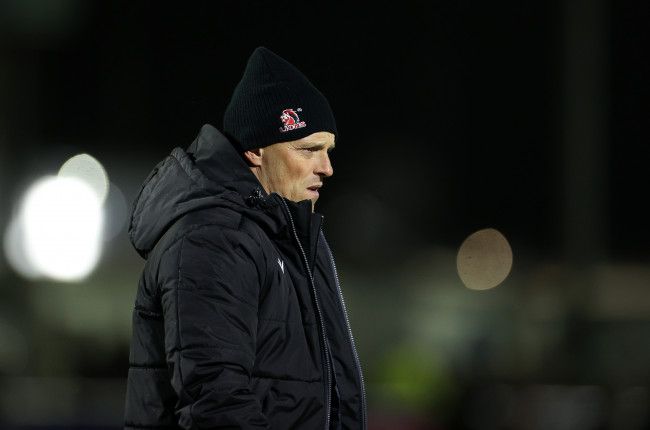
The recriminations flew faster than Bordeaux’s backline. Bath head coach Johan van Graan graciously accepted his side’s 38-26 Champions Cup semi-final defeat on Sunday, but simultaneously lobbed a grenade into European rugby’s most contentious debate, whether travelling sides get a fair shake from television match officials when playing in France.
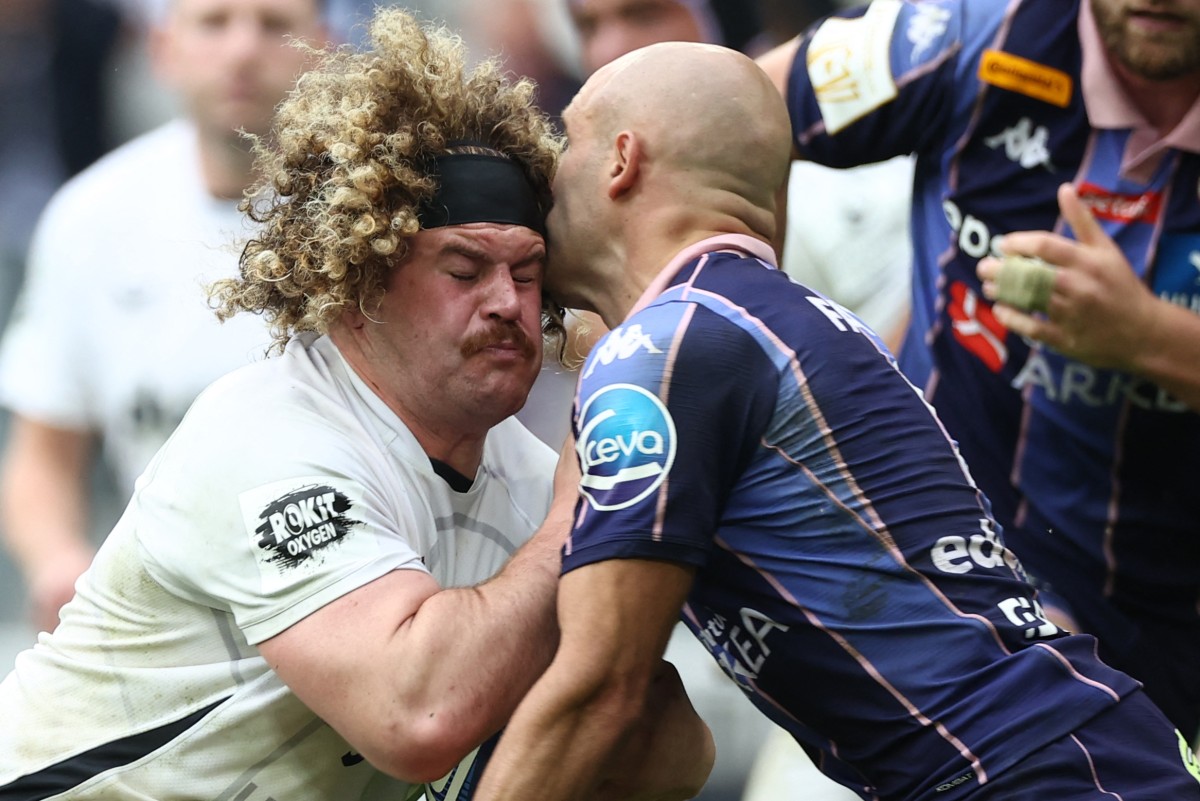
Speaking to the BBC after watching his side’s European dream die at Stade Chaban-Delmas, the South African coach pulled no punches, citing three separate incidents where Bath No 8 Alfie Barbeary absorbed direct contact to the head without so much as a second glance from the TMO bunker.
“I want to make clear that the better team won on the day,” van Graan prefaced diplomatically, “but I want to ask why certain things are not picked up when you play away from home in France.” he told KickOff.com
The consistency question
Van Graan’s complaint wasn’t about the final scoreline or even the match officials on the pitch, it was about the murky world of what footage reaches the TMO and when. His pointed comments carried the weight of someone who’s seen this script before, referencing what he believes were three clear head contacts on Barbeary’s carries that somehow evaded intervention.
“All we want is consistency on both sides of the ball right through the competition,” the former Munster boss stated. “I believe specifically that three carries from Alfie Barbeary made direct contact with the head.”
Crucially, van Graan stopped short of accusing anyone of deliberate misconduct, instead questioning the systems in place. “The main point I want to make is that from a consistency point of view, that wherever every game is played, the TMO gets access to all the footage he wants. From my point of view, you want the match officials to know what they are looking at. Whatever decision a ref makes is the final call.”
It’s diplomatic phrasing that doesn’t quite mask the underlying frustration, a coach wondering aloud whether the technology supposedly ensuring fairness actually delivers when the away changing room door slams shut in hostile territory.
French broadcasters fire back
Van Graan’s comments didn’t take long to draw return fire. French television broadcasters, clearly stung by the implication that footage might be selectively provided or withheld, mounted a robust defence of their processes.
Speaking to AFP, Cédric Beaudou categorically rejected any suggestion of impropriety in how footage reaches match officials.
“The video referee, when he says ‘I want to speak to the on-field referee as I’ve seen something’, play is stopped, the referee asks us for the footage, we give it to him, and then we broadcast the footage,” Beaudou explained. “The video referee is the master of what he wants to see, and nowadays he has access to every camera, every angle.”
Beaudou was emphatic in his conclusion: “It’s impossible to hide footage.”
EPCR backs the system
The European Professional Club Rugby organisation also waded into the controversy, defending the TMO protocols used across all Champions Cup fixtures.
“The TMO interventions are managed by the television broadcast,” EPCR told AFP. “Two screens are used. One live, and another with a five-second delay. This is identical for all EPCR matches. Every incident the TMO wants to study can be the subject of a formal review.”
The statement suggests uniformity of process, every match, every venue, every broadcaster working to the same standards.
Yet van Graan’s comments expose a fundamental problem: perception versus reality. Whether or not French broadcasters provide identical access at every venue becomes almost secondary if coaches, players, and supporters don’t believe the system delivers consistent outcomes.
The uncomfortable truth
Perhaps the real issue isn’t access to footage or broadcaster cooperation, but the inherent limitations of a system relying on human judgment calls about when to intervene. TMOs can’t review every collision, every cleanout, every tackle. They’re making split-second decisions about what warrants closer examination, and those decisions inevitably carry subconscious bias influenced by crowd noise, match flow, and stakes.
Playing in front of a raucous Bordeaux crowd chasing a Champions Cup final berth creates a vastly different environment than a sterile review room. That shouldn’t matter, but does anyone truly believe it doesn’t?