
The University of the Western Cape (UWC) is celebrating the tenth anniversary of the Inter-University Institute for Data Intensive Astronomy (IDIA) — marking a decade of world-leading science, skills development and South Africa’s growing readiness for the Square Kilometre Array Observatory (SKAO) era.
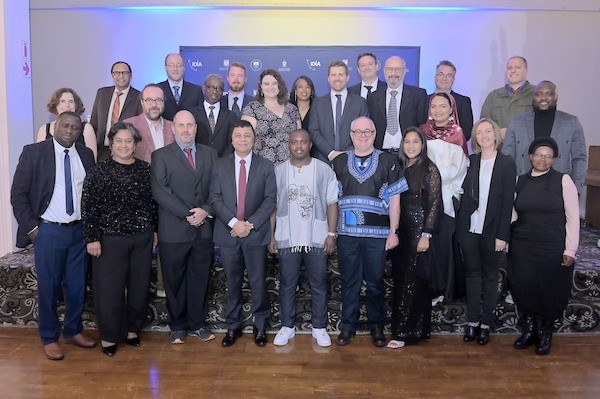
IDIA marked its milestone by bringing together university leaders, representatives from national facilities and the Department of Science, Technology and Innovation. The occasion also celebrated the signing of IDIA’s third funding cycle (2026–2030), continuing the partnership between the University of Cape Town, the University of Pretoria and UWC, alongside close collaboration with the South African Radio Astronomy Observatory (SARAO).
Greatest challenges
Founded in 2015, IDIA was established to tackle one of modern astronomy’s greatest challenges: how to process, visualise and interpret the enormous volumes of data generated by the world’s most powerful telescopes. That challenge became real with the commissioning of SARAO’s MeerKAT radio telescope — and will become even more pressing in the SKAO era.
Through the ilifu Research Cloud, advanced software platforms, specialist support and training programmes, IDIA has built the research ecosystem needed to turn data into discovery. Over the past decade, IDIA and ilifu have supported a substantial share of South African-led MeerKAT science, enabling hundreds of researchers from institutions across South Africa and around the world to conduct data-intensive research.
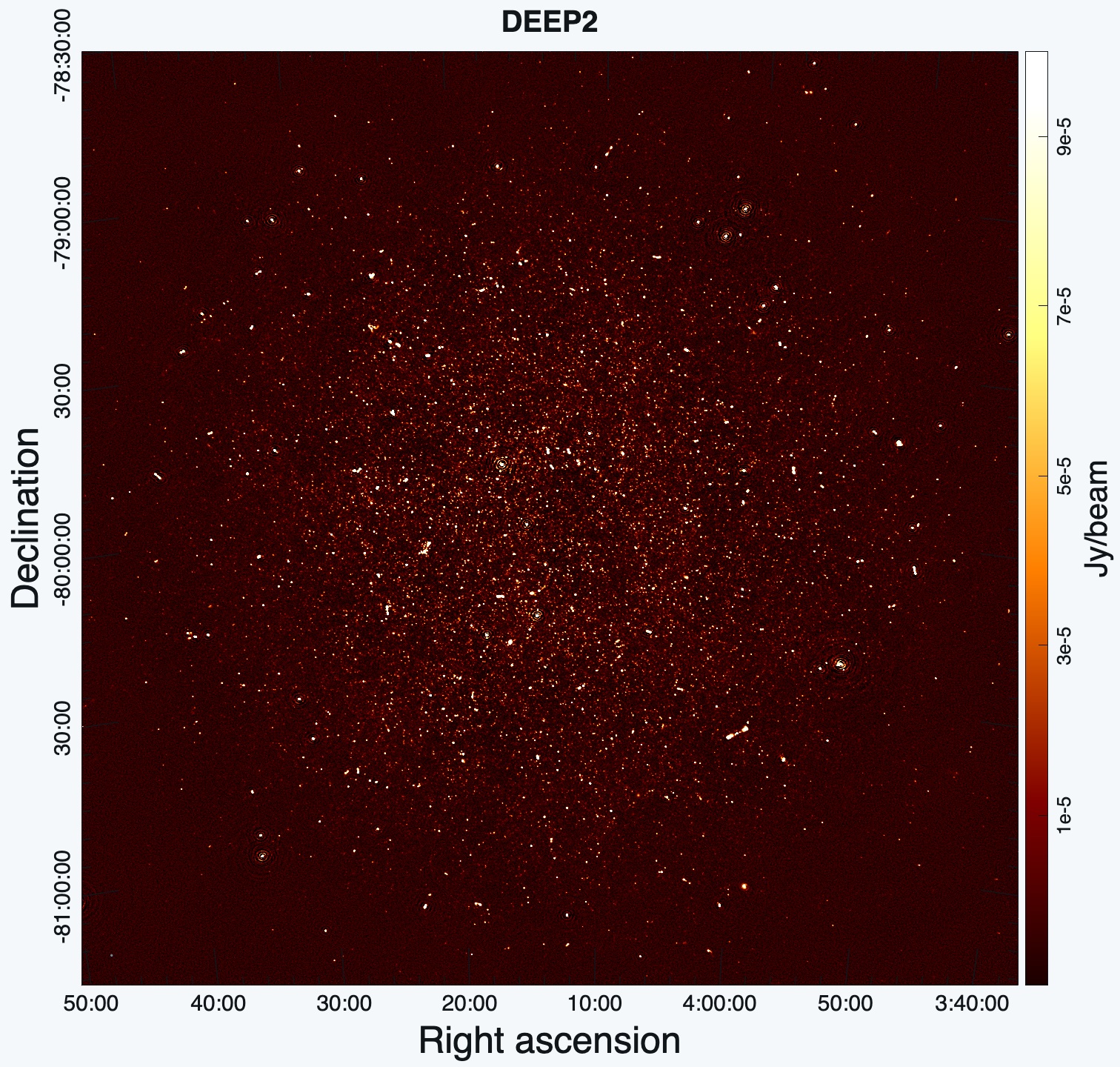
UWC’s Astronomy Group is internationally recognised as a leading contributor in radio astronomy and cosmology. Around 80% of the group’s postgraduate students and postdoctoral researchers rely on ilifu’s computational resources to exploit MeerKAT data, produce internationally competitive results and gain experience with industry-standard tools. Among IDIA’s flagship programmes is MeerKLASS (MeerKAT Large Area Synoptic Survey), led from UWC by Prof Mario Santos. The survey aims to cover approximately 10 000 square degrees of the southern sky, probing cosmology through intensity maps of neutral hydrogen to provide new insights into the large-scale structure and evolution of the universe.
MeerKLASS
In a single year, MeerKLASS can consume more than 235 CPU years of computing time on ilifu, with data storage requirements of close to one petabyte per year of observation. The survey has already achieved major milestones, including the first practical demonstration of the multi-dish auto-correlation intensity mapping technique for cosmology, and measurements that constrain the abundance of neutral hydrogen at distances beyond the reach of direct detection.
“For UWC researchers, IDIA and the ilifu Research Cloud have become indispensable components of the scientific process,” said Prof Santos, SARChI Chair in Multi-Wavelength Cosmology and Director of the UWC Centre for Radio Cosmology. “The computing infrastructure, software environment and specialist support provided through IDIA and ilifu have enabled our students and researchers to develop new analysis techniques, carry out internationally competitive research and help establish South Africa as a leader in radio cosmology.”
IDIA’s impact at UWC extends well beyond cosmology. The UWC-based Computational Astrophysics and Machine Intelligence Lab (CAMIL), led by Assoc Prof Michelle Lochner, is pioneering the use of machine learning and advanced statistical techniques to uncover new insights from vast astronomical datasets. As facilities such as MeerKAT, the SKAO and the Vera C. Rubin Observatory generate ever-increasing volumes of data, CAMIL is developing innovative human-machine collaborative approaches to identify rare objects, uncover unexpected phenomena and accelerate scientific discovery.
One of the group’s flagship tools is Astronomaly — a discovery framework used to identify unusual objects in datasets from several telescopes, including MeerKAT. Using ilifu’s capabilities, UWC researchers and students have also developed cutting-edge methods for anomaly detection, galaxy classification and large-scale radio data analysis.
Research into galaxy formation and evolution, led by Assoc Prof Ed Elson in the Department of Physics and Astronomy, adds yet another dimension to UWC’s data-intensive research profile. By combining MeerKAT observations with advanced computational analysis, researchers are investigating how galaxies form, evolve and interact across cosmic time.
The long-term success of these programmes depends not only on technology, but on cultivating future scientists. IDIA has supported more than 500 graduate students across astronomy, bioinformatics and related data-intensive disciplines, while contributing to training schools, workshops, hackathons and public engagement programmes across South Africa and the broader African continent. Central to this effort is IDIA’s Development and Outreach Office, based at UWC’s Department of Physics and Astronomy and headed by Assoc Prof Sally Macfarlane, IDIA’s Associate Director for Development and Outreach.
“Preparing for the scientific opportunities of the next 50 years and beyond requires more than training the next generation of researchers — it requires investing in the next-next generation, who will inherit and sustain these facilities long into the future,” said Prof Macfarlane. “Through IDIA’s development and outreach programmes, we work to create a sustainable ecosystem that inspires future scientists, develops critical data-intensive skills and empowers participants to become mentors and innovators in their own communities.”
Societal impact
UWC Rector and Vice-Chancellor Prof Robert Balfour paid tribute to IDIA’s broader societal impact. “The value of IDIA is measured not only in publications or platforms, but in people,” said Prof Balfour. “Its work in human capacity development, training and public engagement helps broaden participation in areas of science and technology that will shape the future. That broader societal impact is one of the key motivations for governments and universities investing in major research infrastructures. At UWC, investment in the collaborations exemplified by IDIA — on this its special tenth anniversary — as well as the infrastructure underpinning them, is critical to the University’s mission to become a leading research institution with demonstrable impact on uplifting society.”
READ ALSO: UWC gardener pursues postgraduate studies despite life-changing setback