

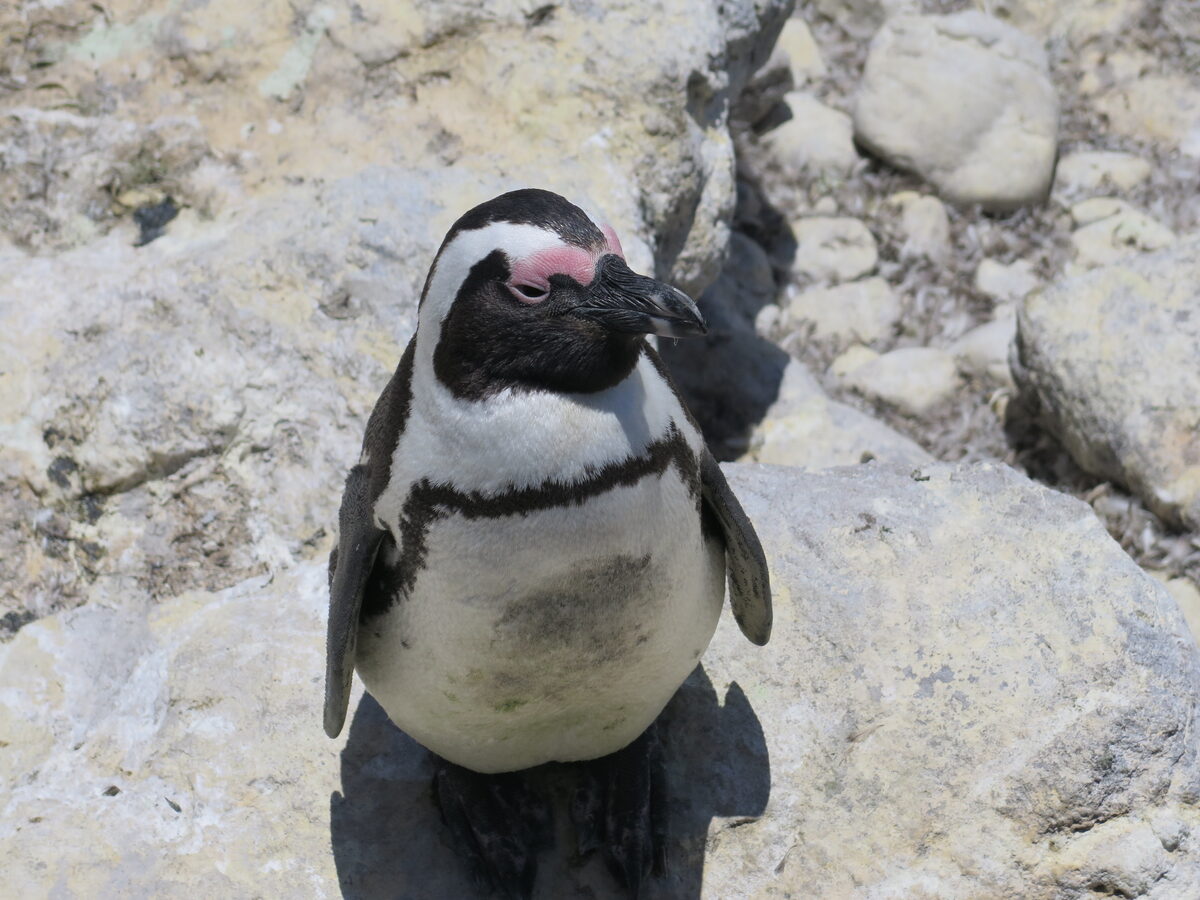
GANSBAAI – International African Penguin Day on 10 October serves as a reminder of the urgent need to protect one of South Africa’s most recognisable seabirds, even as declining food availability and the effects of climate change continue to threaten its survival.
Dr Loraine Shuttleworth of the Dyer Island Conservation Trust (DICT) says raising awareness of the species’ plight is more important now than ever.”Having these days really help bring it to people’s attention,” Shuttleworth said.
Food shortages threaten chicks
One of the major challenges facing African penguins is the lack of available prey. Research shows that penguins are having to travel further to find food, with consequences for their breeding efforts and the survival of their chicks.
“From a research perspective we know that penguins need to travel further to find food and so they also leave their eggs and chicks unattended, which is definitely not a good thing,” Shuttleworth said.
Low prey availability is also contributing to poor physical condition among the birds, with some becoming severely emaciated.
ALSO READ: Extinction threat looms over African penguins in Cape Town
Climate change adds pressure
Climate change affects prey availability and exposes penguins to heat stress. Shuttleworth said artificial nest boxes provided for the birds help create a refuge from high temperatures.
Despite the concerning outlook, she believes hope remains an important part of conservation.”I think we should always have hope, although things are looking very bad at the moment, doom doesn’t help,” she said.
A homegrown species
The African penguin (Spheniscus demersus) is the only penguin species that breeds naturally on the African continent, with colonies in South Africa and Namibia.
Once numbering more than a million breeding pairs in the early 1900s, the population has declined dramatically over the past century. Historical threats included the harvesting of eggs for human consumption and the collection of guano – seabird droppings used as fertiliser – which destroyed nesting habitat. Today, food shortages linked to commercial fishing and changing ocean conditions remain major concerns.
In October 2024, the species was classified as critically endangered on the International Union for Conservation of Nature’s (IUCN) Red List, reflecting its extremely high risk of extinction in the wild.
What individuals can do
Shuttleworth emphasised that protecting African penguins is not solely the responsibility of conservation organisations. Everyday choices affect the marine environment and the species that depend on it.
The public is encouraged to consider its consumption choices, avoid littering, dispose of fishing gear responsibly and refrain from disturbing penguins when encountering them in the wild.
Organisations such as the DICT and Marine Dynamics continue to work to protect the African penguin while addressing the pressures contributing to its decline.
African Penguin Day offers more than an opportunity to celebrate the species – it is a chance to draw attention to the threats to its survival and encourage people to take practical steps towards protecting the marine environment.