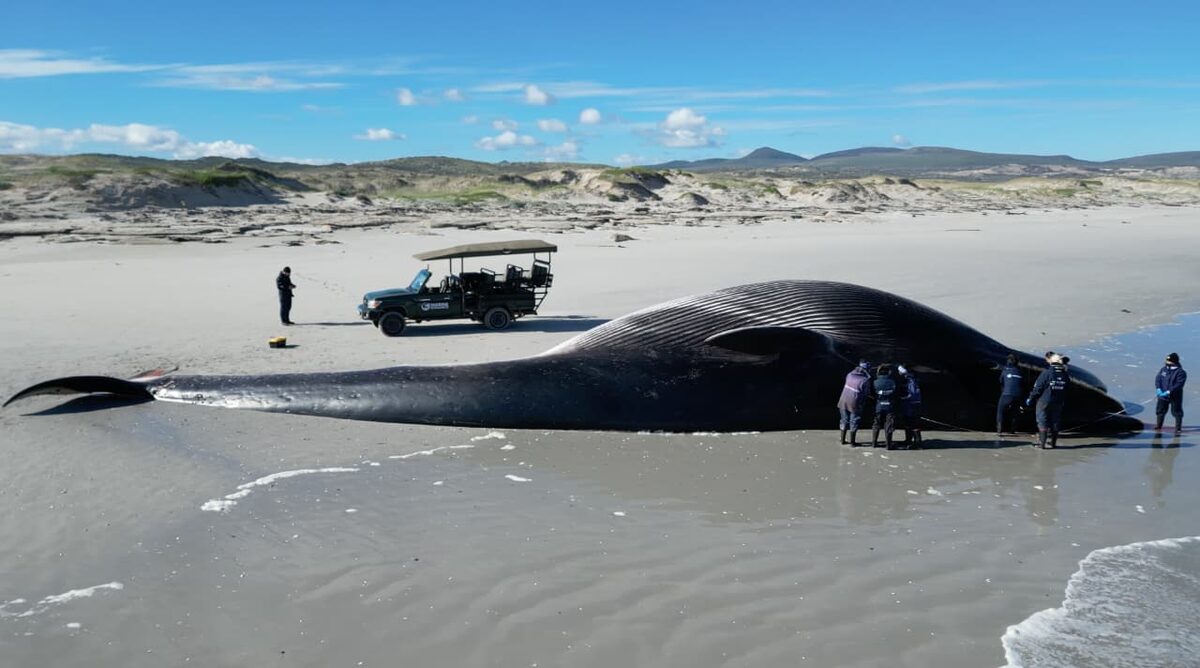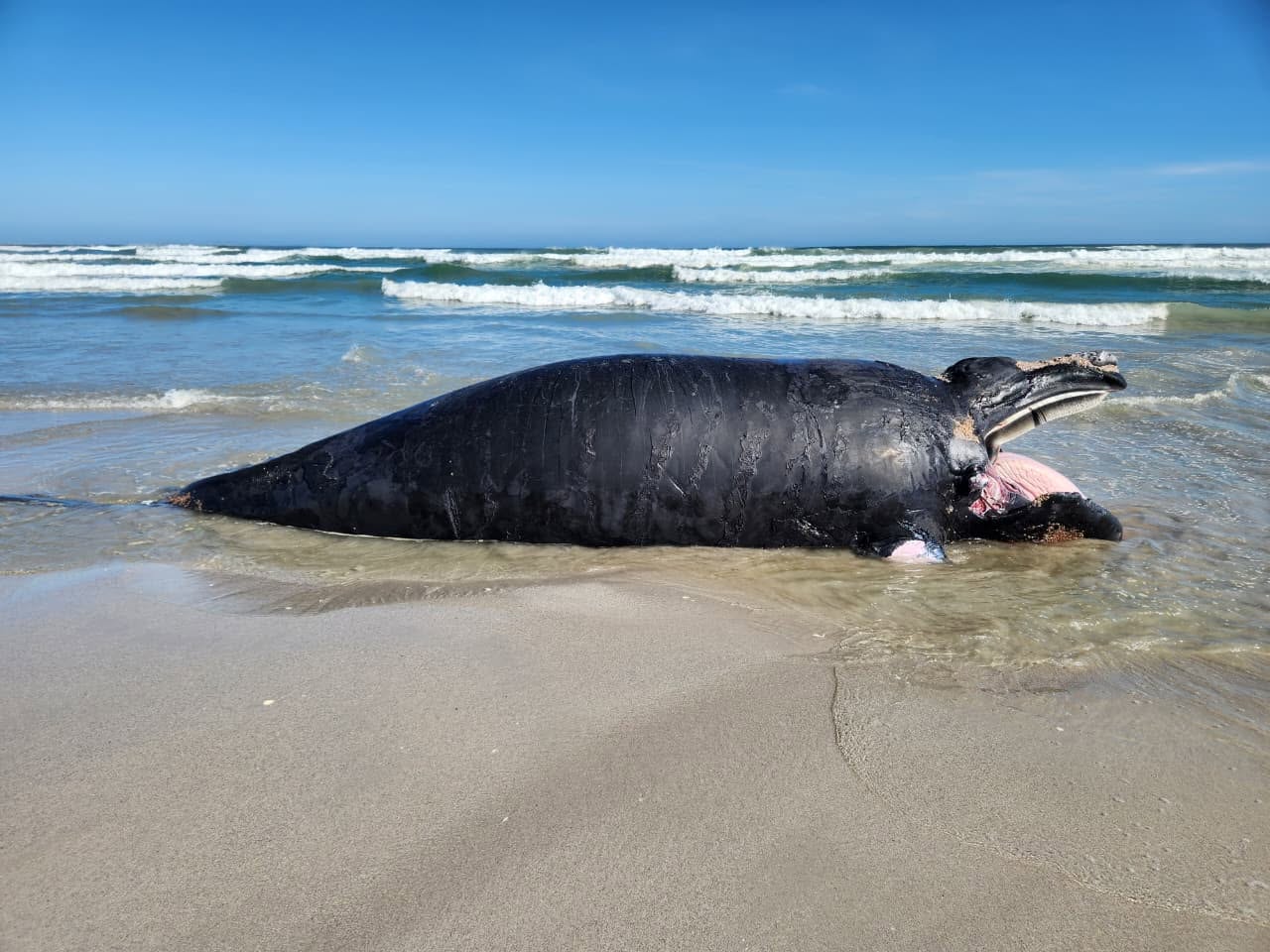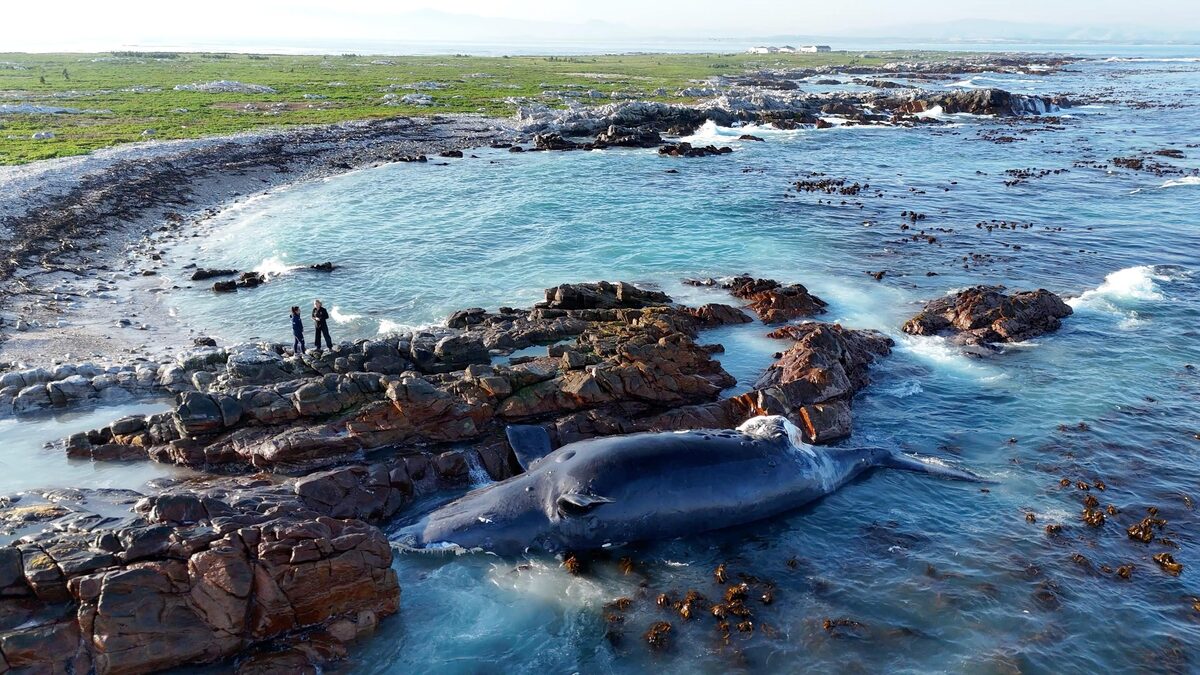

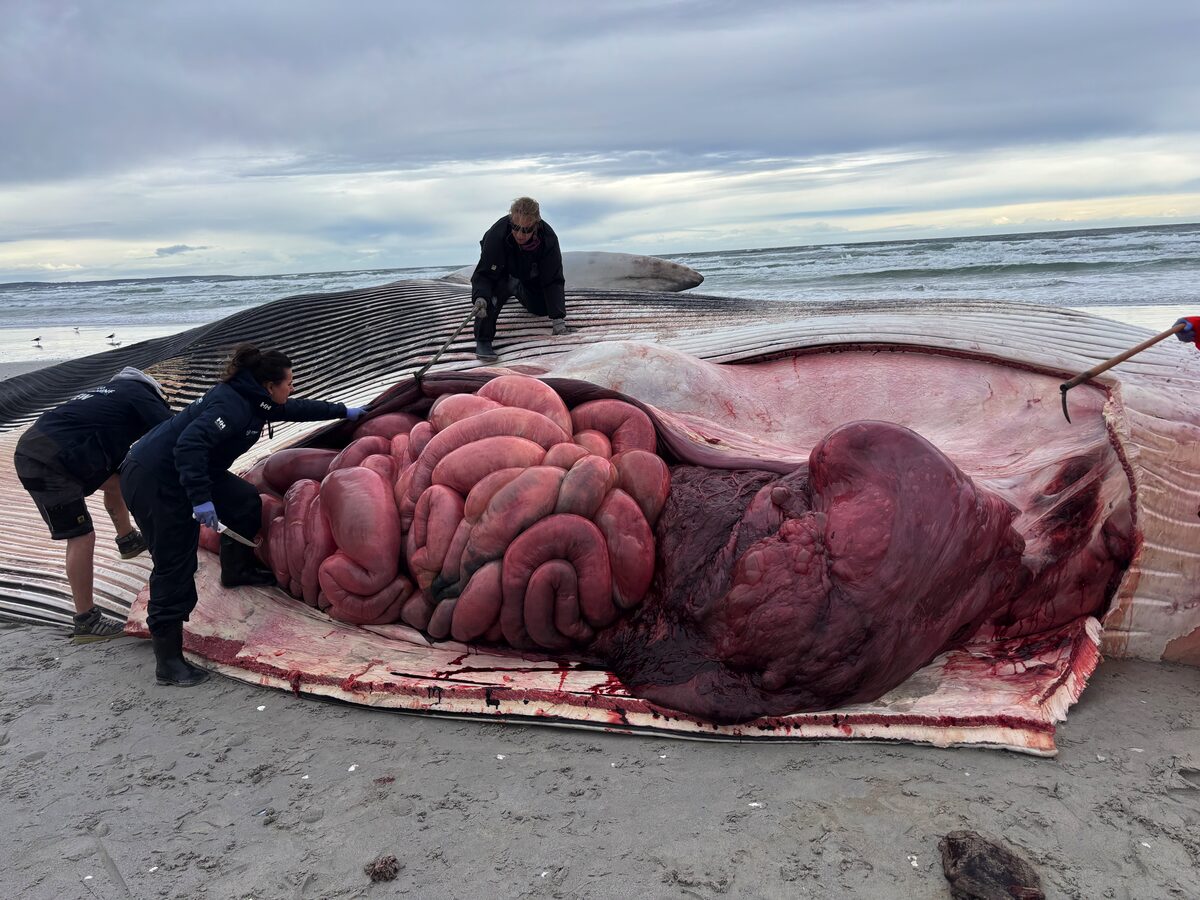
Scientists investigating the death of the rare 23m fin whale that washed ashore at Die Plaat near Gansbaai have ruled out any obvious signs of a cause of death, but say laboratory tests on tissue and rare baleen samples could still reveal what killed the vulnerable giant.
The test could also provide insight into the final chapter of one of the most valuable baleen recoveries ever recorded in the region. This is according to Dr Loraine Shuttleworth of the Dyer Island Conservation Trust (DICT).
Following initial assessment of the whale last week, the team of experts and scientists from DICT and University of Pretoria’s Mammal Research Institute (MRI) Whale Unit returned to the site to conduct a comprehensive necropsy – which is a post-morten examination conducted on an animal to determine its cause of death.
“While full necropsies are not routinely undertaken on whales of this size due to the considerable logistical challenges involved, the rarity of a fin whale stranding in the area presented a valuable scientific opportunity that warranted a detailed examination,” Shuttleworth said.
The initial attention went to investigating whether there was any evidence of vessel strikes on the whale. These could include fractures to the ribs or other signs of blunt force trauma.
The initial focus on ship strikes is currently of importance and concern after two Bryde’s whales died in the region in April.
Conflict in the Middle East led to an increase in the rerouting of commercial shipping traffic associated with vessels around South Africa and this has heightened awareness of the potential threat of ships to baleen whales.
However, following the thorough examination, there were no obvious signs or evidence of ship strikes on the whale. At the time of publication, no other clear cause of death as been identified yet.
“Additionally, the whale was a mature female [and] the examination also sought to determine whether she was carrying an unborn foetus, however, no foetus was present,” said Shuttleworth.
Meanwhile, the necropsy provided a rare chance to recover baleen plats from the whale.
Baleen serves as “a biological archive” that records information about a whale’s life while also being far more than just a feeding structure.
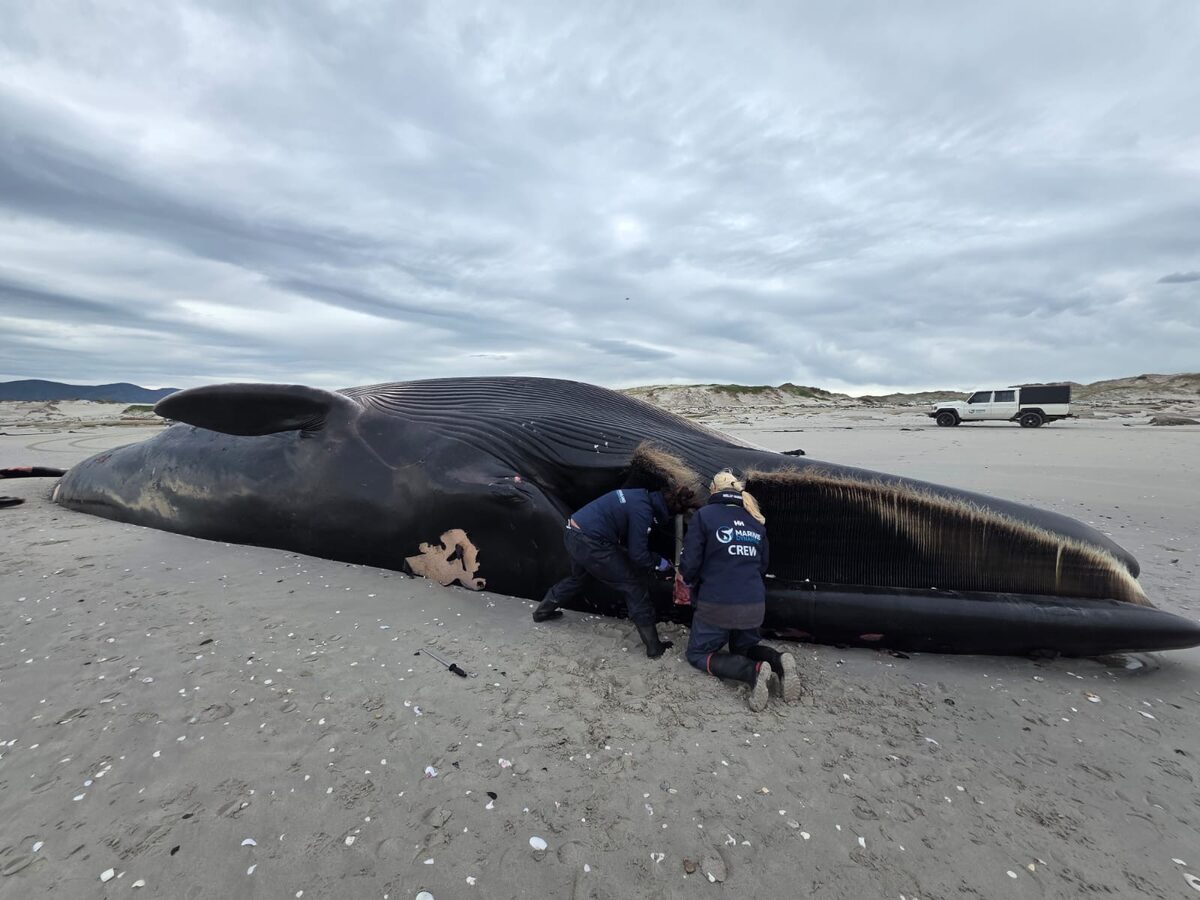
“By sampling at consistent, successive intervals along the baleen, researchers can use stable isotope (different versions of the same chemical element) analysis to investigate changes in diet, foraging areas and migration patterns through time,” explain Shuttleworth. “Endocrine analyses can further reveal aspects of the whale’s life including reproductive history or periods of physical stress associated with events such as entanglement or other significant challenges.”
However, the recovery of the baleen from stranded whales is not always possible.
Shuttleworth explained that “in most cases, the mouth remains tightly closed after death and cannot be safely opened”.
“Even when the mouth is accessible, removing the baleen plates from the gum is an extremely difficult and labour-intensive process,” she said. “The position of this whale therefore provided a rare opportunity to successfully recover these valuable samples for future research.”
Marine Dynamics and the DICT also acknowledged the significant sadness around the loss of this already vulnerable animal but also noted the significance and opportunity that strandings such as these provide for research and “opportunity to improve our understanding of these elusive giants”.
“Every sample collected and every piece of information gathered contributes to ongoing research that helps build our understanding of whale biology, health and the threats these animals face, ultimately informing their conservation for generations to come.”
- This article contains images that may affect sensitive readers.