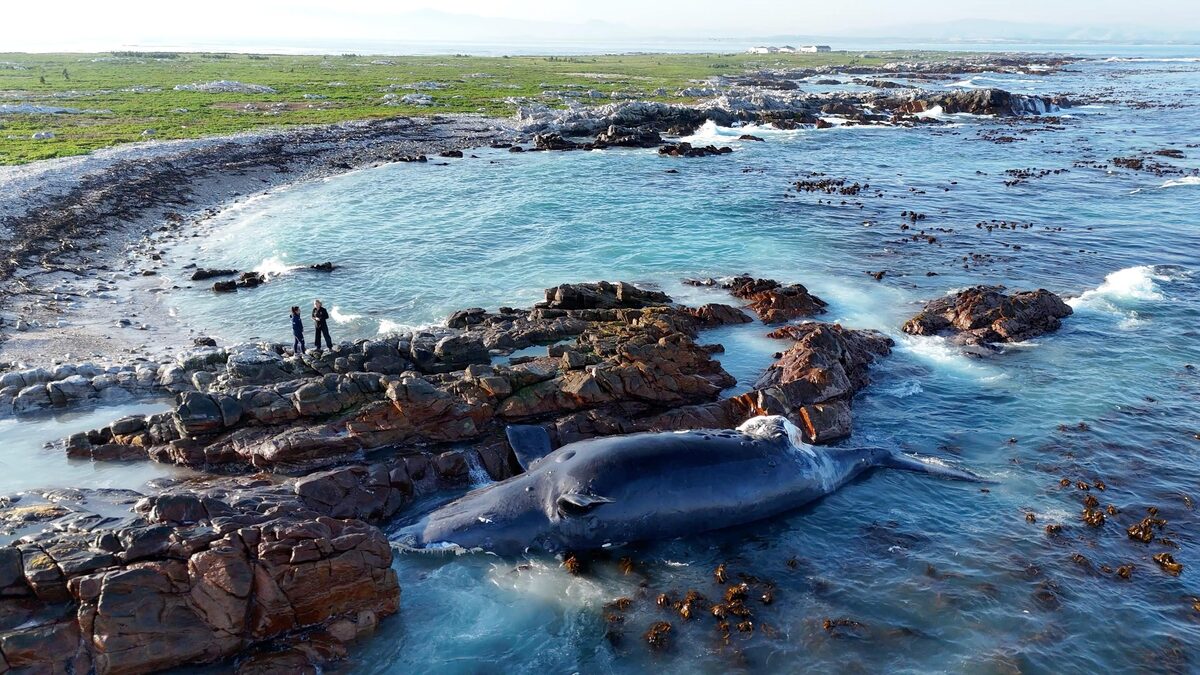

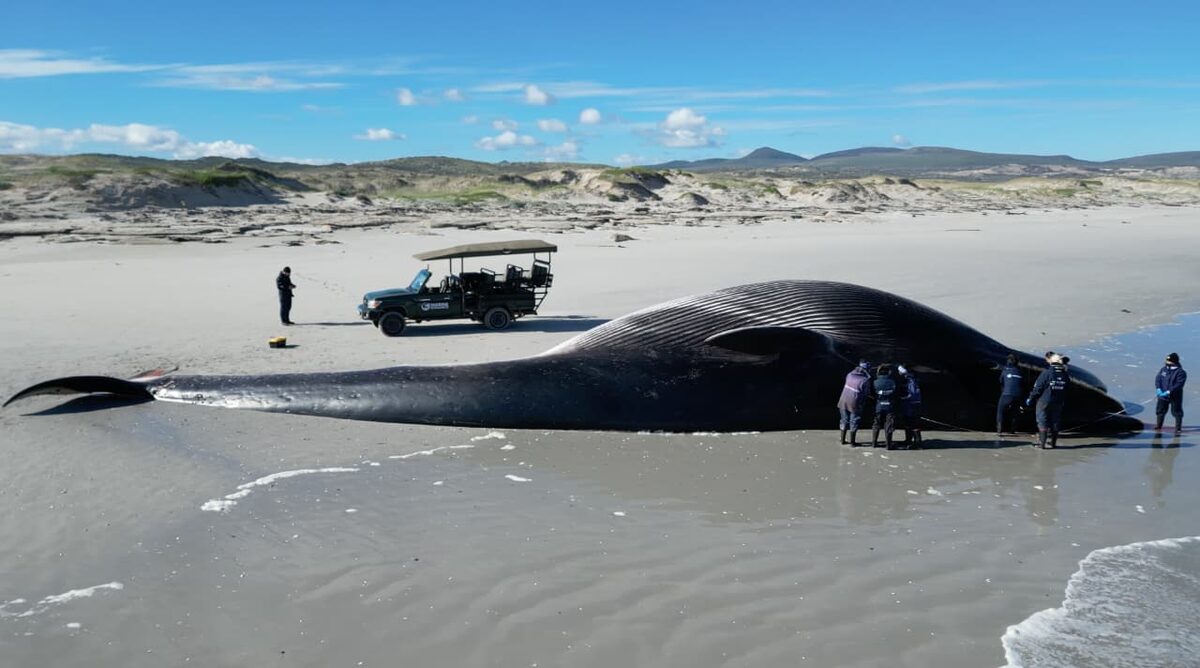
The second-largest whale species on the planet and one of the most vulnerable washed up on the shores of Die Plaat in Gansbaai, a first time experience for Wilfred Chivell, founder of the Dyer Island Conservation Trust.
On Wednesday 1 July, Jason Stafford of Ivanhoe Sea Safaris reported a sighting of a deceased female fin whale close to Gansbaai Harbour.
The fin whale – also referred to as the Balaenoptera physalus – is 23 meters long; making it the second-largest whale on earth after the blue whale. Severe global declines caused by industrial whaling has made it one of the most vulnerable species on the International Union for Conservative Nature (IUCN) red list.
What makes this sighting particularly special is that fin whales are usually found in oceans across the Northern and Southern Hemispheres where they generally inhabit offshore and deep-water environments. However, the large baleen whales move through productive temperate and cooler waters in search for food. They are also known striking asymmetry in pigmentation, particularly on the head and baleen.
“They are sleek, fast-moving whales that can reach up to 27 meters in length and weigh more than 70 tonnes,” Marine Dynamics told Hermanus Times.
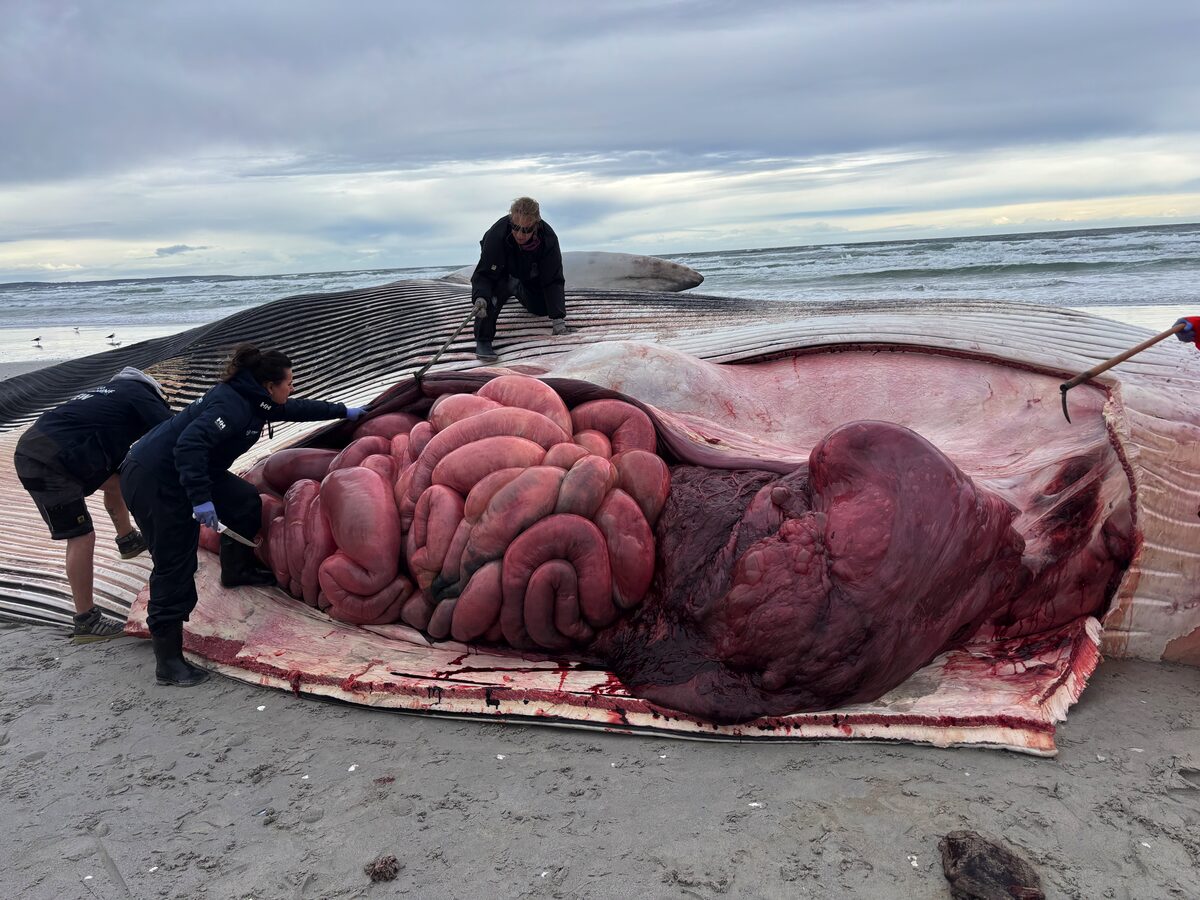
Stafford alerted the Marine Dynamics and Dyer Island Conservation team who swiftly responded to the scene and assessed the animal, documenting its stranding.
The Dyer Island Conservation Trust (DICT) research team identify the species as a fin whale based on sevral distinguishing features. “These included the asymmetrical colouring of the baleen, with only the first few baleen plates on the left side showing white outer edges, while on the right side the first 100-200 plates are white to pale in colour,” Marine Dynamics told Hermanus Times. “Fin whales can also be identified by their ventral grooves, which may extend as far as the umbilicus, as well as the amount of white visible along the right side of the throat and tail region.”
Put together, these features helped scientists from the DICT confirm that the stranded whale was a female of the fin whale species.
The Dyer Island and Marine Dynamics will be joined by scientists from the University of Pretoria Whale Unit – based in Hermanus – team will return to the site today.
More research and data collection is set to take place in efforts to better understand the circumstances surrounding the stranding.