

Despite soaring youth unemployment and the rise of artificial intelligence, a university degree continues to offer significant long-term benefits for South African graduates, according to an education expert.
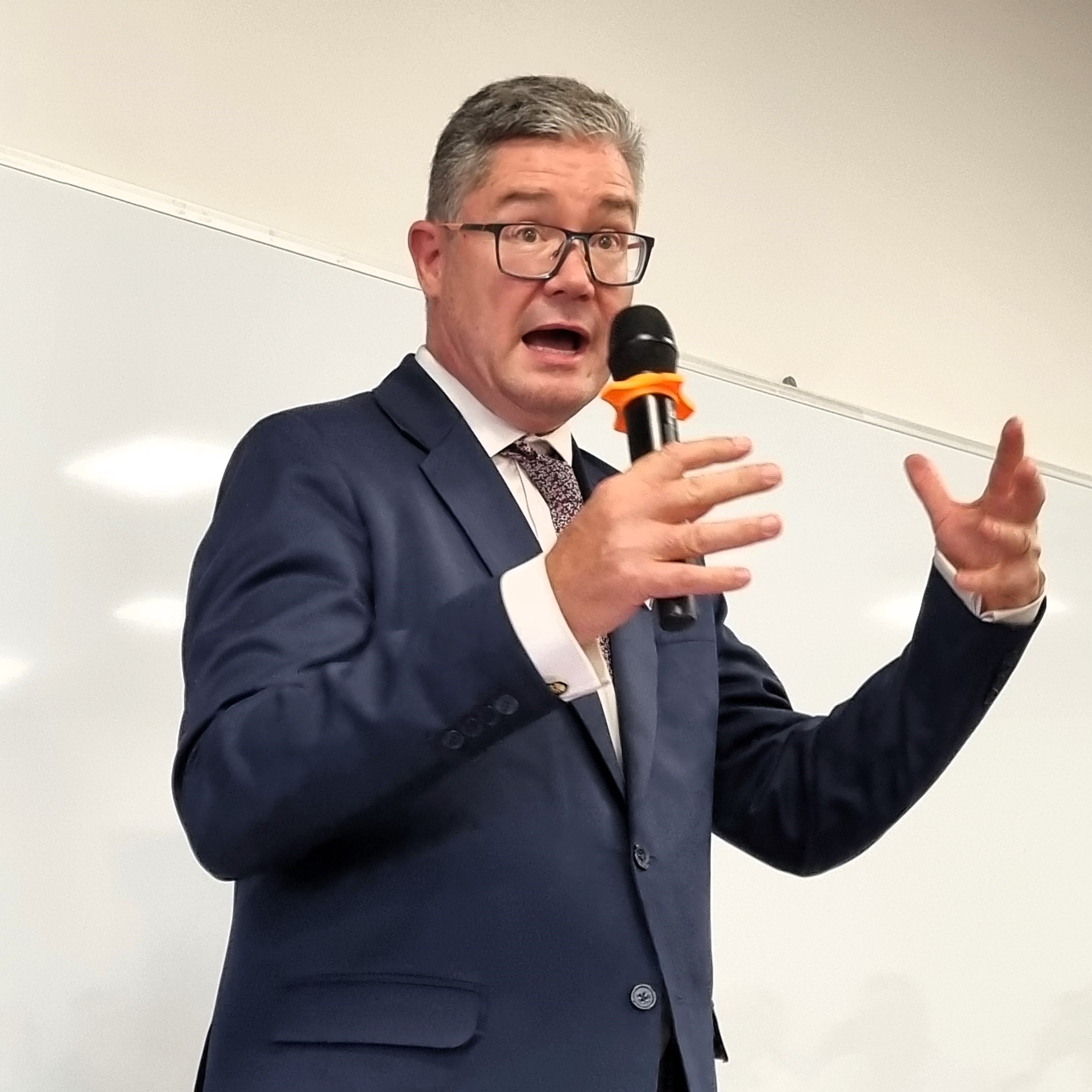
Prof Linda du Plessis, senior deputy vice-chancellor of the North-West University, argues that whilst a degree no longer guarantees immediate employment, it equips graduates with adaptability and critical thinking skills essential for navigating an uncertain job market.
“Universities do not simply train students for specific jobs. They prepare them for careers that may not yet exist,” Du Plessis said.
The comments come as young South Africans face a challenging employment landscape. Recent figures presented to the Portfolio Committee on Employment and Labour show that young people between the ages of 15 and 24 face an unemployment rate of 58,5%, whilst those aged 25 to 34 experience a rate of 38,4%.
The official unemployment rate among youth aged 15 to 34 increased from 36,9% in the first quarter of 2015 to 43,7% in the third quarter of 2025.

Statistics South Africa estimates that roughly 3.5 million of the 10.3 million young people aged 15 to 24 are not in employment, education or training. The graduate unemployment rate for persons with a bachelor’s degree or higher was reported at 10,3% in February 2026.
Du Plessis said the debate about higher education often confuses employment with employability.
“Employment refers to having a job at a specific point in time. It is external, offered by an organisation, and often shaped by economic conditions beyond an individual’s control. Employability, by contrast, is internal. It is cultivated through continuous learning, self-development and resilience,” she said.
Research shows that higher education remains one of the most powerful drivers of social mobility and economic opportunity, with university graduates tending to earn higher lifetime incomes, particularly students from lower-income families.
Fields such as teaching, nursing, social work, engineering and information technology continue to require qualified graduates, with demand often extending across the country.
According to the World Economic Forum’s Future of Jobs Report, creative and analytical thinking now rank among the most sought-after skills worldwide, followed closely by resilience, flexibility, curiosity and a commitment to lifelong learning. Nearly 40% of job-related skills are expected to change by 2030.
Du Plessis said rapid advances in artificial intelligence have intensified the need for adaptability.
“In such an environment, the ability to continuously learn and adapt becomes more valuable than any single technical skill. Interestingly, these are precisely the qualities that universities seek to cultivate in their graduates,” she said.
She noted that whilst short courses and micro-credentials may teach specific skills, they rarely develop the same depth of analytical ability and intellectual resilience as a university degree.
“A degree does not automatically open every door. What it does give a graduate is something more powerful: the ability to knock on doors that others may never reach,” Du Plessis said.
ASLO READ: Western Cape records lowest unemployment rate in South Africa



You must be logged in to post a comment.