

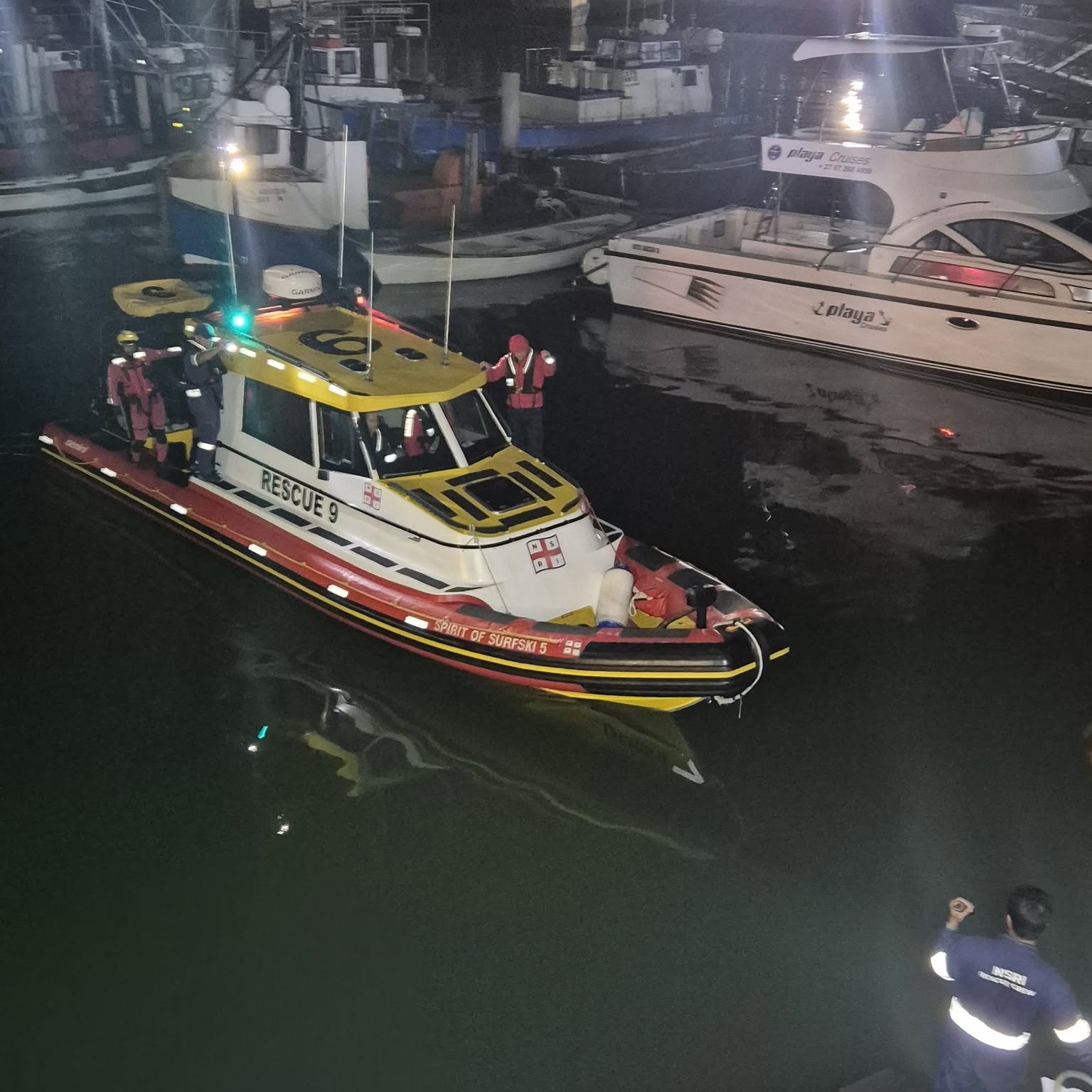
GORDON’S BAY – It had all the makings of a coastal tragedy: dense fog, fading daylight, and frantic eyewitness reports of a paraglider plunging into the freezing ocean between Dappat Se Gat and Kogelbaai in the Western Cape.
Instantly, a massive, multi-agency search operation swung into gear, with rescue boats slicing through the swells. The only problem? The “distressed pilot” wasn’t a human at all — it was a rogue cluster of escaped helium party balloons.
The dramatic incident unfolded at 17:25 on Sunday, 31 May, when sharp-eyed witnesses spotted what they thought was an aviation disaster. After a tense search in dense fog, the local paragliding association confirmed all its pilots were safe and sound.
Enter a local surfer, who casually solved the mystery: the “UFO” was nothing more than a cluster of large helium party balloons drifting into the ocean.
Shockingly, this wasn’t an isolated incident. Just a week prior, on Saturday, 23 May, the NSRI Wilderness team had to recover a similar cluster of helium balloons mistaken for a distressed paraglider. While the NSRI commended the eyewitnesses for their quick, good-intentioned reporting, scrambling emergency services for a stray party decoration is a massive drain on resources.
While mistaking a balloon for a human being in a fog bank has a certain comedic timing, South African environmental laws are not laughing. Under the National Environmental Management Act (NEMA) mass balloon releases are completely illegal.
Under NEMA Section 28, failing to avoid significant environmental pollution can land a person to a maximum fine of R10 million, up to 10 years in prison or both.
Under the Waste Act (Section 27(2), intentionally or negligently littering (or letting someone under your control do it) carries an additional fine of up to R5 million or 5 years in prison.
“Balloons Don’t Go to Heaven”
Lisa Starr of the Helderberg Ocean Awareness Movement didn’t mince words about the floating menace.
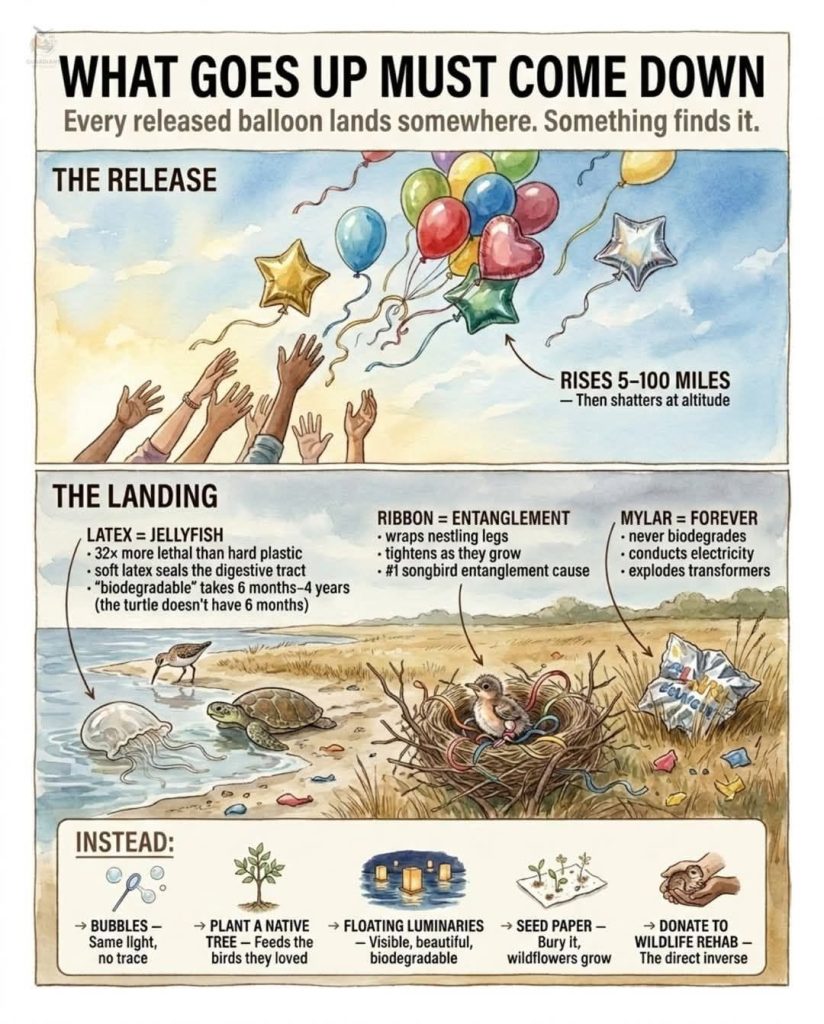
“Balloons don’t go to heaven,” Starr warns. “The negative impact of balloons on the environment is real. Even the so-called ‘environmentally friendly’ ones take four years to break down.”
Starr points out that releasing balloons is nothing short of purposeful littering. Marine life and terrestrial animals frequently mistake the deflated plastic for food or become lethally entangled in the attached strings.
But environmental impact aside, Starr points out another undeniable truth:
“You don’t need balloons in your life—they’re so kitsch!”
The NSRI is currently appealing to anyone with information regarding the helium balloons lost near Wilderness around 23 May, or Kogelbaai around 31 May, to contact the NSRI EOC at 087 094 9774.
Additionally, if you spot any of these washed-up party favors along the Kogelbaai coastline, report it so they can be disposed of properly.



You must be logged in to post a comment.