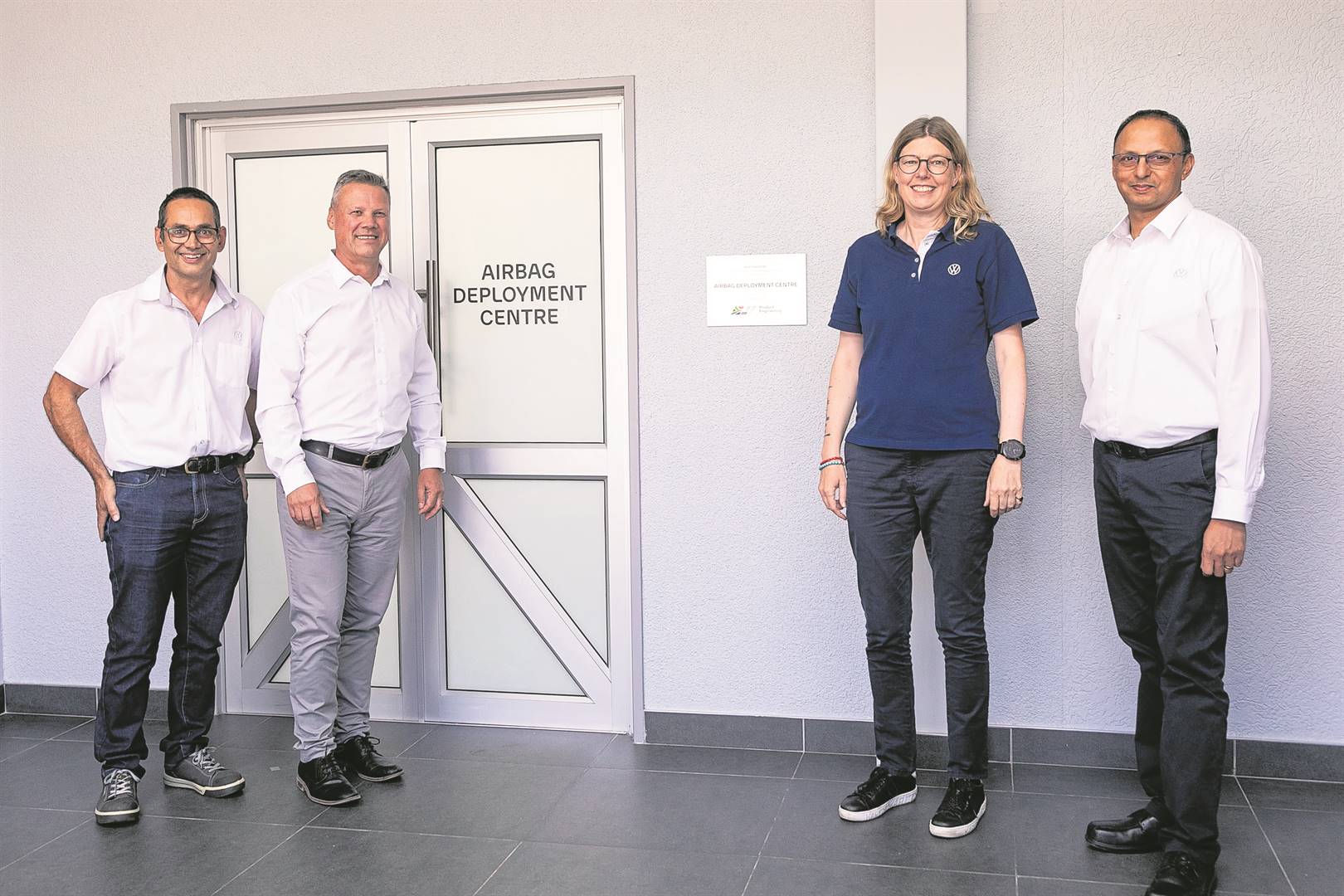
A project team across four countries collaborated to establish a new R235-million ultra-modern wax flooding facility for locally built Volkswagen Polos and Polo Vivos at the Volkswagen Group South Africa (VWSA) plant in Kariega.
The wax flooding process, which serves to protect Volkswagen vehicles from corrosion in the cavities of the vehicle body, is now performed in a building covering 5 350m² across four levels, in the plant’s former electro-coating facility. This same process is what enables Volkswagen to sell vehicles with a 12-year anti-corrosion warranty.
The facility is operating across three shifts and the plant’s daily production volume is 680 vehicles per day – though it can meet the demands of the plant’s full installed capacity of 710 vehicles per day. In fact, at its full capacity the wax flooding facility will be able to process 747 vehicles per day.
The process of wax flooding follows after the body of a vehicle has been painted, as certain cavities in the body are inaccessible during the painting process.
First the vehicle body is put on a hanger and heated to 60 degrees Celsius in a pre-heating oven, to prevent the wax from solidifying too quickly when it is injected. Next, the body is lowered onto a wax flooding frame where wax (heated to 110 degrees) is injected and flooded into the cavities. Finally, the vehicle is tipped at a 15-degree angle to allow excess wax to run off for re-use.
The wax used for the process is shipped from Germany in the form of tablets weighing 4,26 kilograms, which are melted down on site.
Using this new facility has not only allowed the VWSA plant to increase the volume of vehicles moving through the wax facility, but it also takes into consideration the environmental impact of the process.