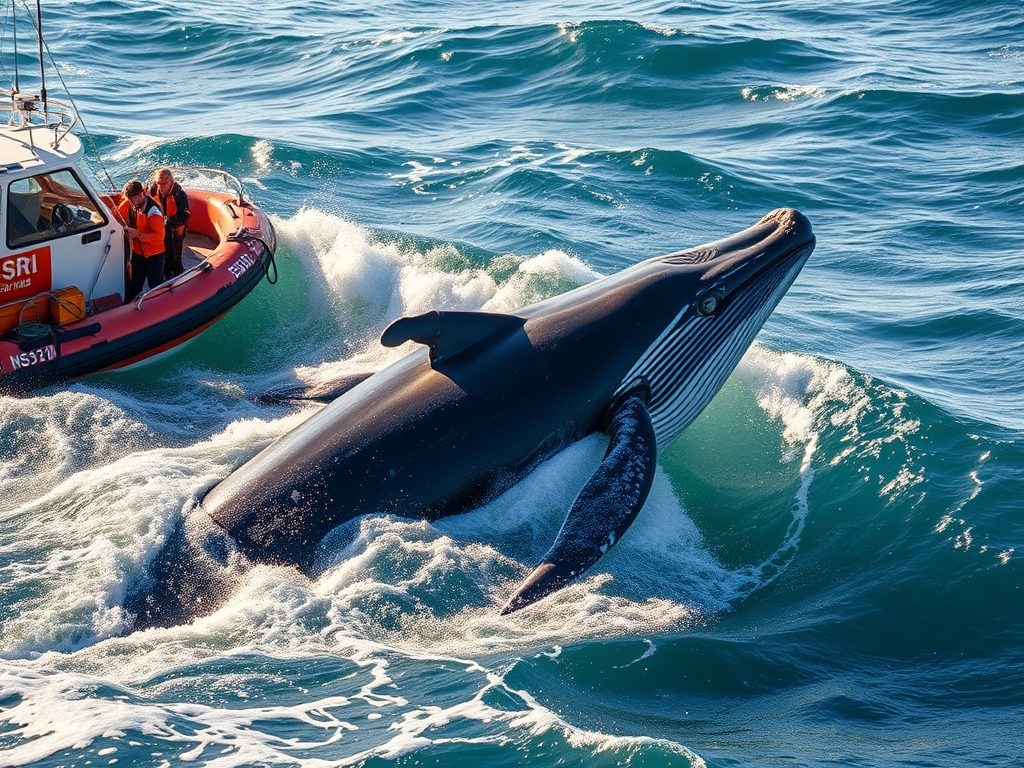
RESIDENTS of Nelson Mandela Bay were in awe when they recently spotted about 10 humpback whales in Bay waters, way earlier than expected in terms of their migration periods.
These magnificent giants, characterised by their huge white splashes in the water, made their arrival a month early, as they usually pass through Algoa Bay in June, on their migration to East Africa.
Conservationist, wildlife educator and marine safari specialist at Raggy Charters Marine Eco-Cruises, Lloyd Edwards, said that the reason for the migration is that the females need to reach these warmer waters in order to give birth to their two ton calves.
“They are born without the insulating blubber of their mothers and would simply freeze to death if they were born in the chilly 2°C water of the Southern Ocean.
“The males also need to undertake this journey, the longest in any mammal, in order to mate with the receptive females. Their gestation (pregnancy) is a full year; hence they needed to be mated within the same place that they are going to give birth the following year,” Edwards explained.
“When the calf is strong enough after being fed on the highly nutritious milk of the mother, they start the southward journey back towards the Antarctic.”
Edwards mentioned that from their 23 years of records, the latest these whales have been observed coming past Algoa Bay is the second week in January, until five years ago when this seemed to have changed. They are now very rarely observed passing here after the end of November.
“It was then a big surprise when Raggy Charters spotted at least 10 of these sub-adult humpback whales moving nervously around in the shallow waters off North End.
“We were inundated with reports from motorists on Settlers Freeway that had been spotting the animals just behind the shore break. They were in such shallow water that they stirred up the sand with their massive tails,” he added.
According to Edwards, the most likely culprit was a large male killer whale that had been spotted in the area. Killer whales are known to prey on the smaller humpbacks, but will not tangle with a fully grown adult.
He explained that the pectoral flippers of the adults, which are the largest of any whale, are used to “swat” the would-be attackers.
“A direct hit on a killer whale would mean injury and he would simply not be able to feed. In fact, any injury on this apex predator would mean the end of his genes in the gene pool,” he added.
“The humpback whales are the most energetic of all the whales that pass Algoa Bay. Their presence is often only seen by the huge white splashes that they make upon re-entering the water after a breach.
“At up to 40 tons in weight, this can indeed be quite a sight,” said Edwards.