

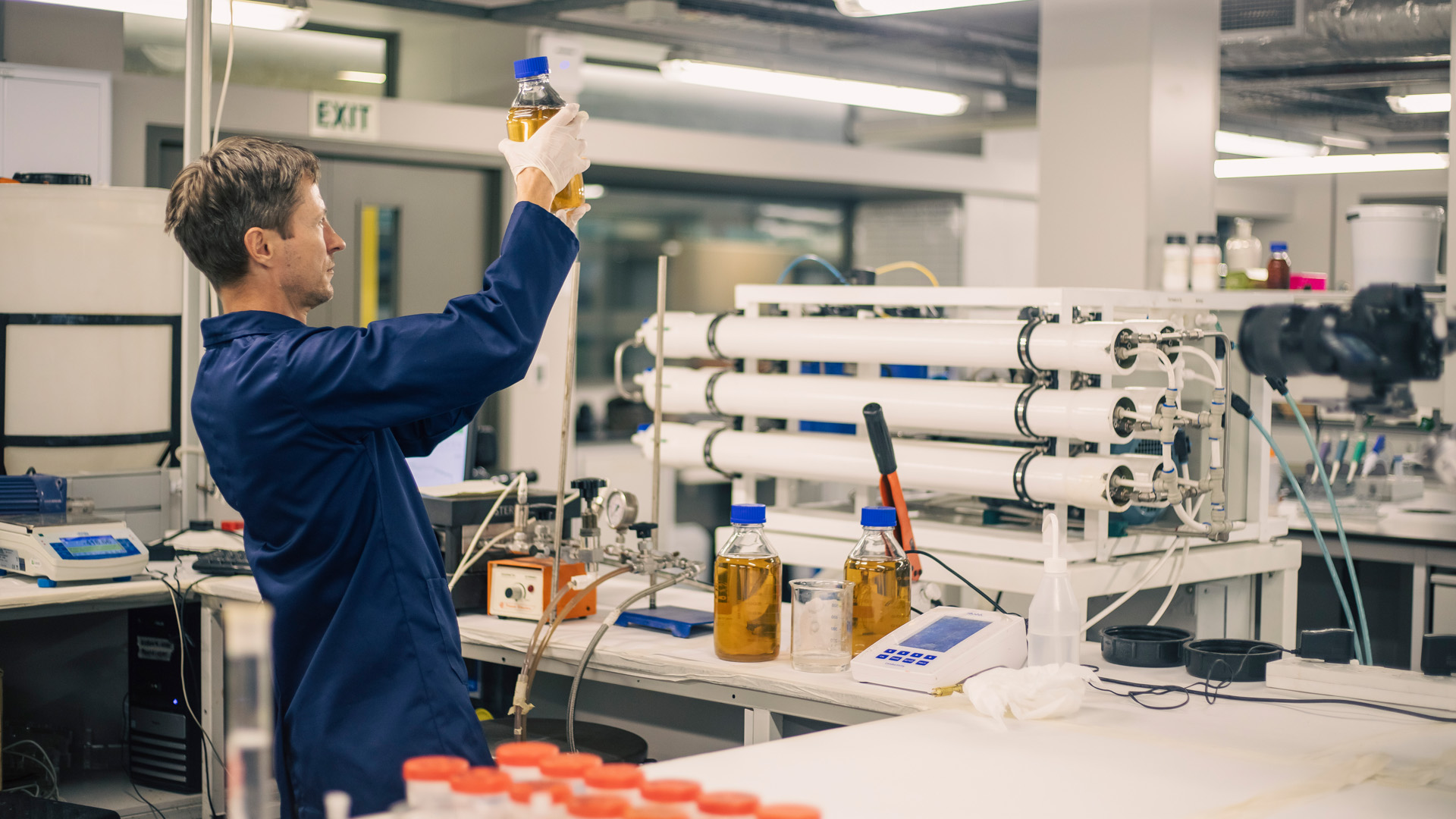
A chemical engineer from the University of Cape Town is one of four entrepreneurs selected as finalists for the 2026 Africa Prize for Engineering Innovation, the continent’s largest award dedicated to supporting engineering innovation and impactful entrepreneurship.
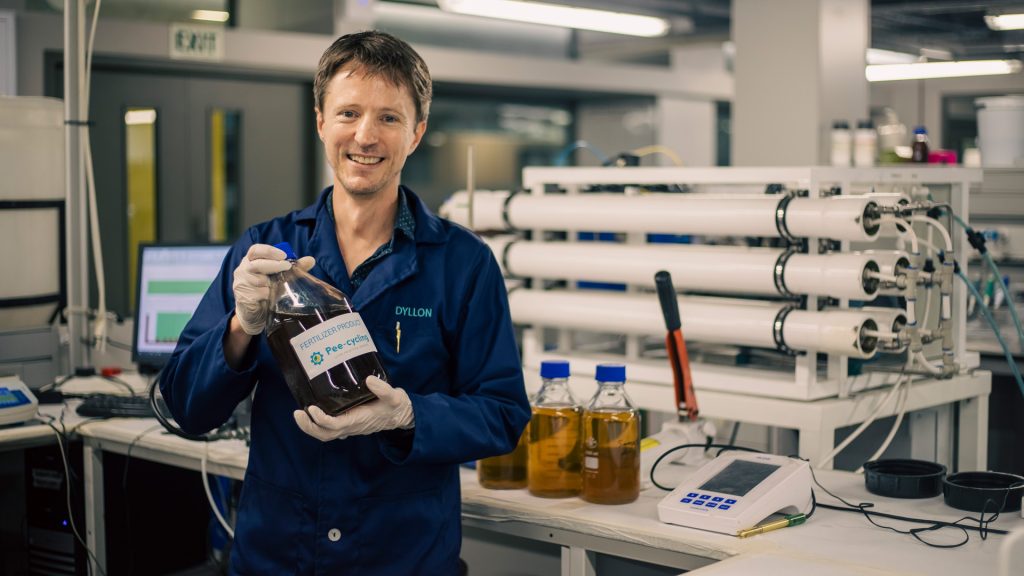
Dyllon Randall co-founded Pee-Cycling, a modular urine-to-fertiliser recovery system that conserves potable water, recovers valuable nutrients and reduces reliance on imported fertiliser. The system collects urine through purpose-built waterless urinals or no-mix toilets, stabilises it to prevent nitrogen loss, and uses pretreatment and reverse osmosis to produce concentrated, nursery-grade liquid fertiliser and clean reusable water.
Unlike evaporation-based alternatives, the system removes water without converting it to steam, significantly reducing energy requirements. A full-scale unit occupying approximately 12 to 15 square metres can process up to 3 000 litres of urine per day. Every 1 000 litres processed saves around
2 000 litres of potable water.
From pilot to real-world operation
Since joining the 2026 Africa Prize programme, Randall has moved Pee-Cycling from pilot stage into real-world operation. The system’s plant at Cape Town Stadium is now fully operational, and the project collected 3 600 litres of urine during the South Africa vs New Zealand rugby match alone.
Pee-Cycling has signed its first commercial client, Bidvest Prestige, to operate and maintain the stadium system. Delivered in partnership with Bidvest Prestige and the City of Cape Town, the project has been included in the City of Cape Town’s stadium tender for three years. Pee-Cycling also won first place at the FNB Afri GreenPitch Challenge 2026, organised by GreenCape.
The context
Across Africa and South Africa, millions face mounting water scarcity and lack adequate sanitation, while farmers contend with rising fertiliser costs. Yet water is routinely used to flush away human waste – including urine – that could instead be recycled to support local food production if isolated and converted into safe fertiliser. Pee-Cycling directly addresses this challenge.
Three other finalists
Randall is joined on the shortlist by three other entrepreneurs from Kenya and Niger:
Naom Monari (Kenya) – A former student nurse who developed Renal Roads, a fully equipped mobile dialysis clinic built inside a repurposed 40-foot shipping container. The unit visits three communities each week and can provide up to 400 dialysis sessions per month, with treatment reimbursed through Kenya’s national health insurance. Renal Roads has partnered with Nipro Medical and received funding from the World Diabetes Foundation.
Alice Muhuhu (Kenya) – A medical doctor and entrepreneur who developed MoyoECG, a portable, AI-enabled cardiac monitoring platform that can recognise patterns associated with more than 50 cardiac conditions. Early pilots have reduced ECG interpretation time from around 30 minutes to under five minutes. MoyoECG was previously named the Qualcomm Make in Africa winner.
Mamane Kabirou Ousseini (Niger) – The first engineer selected from Niger for the Africa Prize. He founded Likita Care, a locally manufactured integrated medical monitoring platform combining connected hardware, clinical software and digital fabrication. More than 70 monitoring units have been deployed across five medical centres in Niger, with the company now planning a manufacturing facility and exploring expansion into neighbouring countries.
The final
The four finalists will pitch to a panel of judges at the 2026 Africa Prize Final, hosted by former Springbok rugby player Bryan Habana on 28 October at NH Johannesburg Sandton. One winner will receive the £50 000 (about R1,08 million) Africa Prize, with the remaining three finalists each receiving £10 000 (about R216 000).
The event, supported by Anglo American, will feature an address by Lisa Weedon, acting high commissioner for the United Kingdom to South Africa. The remaining shortlisted innovators will also compete for the £5 000 (about R108 000) One-to-Watch Award, decided by audience vote.
Rebecca Enonchong FREng, chair of the Africa Prize judging panel, said: “This year’s shortlist is a strong demonstration of the extraordinary depth of engineering talent across the continent. Each of their innovations provide solutions to very different challenges, but show what is possible when engineering is shaped by a clear understanding of a given problem in its local context.”
Since launching in 2014, the Africa Prize has supported more than 180 businesses from 24 countries. Today, 85% of alumni are generating revenue and together they have secured more than $34 million (about R554 million) in third-party grants and equity funding.
The Africa Prize is delivered by the Royal Academy of Engineering and part-funded by the UK’s Department for Business, Innovation, Science and Trade.
ALSO READ: Cape Town secures $1 million global prize for informal settlement waste management




You must be logged in to post a comment.