

The University of the Western Cape’s African Universities Hub for Human Rights recently hosted its third Summer School, bringing together 26 participants from 17 African countries to rethink how human rights defenders work in a rapidly changing political, economic and technological landscape.
The five-day programme, themed “Rethinking Human Rights and Democracy: Contestation, Crisis, and Possibility“, ran from 28 September to 2 October at UWC. Participants included activists and early-career researchers working on environmental rights, women’s rights, access to health and broader human rights and democracy concerns.
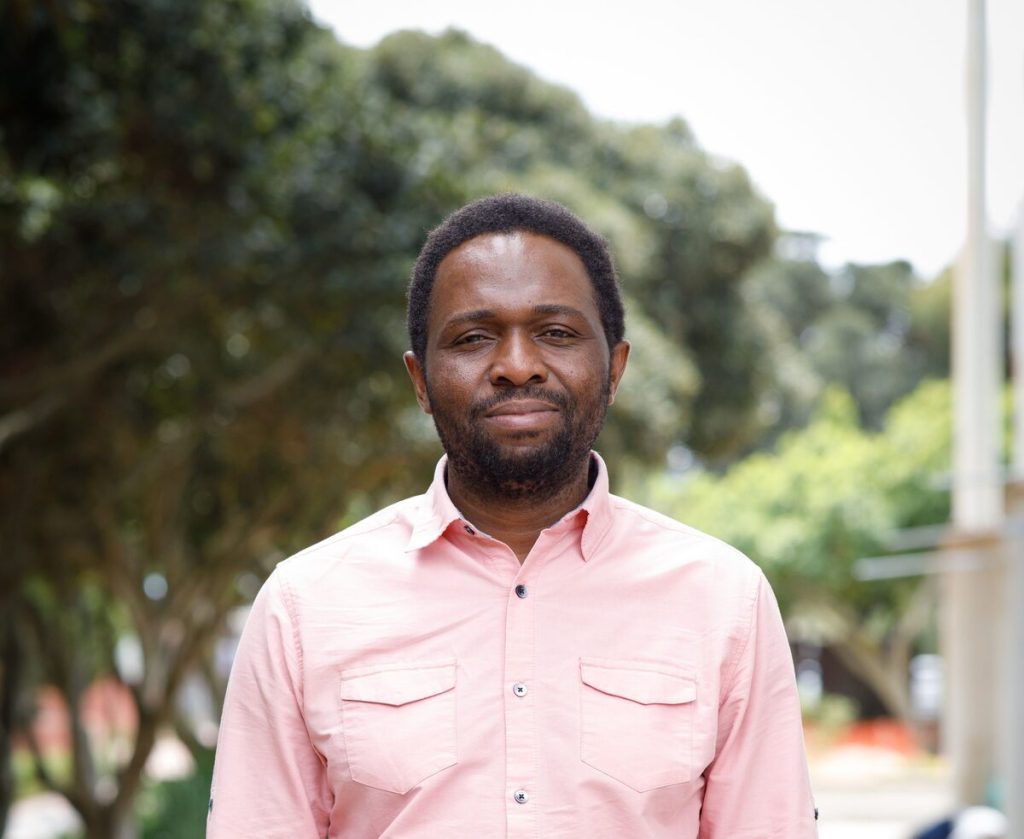
Dr Mmeli Dube, programme lead of the African Universities Hub for Human Rights at UWC’s Politics and Urban Governance Research Group (PUG), says human rights and democracy are increasingly contested. “Countries defend them selectively while economic interests often take priority over people’s rights,” he says.
Governments restrict freedoms in the name of public safety, while digital surveillance and authoritarianism make it harder to organise and speak out. Waning international support for human rights defenders (HRDs) worsens the challenges, Dube says.
ALSO READ: UWC positions itself on the forefront of digital transformation
A contested space
Human rights defenders, who actively and peacefully work to protect and promote the rights and freedoms of others, are increasingly dismissed as Western puppets. Some anti-rights movements argue that human rights are incompatible with African cultural and religious values.
Professor Brian Raftopoulos drew attention to another dimension of this contest in his lecture. Right-wing movements, he noted, are borrowing ideas associated with Antonio Gramsci about how civil society shapes public opinion, and using civil society to promote their own political visions and influence what people think and value.
Dube says this matters because the struggle over human rights and democracy is also a struggle over public ideas and values, and over whose interests they serve. Human rights defenders must therefore engage not only in defending rights but also in challenging narratives that undermine them.
Digital threats
Technology presents a further tension, serving as both an important tool for organising and a means of surveillance and targeting activists. A presentation by Paul Munatsi of Digital Society Africa explored the political economy of surveillance.
Corporations collect and sell defenders’ personal data, while governments can use that data to monitor, control or harm them. This highlighted the need for HRDs to have the tools and skills not only to work effectively but also to protect themselves and work safely, Dube says.
Rethinking from within
Within the human rights and democracy movements, defenders are reflecting on whether the concepts and approaches they have inherited remain adequate to the challenges they face.
“Human rights defenders need to sharpen their ability to read the moment, rethink their approaches, remain effective, and do this work safely and sustainably,” says Dube. This was the starting point for the Summer School.
The programme was designed around a central question: what does it mean to be a human rights defender in Africa at a time when the political, economic and technological conditions for human rights and democracy are changing so rapidly? Rather than focusing only on immediate challenges, it created space to examine the forces shaping those challenges, question assumptions underlying dominant approaches and think about what might need to change.
Three interconnected lectures by leading scholars combined political economy and decolonial thinking. Raftopoulos addressed the global power dynamics shaping human rights defending, Professor Joel Modiri examined the knowledge systems underpinning dominant approaches, and Professor Morgan Ndlovu positioned HRDs as thinkers and producers of knowledge who can shape African human rights discourse and activist practice.
ALSO READ: Study reveals how SA parents talk to children about apartheid
From analysis to practice
The School connected these discussions to practice through training on storytelling for HRDs, led by Professor Fiona Anciano and Babongile Bidla; digitalisation and the risks facing human rights defenders, including digital tools and security, led by Munatsi; and wellbeing and self-care, facilitated by Arise Family.
The aim was to bridge analysis and practice, because effective human rights defence requires both an understanding of the structures that shape the work and practical strategies for navigating them, Dube says.
Solidarity across borders
A session explored ways to build relationships and strengthen solidarity across movements and countries. Economic crises, anti-immigration laws, growing hostility towards migrants, and the conflicts and risks facing HRDs make solidarity harder to sustain.
Yet authoritarian governments are increasingly cooperating, sharing surveillance technologies and adopting similar laws to restrict civic space. As states strengthen these cross-border connections, activists need to work more closely across countries, Dube says, echoing Modiri’s call to bring different communities and struggles together to challenge the systems that sustain inequality and oppression.
Building on experience
The School represents a significant step forward for the Africa Hub, building on the experience of the first two editions in 2024 and 2025 to combine theoretical and practical knowledge with practical skills, reflection, peer learning and solidarity.
The discussions raise a broader question for universities, funders and human rights defenders on how they can work together to ensure that HRDs have not only the resources and protection they need but also the space to question established approaches, produce knowledge and shape the future of human rights and democracy in Africa.
ALSO READ: From stage dreams to UWC chemistry professor: a Khayelitsha scientist’s journey


You must be logged in to post a comment.