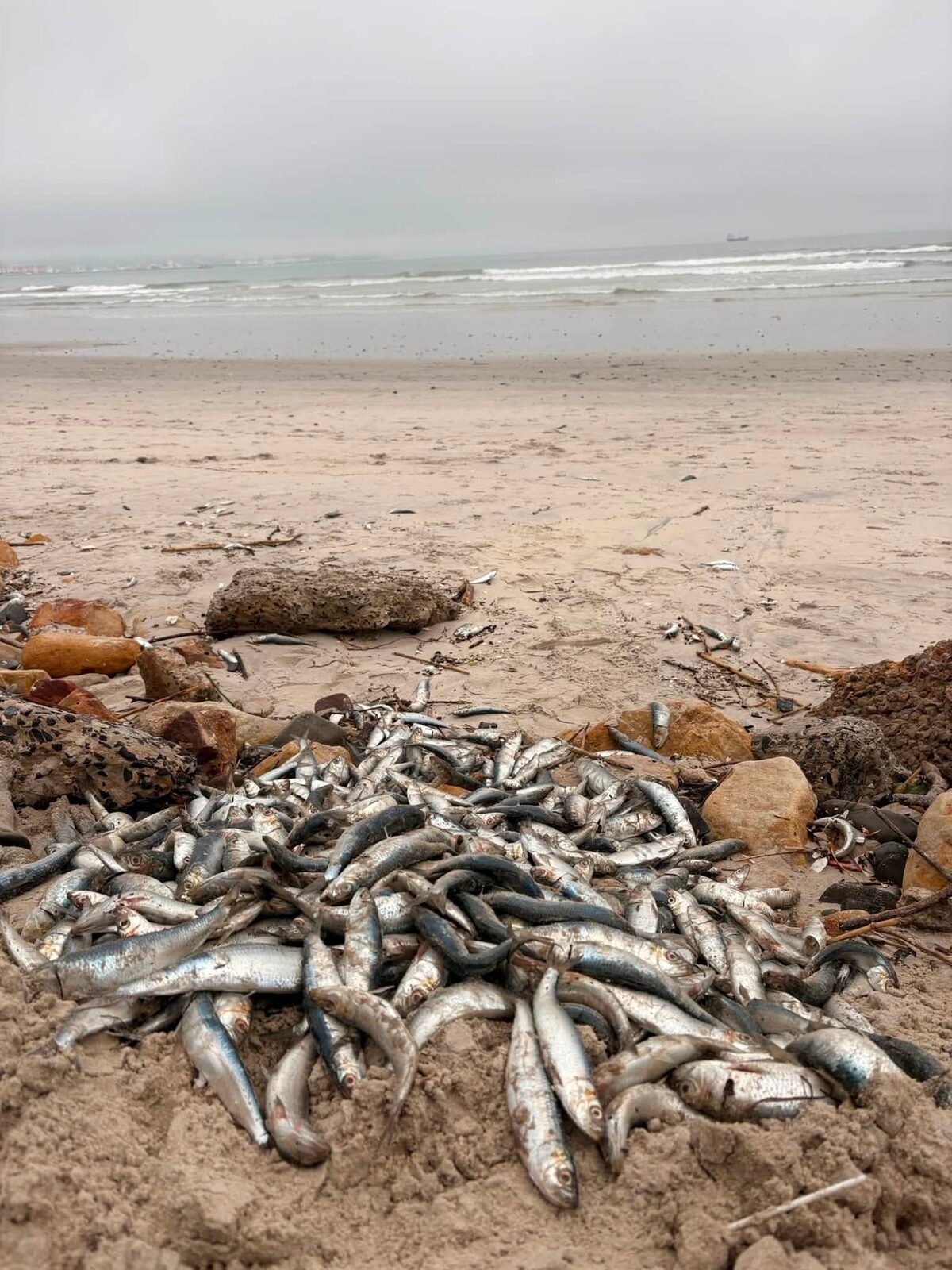

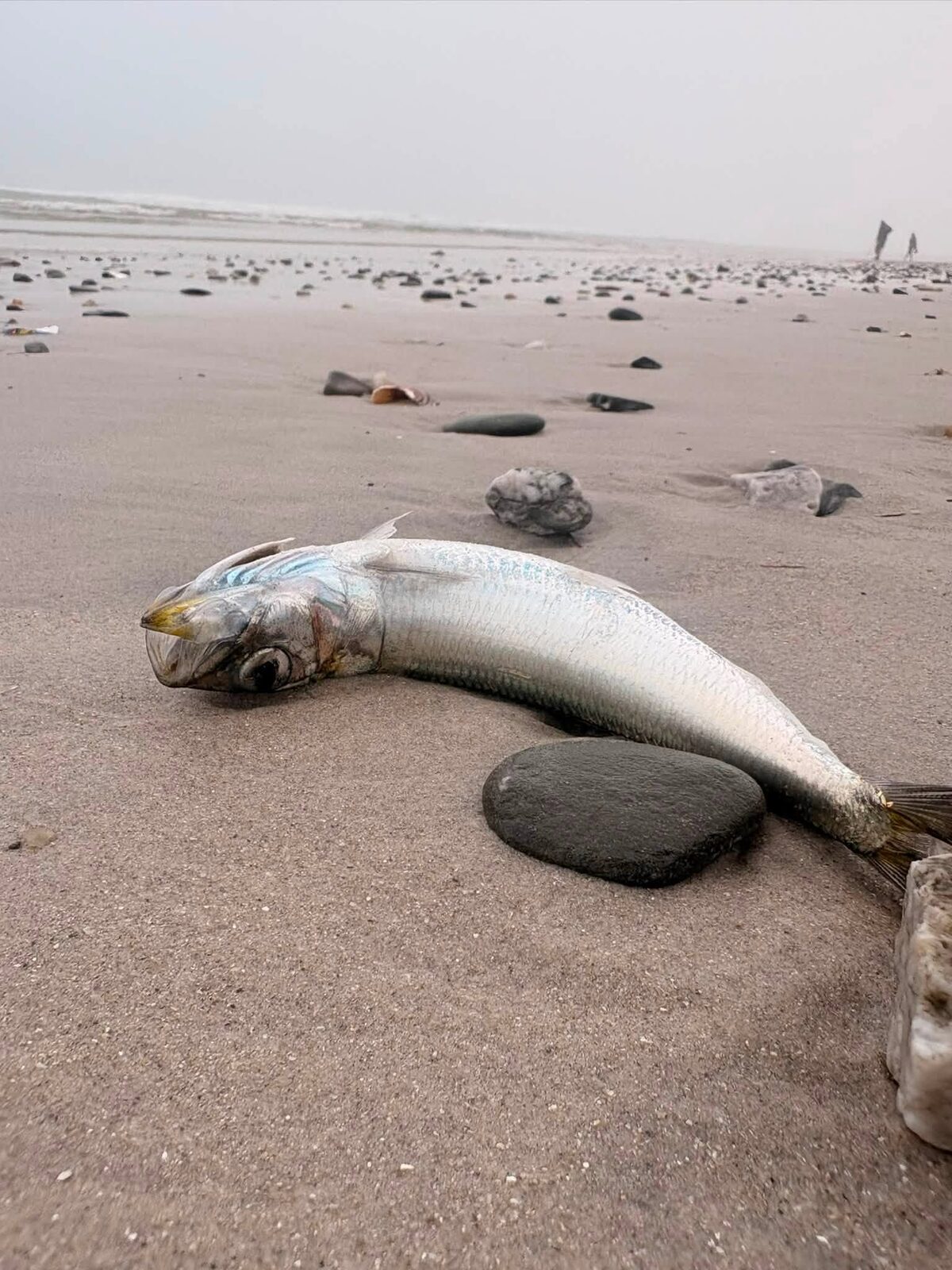
The City of Cape Town has begun the clean-up and removal of large numbers of dead sardines washing ashore along the coastline, but residents in Melkbosstrand, Bloubergstrand and Milnerton Lagoon Beach are still reporting sightings of the fish.
TygerBurger visited several beaches and found some dead sardines still scattered along the shoreline, weeks after the mass die-off first became apparent.
The City’s Urban Waste Management Cleansing Department says they are currently working to remove the fish that have washed ashore between Silwerstroomstrand and Milnerton.
Dead and dying sardines have also been reported across a much wider area, stretching from Saldanha Bay on the West Coast to Cape Agulhas on the south coast.
Clean-up faces disposal delay
The City said the clean-up has been slightly delayed because its disposal department had to request an exemption to allow the dead fish to be disposed of at Vissershok Landfill.
The fish have been designated as possibly infected, requiring the necessary approval before they can be disposed of at the landfill.
The exemption request is being processed and has been escalated to the Minister of Forestry, Fisheries and the Environment, David Maynier, because of the urgency of the matter.
The City said it was making every effort to remove the fish as quickly as possible.
Deputy Mayor and Mayco member for spatial planning and environment, Eddie Andrews, said the dead fish were not considered a health risk to residents, apart from the nuisance caused by the smell.
Residents have, however, been urged not to collect the fish.
“While the fish pose no risk to anyone other than the nuisance factor related to the smell, we ask residents to please refrain from collecting the fish,” Andrews said.
He also urged dog owners to prevent their pets from accessing the dead fish on the beaches.
Virus found in sardines
The Department of Forestry, Fisheries and the Environment (DFFE) has confirmed that diagnostic testing detected genetic material from pilchard herpesvirus (PHV) in sampled sardines collected from various affected beaches.
However, scientists are still investigating what role the virus played in the mass mortality.
The DFFE has established an urgent task team involving the department, the fishing industry and other stakeholders to investigate the cause of the die-off.
The investigation will examine the possible role of PHV, environmental conditions and other factors that may have contributed to the deaths.
The department is also expanding disease surveillance along the West, South and East coasts while further disease, pathology and environmental investigations continue.
Cause of die-off remains unclear
Although PHV has been detected in the fish, experts have cautioned that its presence does not necessarily mean it was the sole cause of the deaths.
Scientists and marine experts are investigating whether environmental stress may have contributed to or accelerated the mortality. Possible factors being considered include harmful algal blooms, low oxygen levels and unusual ocean conditions.
Testing has ruled out paralytic toxins associated with algal blooms in Saldanha Bay. These toxins can cause serious illness in people who consume contaminated shellfish, but they were not detected in the sardines tested.
The DFFE has also said there is currently no evidence that PHV infects humans or other animals.
Food safety concerns addressed
The department has stressed that the detection of PHV genetic material does not mean healthy sardines caught commercially or canned sardine products are unsafe.
It also said the finding does not justify a general suspension of fishing or canning, with normal monitoring and food-safety controls expected to continue.
The impact of the die-off on the sardine population will be assessed further.
The DFFE’s routine hydroacoustic biomass survey in October and November will provide the first opportunity to assess the possible effect on sardine stocks.
Beaches still seeing sardines
While the clean-up continues, residents along the affected coastline remain concerned about the fish still washing ashore.
During TygerBurger’s visit to Melkbosstrand, Bloubergstrand and Milnerton Lagoon Beach, dead sardines were still visible in some areas.
The continuing sightings highlight the scale of the die-off and the challenge facing authorities as they work to remove the fish from the coastline.
The DFFE task team will continue its investigations, with further information expected as scientific testing and monitoring progress.
For now, authorities are urging the public to avoid collecting the dead fish and to keep dogs away from them while the clean-up and investigation continue.
ALSO READ: Sardine die-off not linked to Milnerton Lagoon, claims City