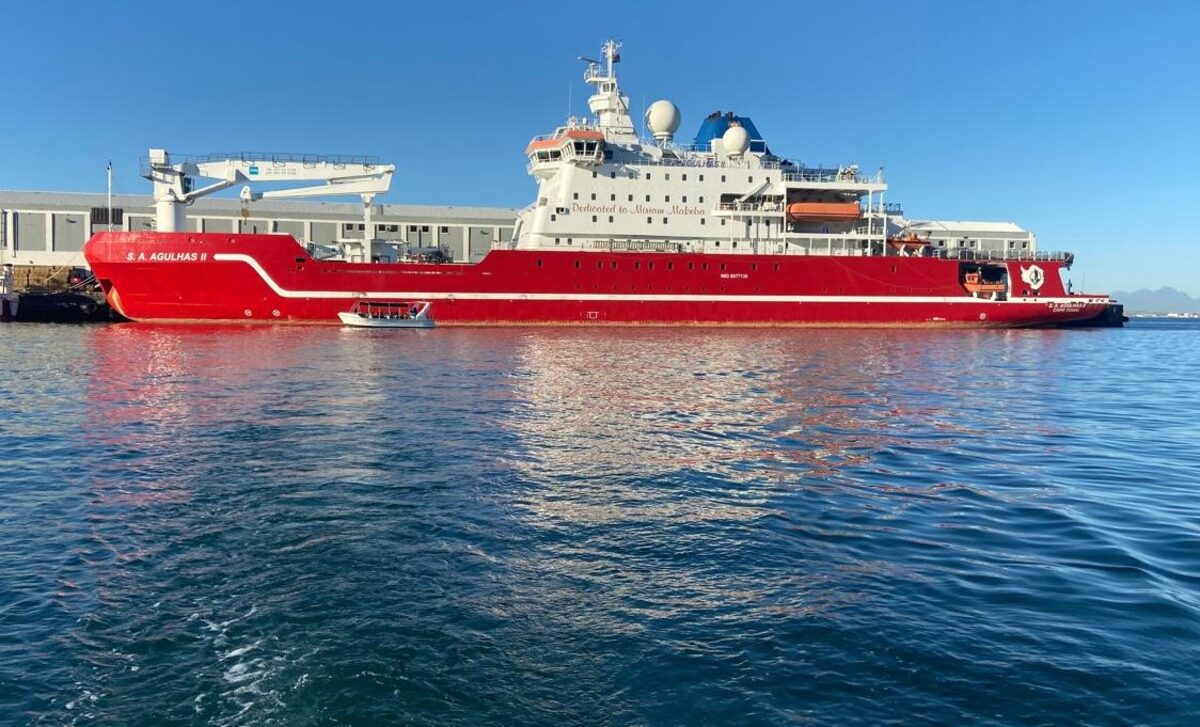

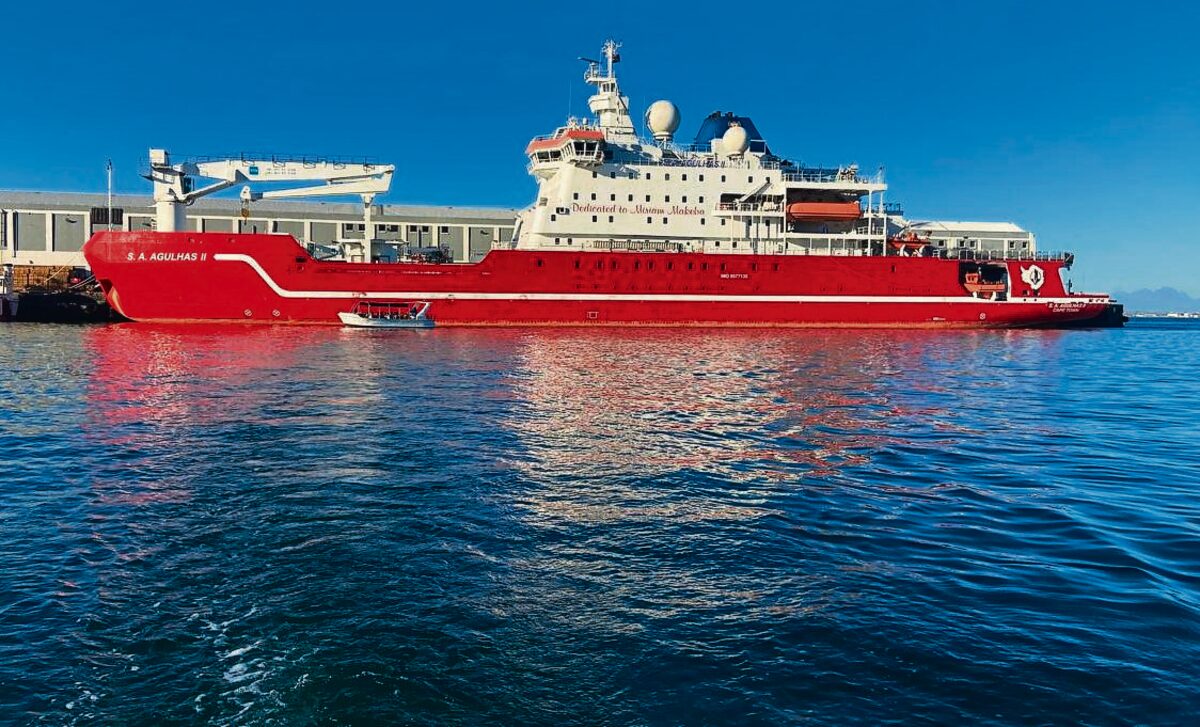
After months of uncertainty over an emergency evacuation and a shortage of specialised polar diesel the SA Agulhas II has finally set sail from Cape Town for Marion Island, marking the return of South Africa’s scientific research team to the remote sub-Antarctic island.
The vessel is carrying the 83rd Marion Island Overwintering Team, known as M83, which comprises about 20 scientists, researchers and specialists who will spend the next eight months continuing South Africa’s research programmes on the island.
The voyage follows the temporary closure of the Marion Island research base at the end of May after the annual resupply and team rotation mission was disrupted by a shortage of polar diesel.
Minister of Forestry, Fisheries and the Environment David Maynier was due to lead the official send-off of the SA Agulhas II on Monday 3 August, as the vessel prepared to resume the mission.
Maynier said the department had worked to ensure the team could return to Marion Island after they were evacuated earlier this year.
“The department has pulled out all the stops to ensure that our team gets back to Marion Island after being evacuated earlier this year because of a shortage of polar diesel,” he said.
“Of course, we’ll have our scientists returning, about 20 scientists, who will be contributing to world-class research programmes.”
Fuel crisis forced evacuation
The return of the team comes after the previous Marion Island research base was temporarily closed following an increasingly difficult fuel situation. Nova News previously reported that the SA Agulhas II was initially expected to leave Cape Town earlier in the year to relieve researchers who had been stationed on Marion Island since April 2025.
However, the mission was delayed after the vessel only received a shipment of the specialised polar diesel required for Antarctic and sub-Antarctic operations on 1 May.
The Department of Forestry, Fisheries and the Environment attributed the delay primarily to a global scarcity of fuel products linked to geopolitical developments in the Middle East.
At the time, the research base had enough polar diesel reserves to last until around 20 May, while food supplies were expected to last for approximately two months.
Backup petrol generators and nine stocked research huts were also available across the island to support emergency requirements if necessary.
The newly delivered polar diesel also had to undergo testing and mixing to ensure it would not crystallise or freeze in the extreme cold conditions experienced in the region.
The fuel crisis ultimately led to the evacuation of personnel from the island and the temporary closure of the research base, putting the annual handover of researchers on hold.
M83 team resumes research
With the SA Agulhas II now under way, the M83 team will take over the next phase of the island’s research programme.
The team includes members from the Department of Forestry, Fisheries and the Environment, the South African Weather Service, the South African National Space Agency, the South African Polar Research Infrastructure and BirdLife South Africa’s Mouse-Free Marion Project.
Their work will contribute to South Africa’s internationally respected scientific programmes in the Southern Ocean, covering environmental, meteorological and wildlife research.
Five-day journey to Marion
Marion Island, situated about 1 920km southeast of Cape Town, is an uninhabited, rocky island covering approximately 290 square kilometres. Despite its remote location, it is an important base for long-term environmental and meteorological research.
The journey from Cape Town to Marion Island takes about five days.
For the M83 team, the voyage marks the long-awaited return to the island and the resumption of research after a challenging period that saw the previous team evacuated and the research base temporarily closed.
The SA Agulhas II’s departure now puts the annual overwintering programme back on course, with the new team set to spend the coming months carrying out research in one of South Africa’s most remote scientific outposts.
ALSO READ: Fuel shortage delays relief mission to Marion Island