
CAPE TOWN – Despite being preventable and curable, tuberculosis (TB) continues to place a significant burden on healthcare systems in low-resource settings in South Africa.
One of the major challenges in the fight against the disease is effective detection. Of the estimated 10.7 million new cases of TB each year, around 2.5 million people remain undiagnosed. This is partly because current diagnostic tools are often too expensive, laboratory-dependent or difficult to deploy at the point of care.
A new research project is set to improve tuberculosis (TB) detection in settings with limited healthcare access.
The project, coordinated by Stellenbosch University, will develop and validate a novel non-sputum-based diagnostic solution that combines AI-powered chest X-ray analysis with a simple fingerstick blood test.
The new international research project, AddiCAD, was officially launched in May 2026 with R46 million in funding from the Global Health European and Developing Countries Clinical Trials Partnership 3.
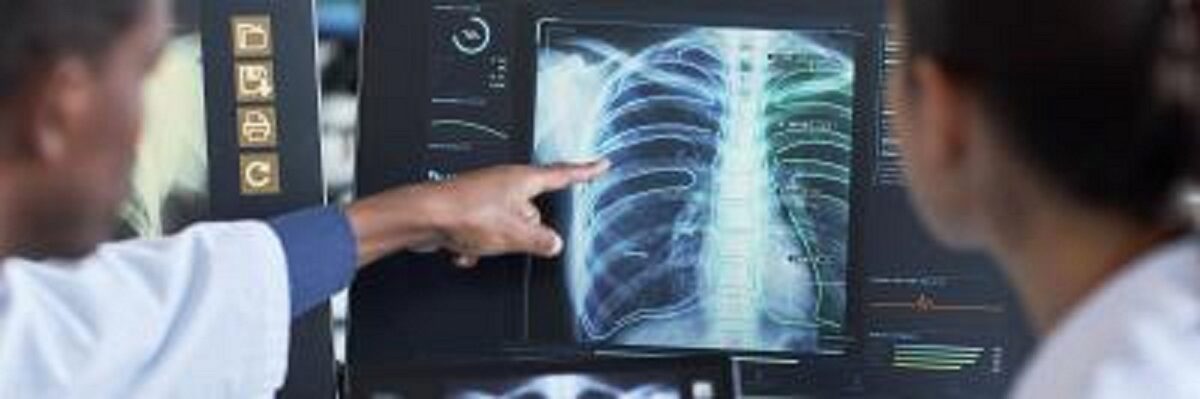
The novel approach brings together two promising technologies in a single diagnostic model. Known as AddiCAD, it combines CAD4TB, an AI system that analyses digital chest X-rays for signs of tuberculosis, with a biomarker test measuring the body’s immune response to infection. By integrating these data sources, AddiCAD aims to provide more accurate results than either method can achieve on its own.
International partnerships
AddiCAD brings together six partners from Africa and Europe with complementary expertise in clinical research, diagnostics, artificial intelligence, data science and implementation.
It consists of Delft Imaging Systems (Netherlands), Life SADX (South Africa), LINQ Management GmbH (Germany), the London School of Hygiene and Tropical Medicine (United Kingdom and The Gambia), Stellenbosch University (South Africa) and the University of Namibia (Namibia).
The project builds on preliminary findings showing that AddiCAD achieved a 20% improvement in specificity compared to CAD4TB alone, without sacrificing sensitivity. This means the combined approach could help reduce false-positive results while still identifying people who are likely to have TB – an important step towards more efficient and reliable diagnosis in high-burden settings.
ALSO READ: Dinosaur eggshells unlock a new way to tell time in the fossil record
Designed for use where rapid diagnosis is needed most
The innovation has the potential to transform TB screening and diagnosis in resource-limited settings. Rather than relying solely on sputum samples – which can be difficult to obtain and process – healthcare workers could use AddiCAD to rapidly identify people most likely to have TB and ensure they receive further testing and treatment without delay.
With the project now underway, the consortium members will develop the novel biosensor and a companion mobile application, before validating the solution in a clinical study involving approximately 1 000 adults with presumptive TB across South Africa, Namibia and The Gambia.
The team will also work closely with healthcare providers, patient representatives, regulators and commercial partners to support future implementation and scale-up. If the initial findings are validated, implementation of AddiCAD may enable life-saving treatment to many additional TB patients.
“For many people, a timely TB diagnosis can prevent negative consequences like transmission, lung damage, or death. Yet far too many diagnoses are delayed or missed,” says Prof Stephanus Malherbe, SU associate professor in immunology and AddiCAD project coordinator. “What excites us about AddiCAD is its potential to bring together cutting-edge science and real-world usability in a way that could make accurate diagnosis more accessible where it is needed most.”