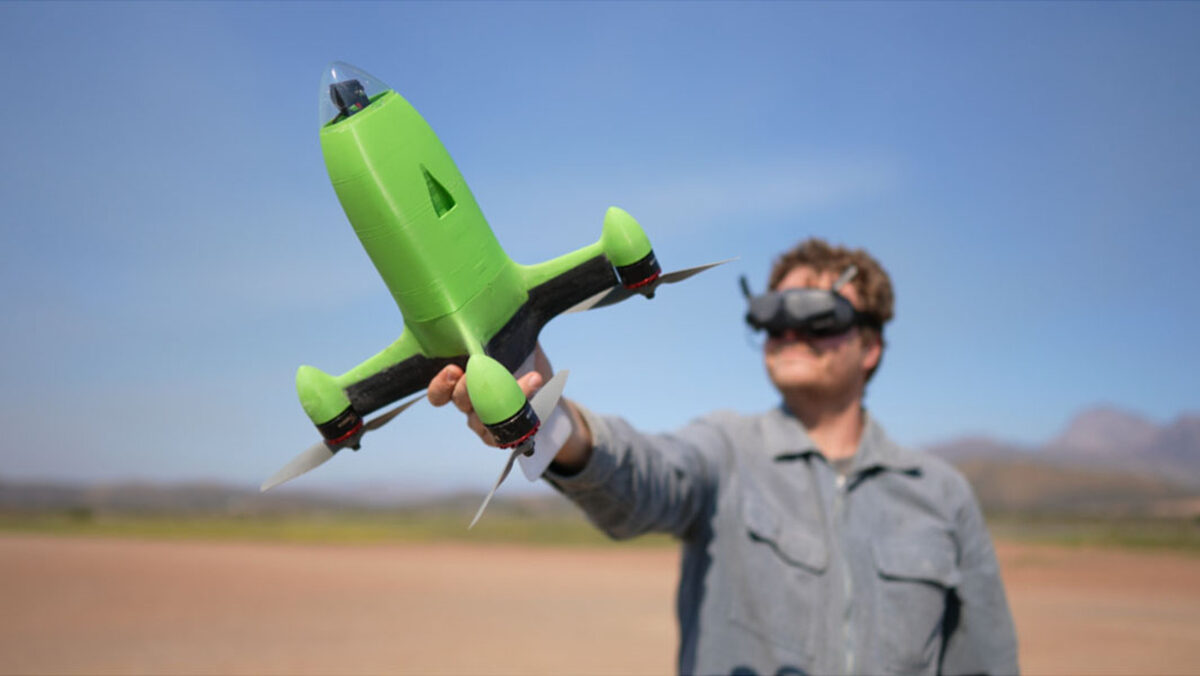

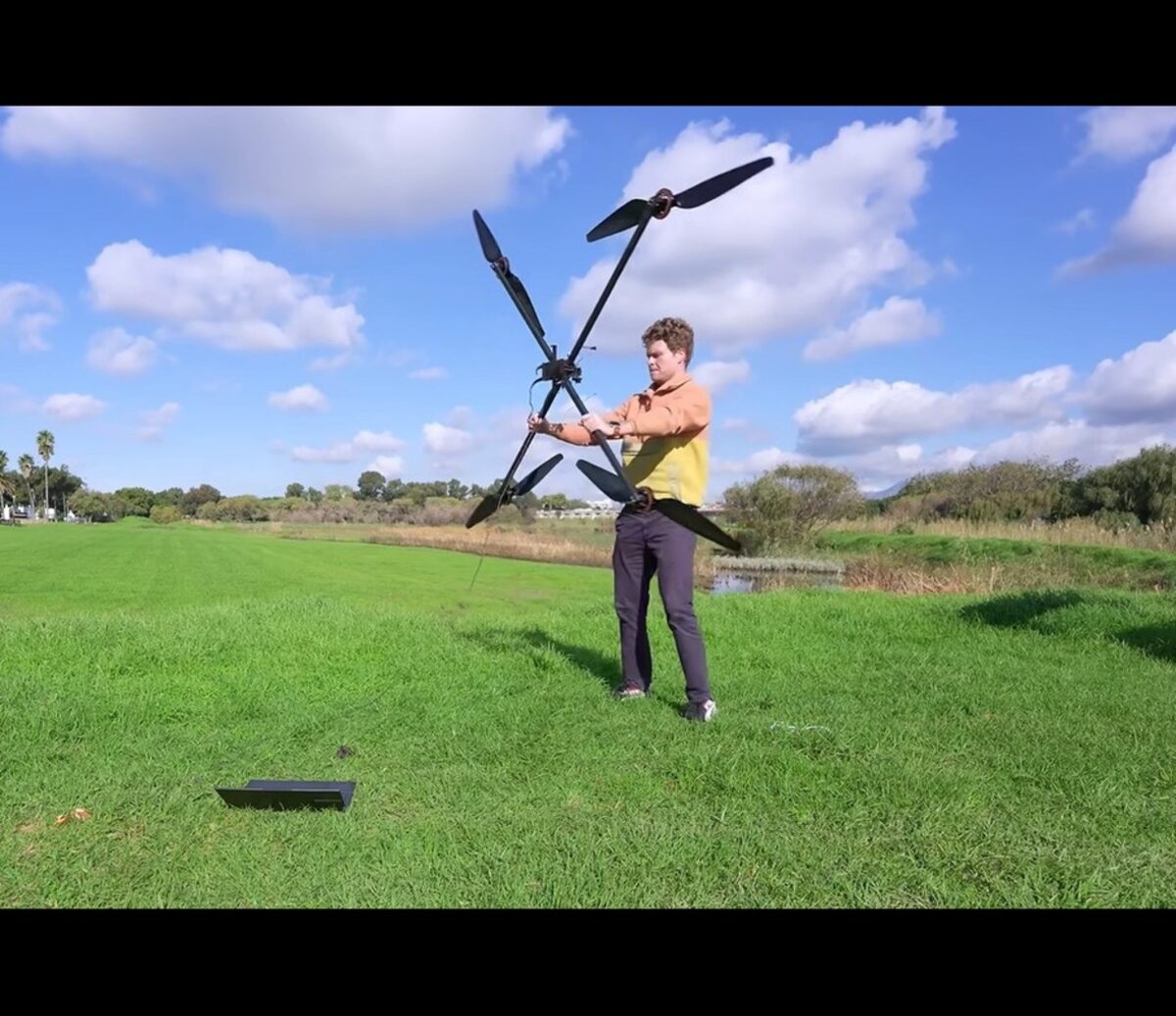
When TygerBurger last reported on Luke Bell and his father Mike in January, the Western Cape father-and-son duo had just made headlines for the third time in little over a year, shattering their own Guinness World Record for the fastest battery-powered RC quadcopter with a blistering 657,59 km/h (408,60 mph) run in Cape Town on 11 December 2025. A 37% improvement on the 480,23 km/h that first put them on the Guinness map in 2024, it was the kind of achievement most engineers would be content to celebrate for a while.
Luke Bell is not most engineers.
While the speed records were a family affair, with architect and aerothermal-engineering enthusiast Mike Bell a crucial partner in the Peregreen project, Luke has now set off on a solo pursuit of an entirely different kind of drone glory. Rather than going faster, he wants to go longer. His new target: the Guinness World Record for the longest continuous drone flight on a single battery charge.
Version 2: Upgrading everything
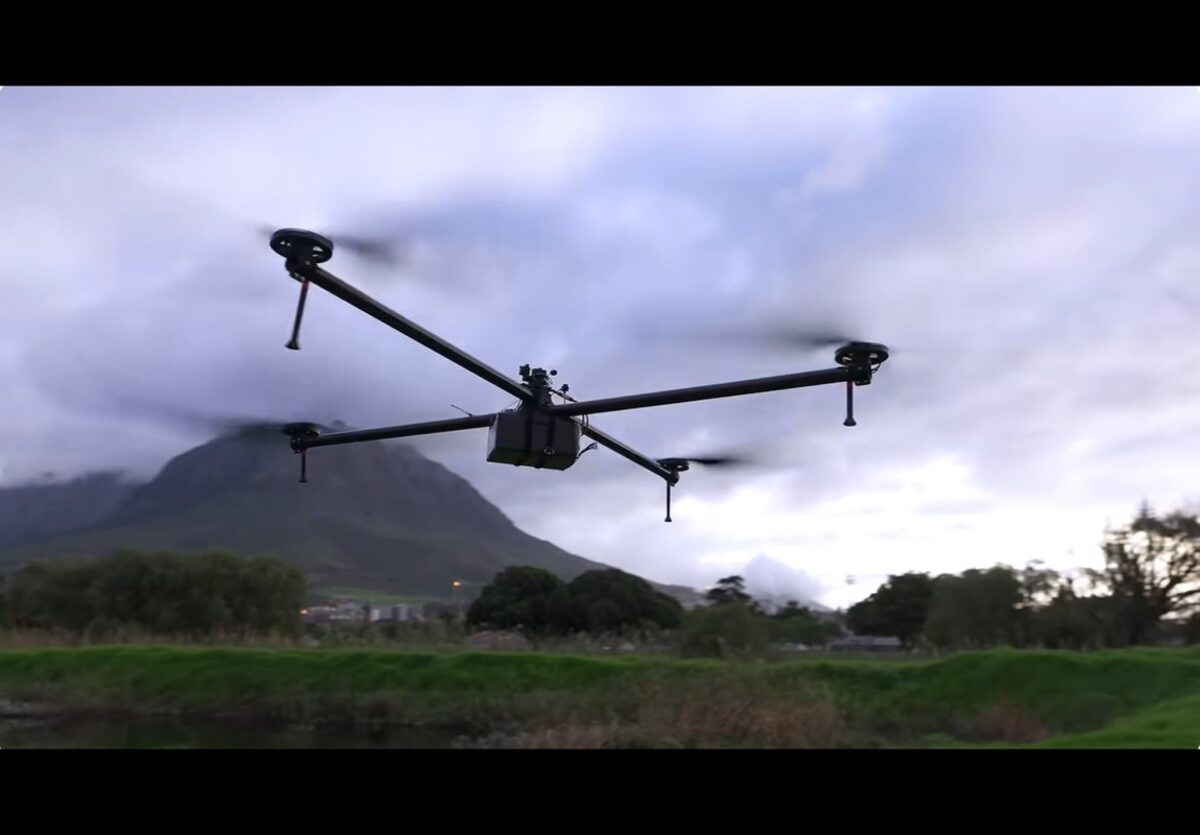
Earlier in 2026 Luke built what he described as the world’s most efficient, longest-flying drone — Version 1 of a purpose-built endurance machine that bore little resemblance to the carbon-fibre speed bullet of the Peregreen project. Now, in a new YouTube video on his channel (Luke Maximo Bell, 240 000 subscribers), he documents taking that already remarkable machine apart and rebuilding it from scratch, upgrading every single component in the pursuit of maximum flight time.
ALSO READ: Western Cape father and son duo shatter their own drone world speed record – again!
The technical overhaul is comprehensive. New T-Motor Antigravity MN1005 motors replace the previous drivetrain, paired with large-diameter T-Motor G40 propellers designed to draw maximum efficiency from every watt. The brain of the aircraft has been upgraded to a Cube Orange+ flight controller, one of the most capable autopilot systems available to hobbyist builders. Radio control is handled by a Radiomaster transmitter and receiver, and the structural 3D-printed components have been reprinted using advanced Bambu PA6-CF and TPU filaments for a stronger, lighter air frame.
The most significant upgrade, however, may be the power source: a cutting-edge SMC semi-solid-state battery, a technology that sits between conventional lithium-polymer batteries and next-generation solid-state cells, promising greater energy density and safer performance during long-duration flights.
The sponsors backing Version 2 read like a who’s who of the high-performance drone world: Bambu (including support through their “Let’s Make It” fund), T-Motor, Radiomaster, SMC and Cube.
The same drive, a different direction
Those who followed the speed-record saga will recognise the same obsessive methodology at work. The Bells spent two years developing and refining the Peregreen, surviving electrical fires caused by overheating wires and batteries, and collaborating with aerothermal engineer Chris Rosser to squeeze every last bit of performance from their machine. Luke’s endurance project reflects the same philosophy — meticulous, iterative and uncompromising.
Where Mike Bell’s architectural background (he designed the Mbombela Stadium in Nelspruit, which hosted four matches during the 2010 FIFA World Cup) brought structural discipline to the speed project, Luke’s role as a content creator, Sony ambassador and drone reviewer gives him a unique ability to document and share the process with a global audience as it unfolds.
The video culminates in an official Guinness World Record attempt, putting Version 2 into the air and pushing it as far as a single charge will carry it.
Watch the journey
Luke’s full build and record-attempt video, “How I Built the Most Efficient Drone Ever Made“, is live on YouTube. For those who want to follow what comes next, Luke documents his projects on YouTube and Instagram.
If the speed records proved anything, it is this: when Luke Bell sets his sights on a Guinness title, he tends to get it.