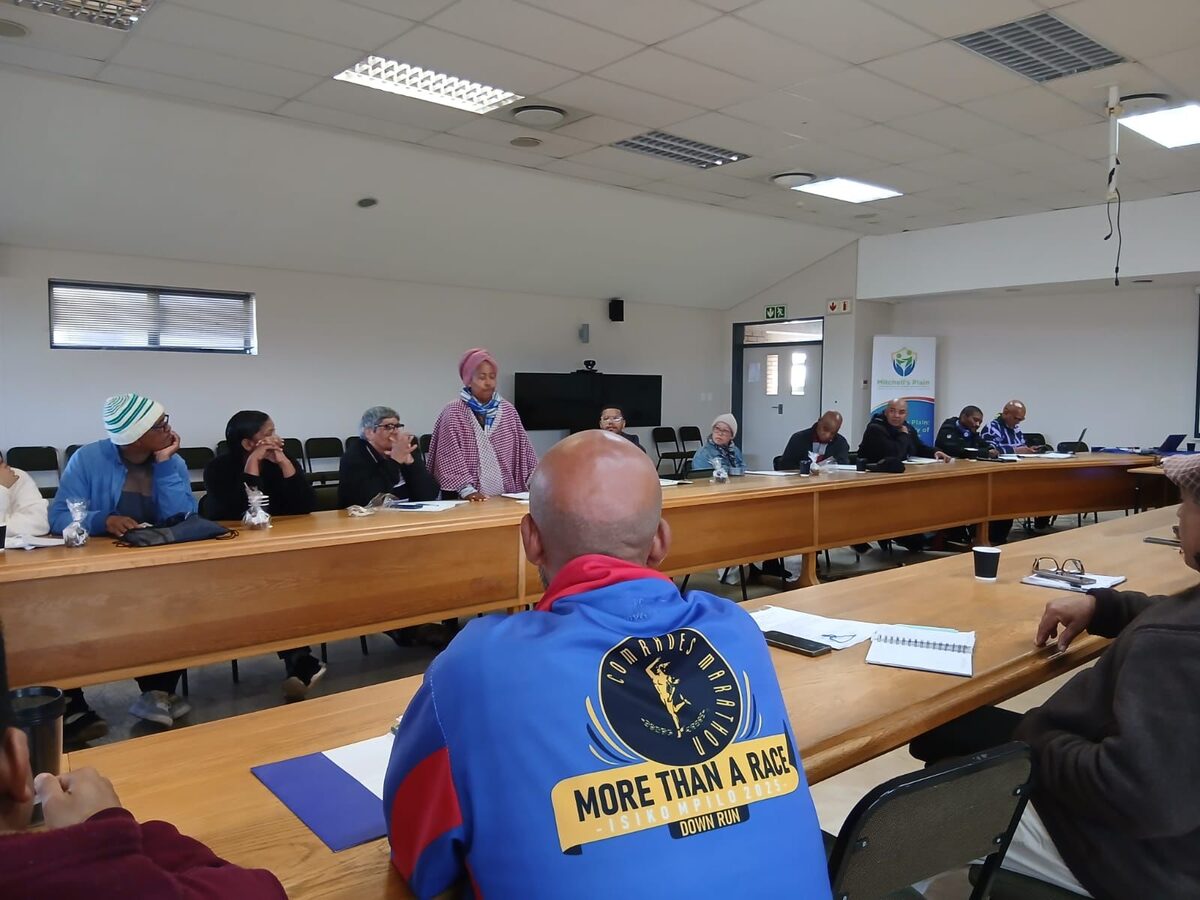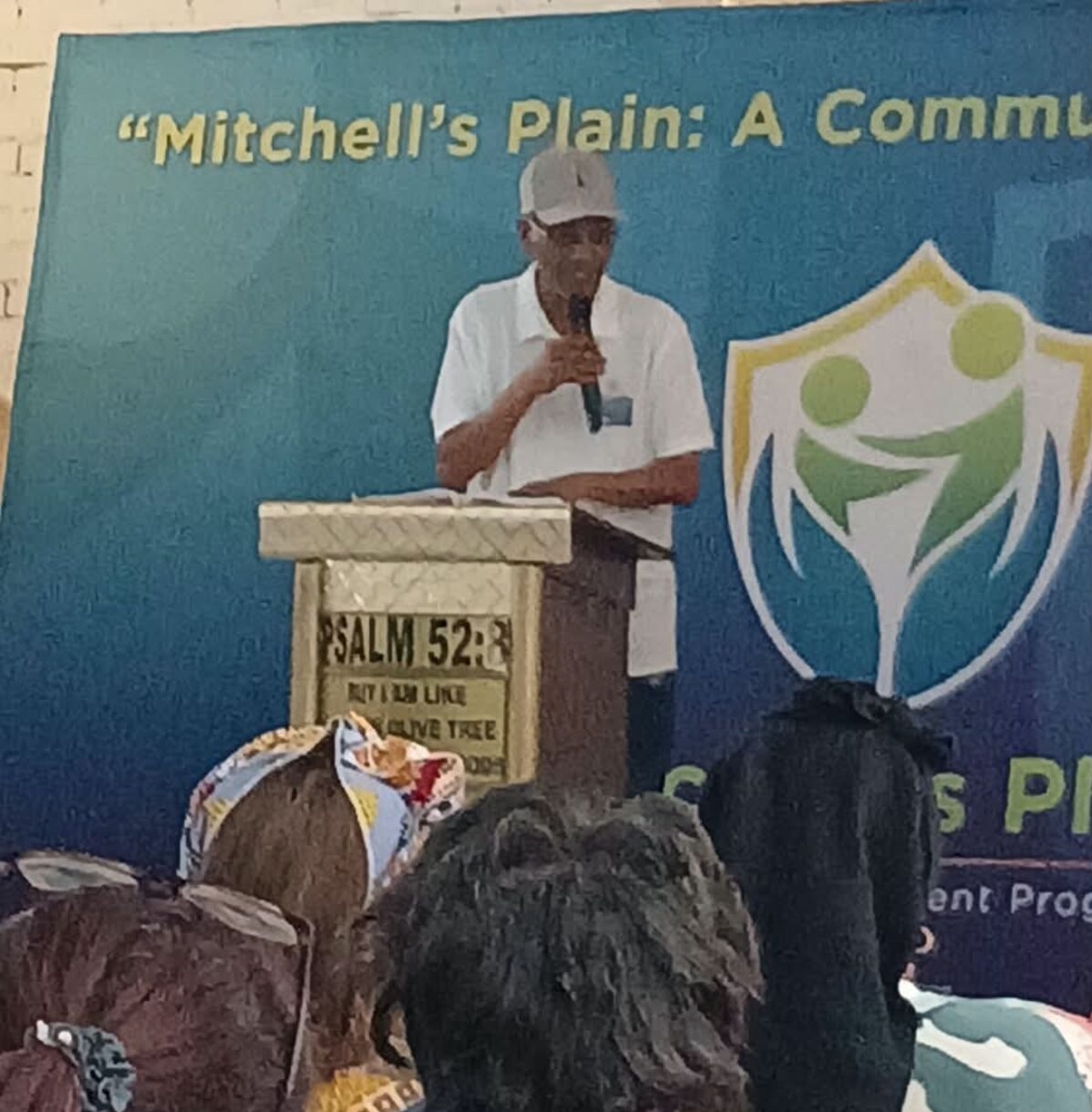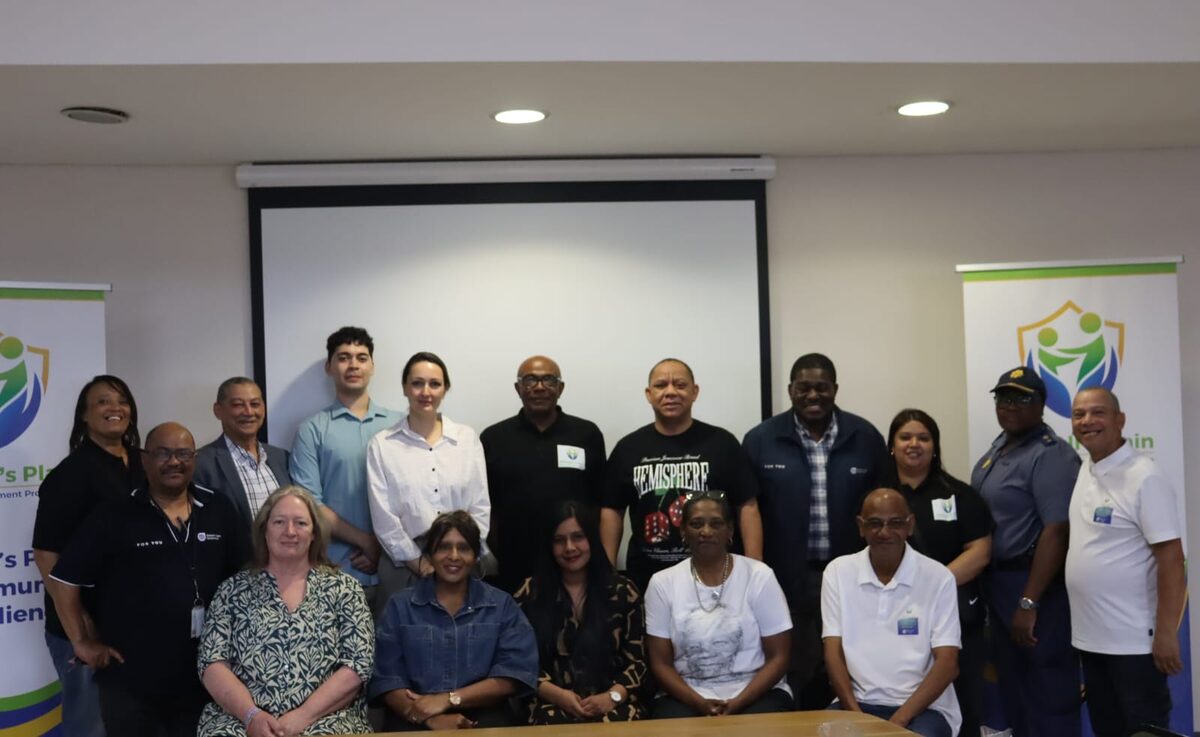
On Friday 16 October the Mitchell’s Plain Safety and Development Forum (MPSDF) brought together 50 community safety representatives for a workshop on gender-based violence (GBV).
The representatives included members of community policing forums and neighbourhood watches. They gained practical knowledge, guidance on accessing support services and a clearer understanding of their role in building safer communities, ahead of a festive season that brings added pressure on community safety.
The workshop was led by Lynn Phillips, MPSDF effective and responsive law enforcement workstream lead, and facilitated by MOSAIC, a non-profit organisation that supports survivors of GBV. MPSDF spokesperson Tyrone Parks said facilitators Eric Bafo, Nomyameko Jikwana and Thembani “Moegamat” Dycige guided discussions on understanding GBV and the practical steps communities can take to respond.
Access to justice and support
Attorney Malikah Schaffers of the Global Initiative Against Transnational Organised Crime (GI-TOC), is stationed at Mitchell’s Plain Police Station. She explained the legal avenues of assistance available and where to seek guidance when GBV concerns arise.
Schaffers is also a legal support officer in the Lawyers in Police Stations Project, a partnership between the police and GI-TOC that was launched at Mitchell’s Plain Police Station in August. The project forms part of the Western Cape Government’s Community-Level Safety and Development Programme, which is being piloted in partnership with the Mitchells Plain community.
Legal Guidance support
The initiative places legal support officers at the police station to provide legal guidance to residents and practical mentorship to police officers, helping to address shortcomings at the earliest stages of the criminal justice process.
Premier Alan Winde and Western Cape MEC of Police Oversight and Community Safety Anroux Marais said they are encouraged by early interventions being implemented through the project.
Engagement with residents
During the initial phase, Schaffers identified challenges in the recording of complaints, including difficulties in distinguishing the specific nature of complaints and ensuring that statements capture all the facts needed to prove an alleged offence. She also found instances where matters that should be pursued through civil proceedings were being registered as criminal cases.
To help address these challenges, Schaffers engages with residents waiting to report cases at the police station. Through an initial check and legal guidance, she helps residents clarify the nature of their complaints and understand the appropriate legal avenues available to them. This aims to reduce confusion, improve the accuracy of statements and limit frustration when cases are withdrawn or removed from the court schedule because they were incorrectly registered.
Schaffers also provides guidance to police officers in the front office on the key facts needed to prove a specific crime and the information that needs to be captured in complainants’ statements.
GI-TOC develops Pocket guide for police officers
As a further intervention, GI-TOC is developing a practical pocket guide to help police officers with the recording of different types of crimes. The guide will help officers identify the relevant questions to ask complainants and ensure essential information is recorded from the outset.
Schaffers has also identified a need to strengthen understanding of the role and functions of commissioners of oaths at Mitchells Plain Police Station. Commissioners of oaths are officials who can certify documents and take sworn statements. A training programme will be undertaken to ensure this resource is used correctly and in line with legal requirements.
Winde said: “Policing is but one component of the criminal justice system. The entire system is in desperate need of an overhaul. Through this intervention, we are taking a more holistic approach to addressing this, by securing more convictions. Too many police stations across the Western Cape continue to face significant resource constraints. While we will continue advocating for a fairer allocation of resources, we are also pursuing innovative solutions and strategic partnerships to address policing challenges and improve service delivery to our communities.”
Marais said: “These early observations show why we need to strengthen the criminal justice process at the point where it begins. When a case is incorrectly recorded or a statement omits important information, it can undermine a case before it even reaches court. By working with the police, GI-TOC and our community partners to address these practical challenges we can improve service to residents and help ensure that cases are properly prepared for prosecution.
“Our focus is on improving the experience of residents, strengthening the quality of case files presented to court and helping ensure that victims have a better chance of seeing justice served,” Marais said.
Law enforcement commitment
Police representatives, backed by a message of support from acting station commander Col Wendy Nciweni, outlined reporting protocols and protection measures while engaging directly with safety structures to rebuild community trust.
ALSO READ: MPSDF helps local organisations build strength for stronger communities