
A coalition of more than 30 African civil-society and non-profit organisations has written to the South African National Department of Agriculture raising concerns about caged egg production being left out of newly proposed standards for how farm animals are raised.
The coalition is led by Animal Law Reform South Africa (ALRSA), with support from the Animal Welfare League (AWL) and Compassion in World Farming (CIWF).
The proposed standards, published for public comment in June, set out detailed rules for 16 animal-production areas, including barn-egg, free-range egg and poultry meat, grain-fed egg, pasture-raised egg and other organic-product production.
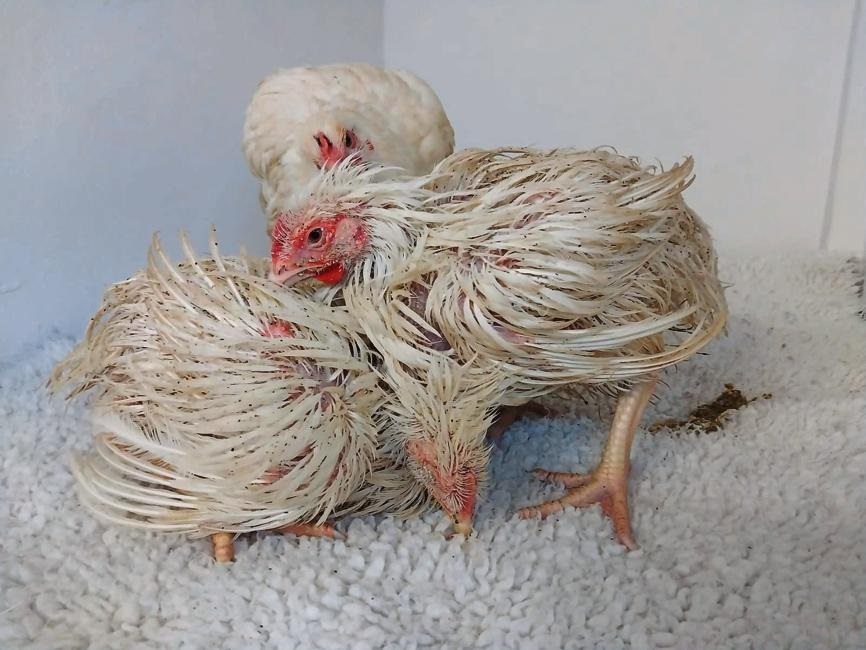
Caged-egg production, which accounts for an estimated 98,6% of eggs sold in South Africa, is entirely absent from the proposed standards. This leaves more than 23 million laying hens kept in battery cages — small wire enclosures that severely restrict movement — and the eggs they produce, outside the rules the standards were meant to provide.
A constitutional responsibility
Amy P Wilson, executive director of ALRSA, said the Department of Agriculture had a responsibility to ensure its rules reflected legal developments.
“In 2016 the Constitutional Court recognised the sentience — that is, the ability to feel and experience — and intrinsic value of animals,” she said. “This recognition should inform the regulation of animal treatment and animal-sourced foods in South Africa. The Department of Agriculture has a responsibility to ensure that its regulatory framework reflects these constitutional and legal developments, promotes meaningful standards of protection, transparency and accountability for all stakeholders, and advances consumer awareness.”
What consumers cannot see
The coalition’s letter notes that consumers could, in theory, be able to identify free-range, organic, grain-fed or other claims relating to eggs under the proposed standards, but will have no regulated way to identify eggs from caged hens, which remain the unlabelled default.
Several of the newly proposed claims also conflict with existing restrictions on egg packaging labels under separate regulations governing the grading, packing and marking of eggs under the same legislation, creating legal uncertainty for producers and regulators.
A pattern of non-transparency
The letter points to a broader pattern of non-transparency in the egg industry, including the continued non-disclosure of an industry-commissioned study into the viability of cage-free egg production in South Africa, first requested under the Promotion of Access to Information Act, a law that gives people the right to request information, more than three and a half years ago.
The coalition argues that South Africa’s regulations also risk falling behind a wider African trend towards recognising animal sentience and strengthening animal welfare standards, pointing to the African Union’s Animal Welfare Strategy for Africa and ongoing revisions to draft battery cage standards by the African Organisation for Standardisation following input from civil society.
NJ Hove of the AWL said the department had an important opportunity.
“The registration of methods of production under the current regulations is one of the most consequential decisions available to the Department,” Hove said. “In the European Union, clear standards and the formal recognition of animal sentience have compelled multinational brands to phase out cages and raise welfare across their supply chains. In South Africa the absence of equivalent clarity allows the same companies to maintain lower-welfare systems. Proceeding without rigorous public participation and precise standards risks locking the country into a fragmented production landscape. Getting this right delivers benefits far beyond animal welfare and consumer protection; it establishes the foundations of resilient, sustainable food systems and credible market development.”
What the coalition is asking for
The coalition is calling on the department to:
- regulate caged-egg production as a proposed method of production, subject to the same public-participation process applied to the 16 claims already published
- require mandatory labelling of caged eggs at the point of sale
- ensure any labelling requirement sits within a defined pathway towards phasing out battery cages, rather than serving as a substitute for it
- establish baseline welfare requirements for caged hens, informed by recognised animal welfare frameworks
- place animal sentience at the centre of developing the standards
Why battery cages are a problem
Peter Stevenson, chief policy adviser at CIWF, said battery cages cause great suffering to hens.
“Scientific research shows hens are strongly motivated to lay their eggs in a nest, perch, dust-bathe, and peck and scratch at the ground, behaviours that are not possible in battery cages. The severe restriction of movement in the cage leads to high levels of osteoporosis — that is, weak and brittle bones — and many battery hens suffer bone fractures. Battery eggs should be labelled as such so that consumers know what they are buying.”
About the organisations
ALRSA is the first dedicated animal law non-profit organisation in South Africa. It works to build a system of animal governance that recognises animals as sentient beings with intrinsic value.
CIWF was founded in 1967 by a British dairy farmer who was horrified at the development of intensive factory farming. Today it is a leading farm-animal welfare organisation dedicated to ending factory farming, with offices across Europe, the US, China and South Africa.
AWL is a non-profit organisation that works with companies to improve farmed-animal welfare across Africa through research, negotiation and strategic campaigning.
The coalition has asked the department to confirm receipt of the letter and has invited further engagement on the concerns raised.
ALSO READ: Chickens rescued from ‘ritual drowning’