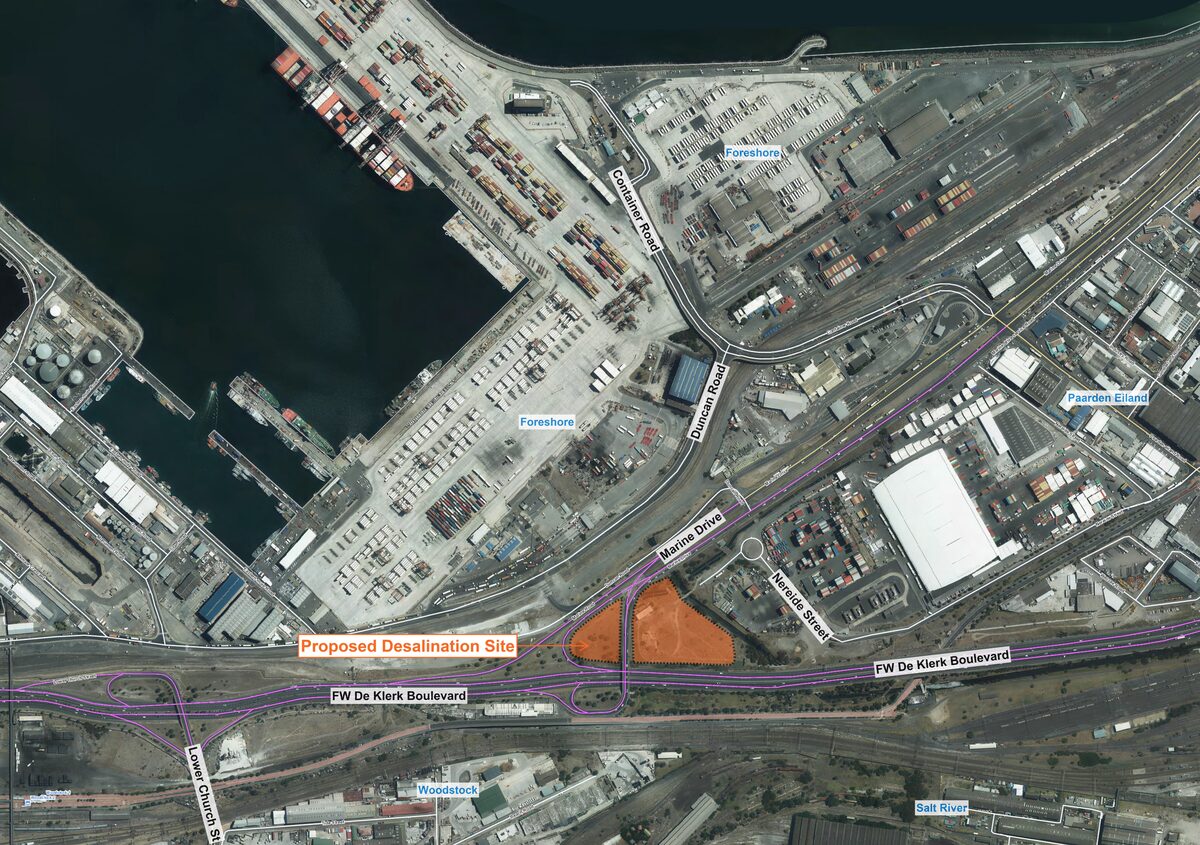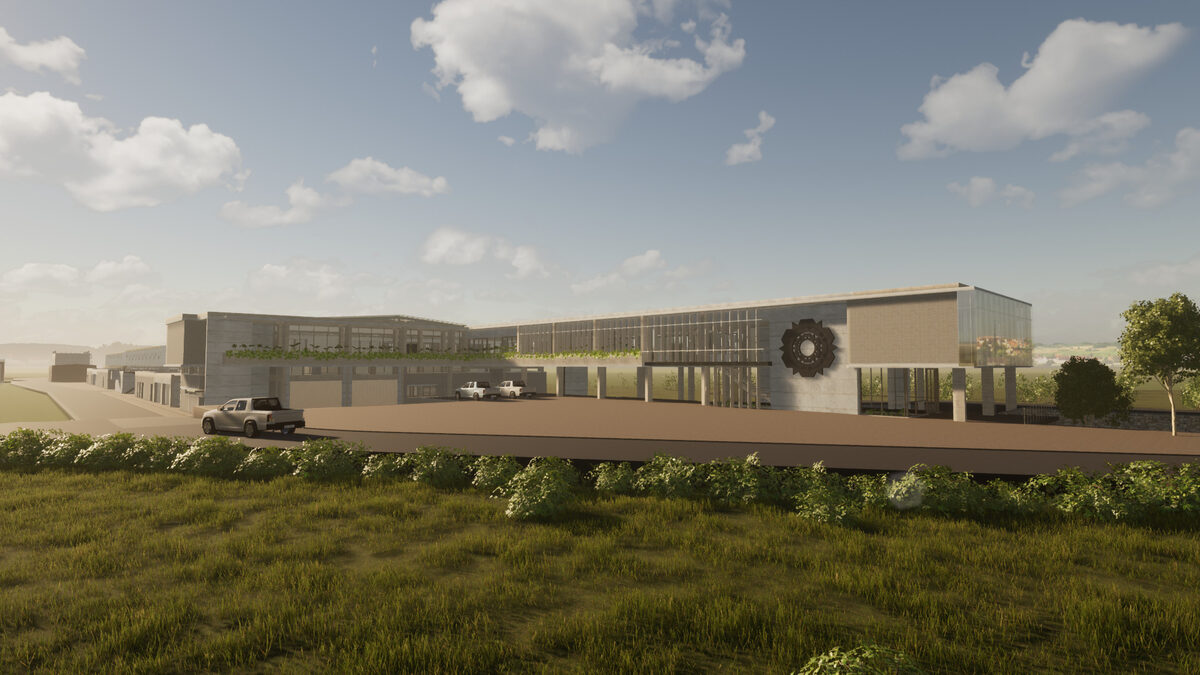

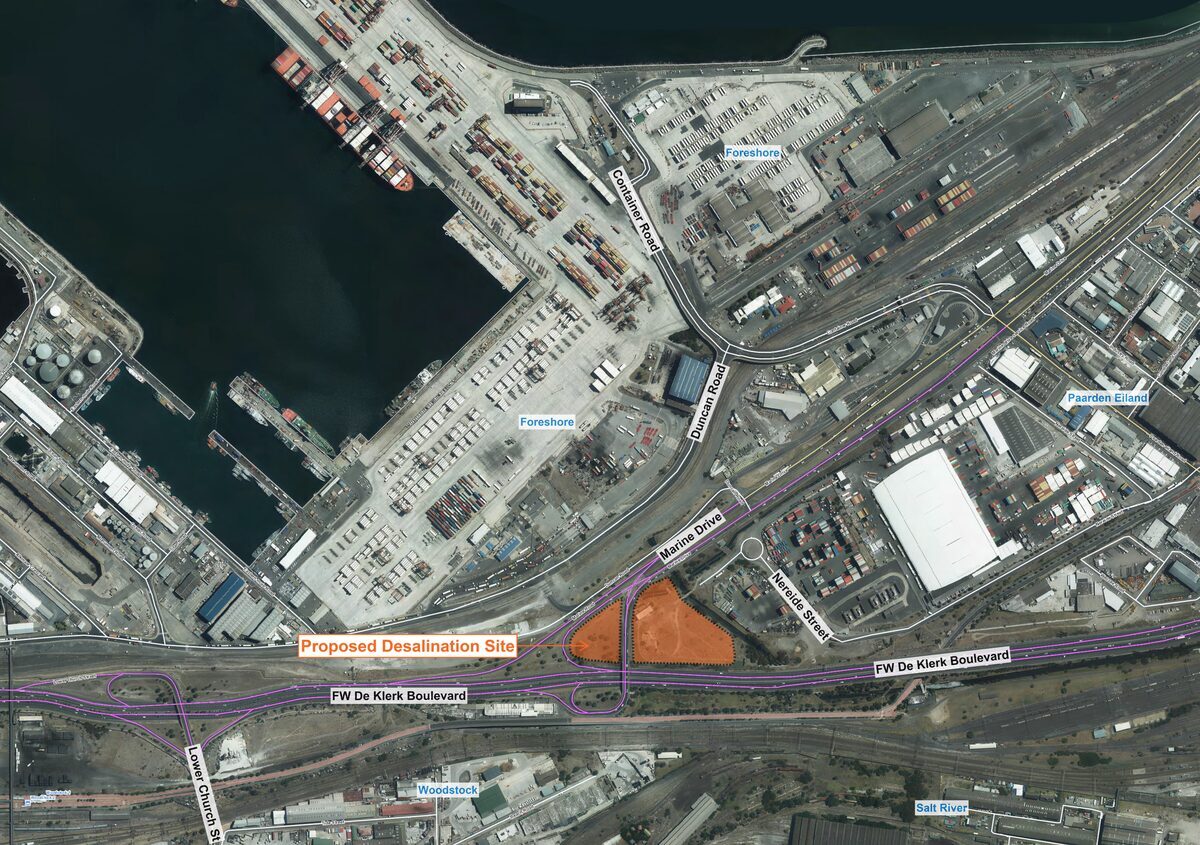
Cape Town’s plans for a permanent desalination plant have suffered a major setback, with the project now facing a possible five-year delay after Transnet indicated it needs the proposed Paarden Eiland site for the expansion of the Port of Cape Town.
The City is now searching for an alternative location for the plant. The latest Water Outlook report indicates that finding a suitable replacement site and restarting the required environmental assessment process could push the project back by about five years.
The permanent plant is now expected to become operational only around 2036.
Cape Town’s combined major dam storage level stood at 75.4% as of early September 2026, with Theewaterskloof Dam at 76%, Berg River Dam at 91%, Wemmershoek Dam at 90%, Voëlvlei Dam at 59%, Steenbras Upper at 84% and Steenbras Lower at 49%.
Transnet forces site rethink
On 21 August Mayco member for Water and Sanitation Zahid Badroodien told council the City was investigating “alternative locations” for the proposed plant.
The Paarden Eiland site had already progressed through the scoping phase of its environmental-impact assessment, meaning the City will now have to identify another suitable location and undertake further environmental work.
The delay comes as Cape Town’s water demand continues to increase. The City of Cape Town Water Outlook report shows no immediate threat to water supply, but increasing demand and lower year-on-year dam levels mean water restrictions have not been ruled out.
According to the latest Water Outlook the city could reach its maximum allocation from the Western Cape’s major supply dams within the next two years.
The dams also supply other municipalities and agriculture, meaning Cape Town cannot rely on all the water stored in the system. The City’s current rate of water-demand growth has been described as unsustainable, adding urgency to efforts to bring alternative water sources online.
While the city is not currently facing an immediate Day Zero scenario, officials have warned that growing consumption and a drier-than-usual season are putting pressure on available supplies.
City remains committed to desalination
Despite the setback, Badroodien said the City remained committed to developing a permanent desalination plant as part of a diversified approach to water security.
“We are committed to advancing our water security by developing a permanent desalination plant, among all other interventions which comprise the New Water Programme,” he said previously.
He said the City was drawing on a range of expertise and exploring different implementation options to ensure that future water-treatment technologies meet safety, technical and regulatory standards.
The proposed plant had been expected to produce between 50 million and 70 million litres of water daily and was originally part of the City’s strategy to increase new water production by 2030.
ALSO READ: City’s R5 billion desalination plant in Paarden Eiland draws opposition fire