

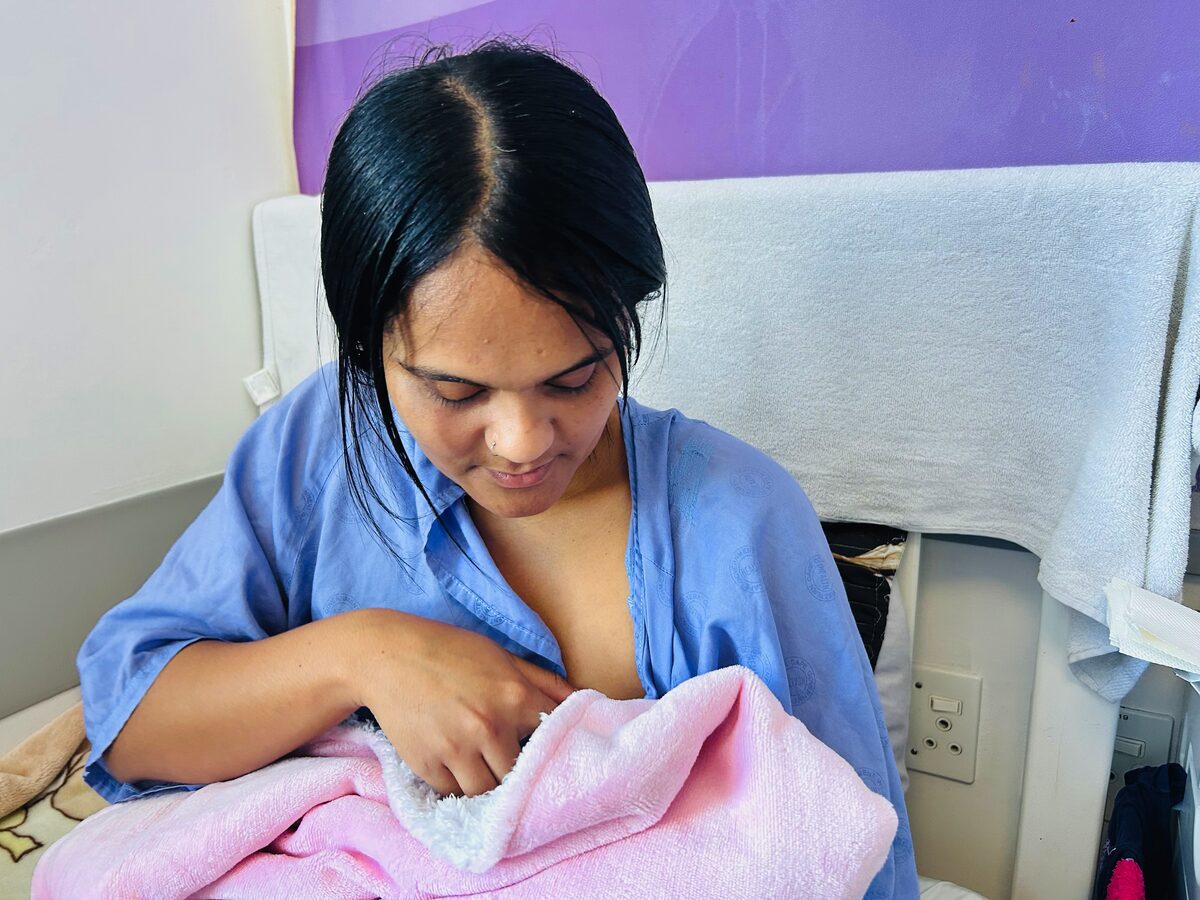
The first 1 000 days of a child’s life from conception to their second birthday are the most critical window for growth, brain development and lifelong health. Breastfeeding during this period gives babies optimal nutrition, strengthens their immune systems, and lays the foundation for healthy development.
But when a mother’s own milk isn’t available or isn’t enough, donor breastmilk steps in as the next best thing, giving premature and medically vulnerable babies a fighting chance.
That message is at the heart of World Breastfeeding Week 2026 (1–7 August), whose theme — “Breastfeeding for a Sustainable Start to Life: Strengthen What Works” — calls on families, healthcare workers, employers, communities and policymakers to rally behind breastfeeding mothers.
A mother’s journey of giving
For Mishkah Dienie, a mother of twins and breastmilk donor, breastfeeding has been both challenging and rewarding.
“On the first day after delivery, I couldn’t provide breastmilk to my babies and was asked to consent to donor breastmilk. That experience made me realise just how important donor milk is for babies whose mothers are struggling,” she said.
Inspired by that experience, Mishkah became a breastmilk donor herself. “Helping other babies besides my own makes me feel like a hero. By providing liquid gold to extremely premature babies, you’re helping improve their chances of survival. It’s the best feeling ever.” Her advice to mothers who can donate is simple: “Just do it. Don’t overthink it. Help save a life.”
Expert voices
According to Crystal Jacobs, registered dietitian at Tygerberg Hospital, breastfeeding success depends on strong support from families, healthcare workers, employers, communities and policymakers.
“Breastmilk is the critical foundation for healthy development and a sustainable start to life. Improving breastfeeding rates requires coordinated action through stronger healthcare services, supportive workplace policies, and community engagement.”
Cindy Louw, operational manager at neonatology at Groote Schuur Hospital, said donor human milk remains one of the most powerful interventions available for premature and critically ill newborns.
“Every baby deserves the best possible start in life. Human milk, whether from a baby’s own mother or from a screened donor, supports the health and survival of vulnerable newborns. Together, we can build sustainable breastfeeding support systems that ensure every infant has access to optimal nutrition and the opportunity to thrive.”
The City of Cape Town’s health department’s results speak for themselves. The weeks after giving birth can be physically and emotionally challenging. While breastfeeding gives babies the healthiest possible start, many mothers face difficulties such as pain, exhaustion, concerns about milk supply, and adjusting to life with a newborn.
ALSO READ: UWC study warns of false baby food marketing, breast still best
Some may also experience postnatal depression or anxiety, making support during this period even more important.
City Health addresses this through its Infant Feeding Counsellor (IFC) Project, which places trained workers in clinics to offer one-on-one support to pregnant women and postnatal mothers on optimal infant feeding practices. The counsellors provide practical guidance and encouragement while helping to identify mothers who need additional support.
The results have been striking. Following the placement of the counsellors, exclusive breastfeeding rates increased by 6.5% across the 10 participating clinics. Notable improvements were recorded at Masiphumelele Clinic (31%), Langa Clinic (26%), Adriaanse Clinic (22,5%) and Valhalla Park Clinic (14%).
Through the Infant Feeding Counsellor Project, mothers receive the practical support and encouragement they need to navigate this journey.
“Nutrition has a profound impact on an infant’s growth, survival and development. We also recognise that breastfeeding is not always easy, particularly during the early weeks after birth. Through the Infant Feeding Counsellor Project, mothers receive the practical support and encouragement they need to navigate this journey with confidence and give their babies the healthiest possible start in life,” says Cape Town Mayco member for community services and health, Francine Higham.
“The results speak for themselves. Although the project currently operates in only 10 of our 89 clinics, it is making a meaningful difference for mothers and babies. We will strengthen the project by expanding the counsellors’ skills and extending their contracts to three years to ensure continuity of care. We will also continue working with partners, including City libraries, to create sustainable support networks for families,” added Higham.
As part of this collaboration, City Health’s infant feeding counsellors and the City’s libraries will continue to host eight-week antenatal and postnatal support groups at selected libraries. The sessions cover maternal and child health, digital literacy, and the importance of reading and talking to babies from pregnancy through early childhood.
Where to donate breastmilk
The Western Cape Department of Health and Wellness encourages eligible mothers with surplus breastmilk to consider becoming donors. Healthy breastfeeding mothers can contact:
- Groote Schuur Hospital: 021 404 6004 / 6299\
- Paarl Hospital: 021 860 2757
- Khayelitsha Hospital: 021 360 4200
- Tygerberg Hospital: 021 938 4709 / 021 938 5150
- George Hospital: 044 802 4577 / 4578
- Oudtshoorn Hospital: 044 203 7240
- Milk Matters: 082 895 8004 | info@milkmatters.org