

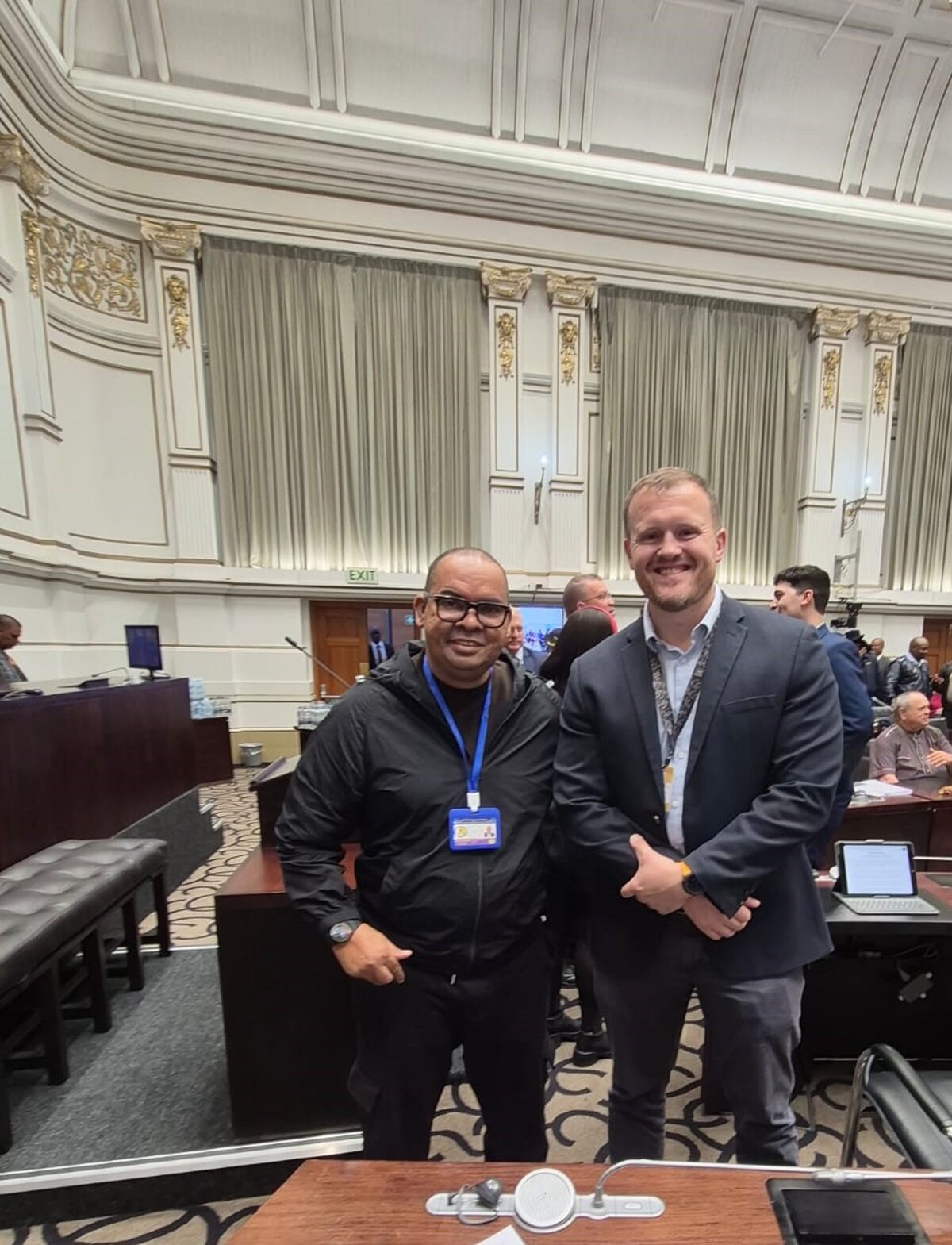
A parliamentary summit on gang-related violence in the Western Cape has heard a resounding call for a fundamental shift from arrests to dismantling the entire ecosystem that allows gangsterism to survive.
Held at the Good Hope Chamber of Parliament in Cape Town on 19 August, the summit brought together researchers, community leaders, faith organisations, Community Police Forums, civil society and senior police commanders, all confronting the devastating impact of gang violence across the Western Cape.
Deeply personal
For Denver Dreyer, vice chairperson of the Kraaifontein Spiritual Crime Prevention Forum, the summit was deeply personal.
Dreyer, who attended as a community representative, spoke openly about his own ten-year journey through drug addiction. “I know what it means to be caught in the grip of addiction,” he said. “Sitting in the National Assembly and participating in a national conversation about finding solutions to gang violence, I could not help but reflect on how far my own journey has taken me,” he told TygerBurger last week.
Dreyer said hearing the human stories behind the statistics affected him most.
“There is a mother who has lost a child. A family living in fear. A young person drawn into drugs or gang activity. A community that has become accustomed to violence,” he says. “I know that behind addiction is often a person who needs intervention, support, accountability and an opportunity to change. I also know that recovery is possible.”
Follow the money
Dr Mark Shaw of the Global Initiative Against Transnational Organised Crime warned that gangs have become increasingly sophisticated and financially driven, with drug trafficking and extortion forming significant parts of the criminal economy.
He emphasised the need to “follow the money”, target gang leadership and disrupt the financial structures that allow criminal networks to regenerate.
Senior station commanders provided direct insight into operational realities. Brig Brian Muller of Mitchell’s Plain Police Station spoke strongly against police corruption, saying corrupt officers must be identified and dealt with.
He also highlighted the challenge of young people repeatedly arrested for drug offences who then struggle to find employment.
Brig Jayseelan Naidoo of Manenberg raised concerns about the link between school absenteeism, youth recruitment and gang economics, and warned of criminal networks gaining access to legitimate economic opportunities, including tenders.
Col Wynand Muller of Nyanga stressed that arrests, firearm seizures and convictions, while important, do not by themselves dismantle criminal structures.
Children on the frontline
A recurring theme was the vulnerability of children outside the education system. The summit heard calls to keep children in school, address dropout and absenteeism, strengthen child protection, and provide sport, cultural and recreational opportunities.
Community representatives warned that previous summits must not become another “talk shop”, calling for measurable action and accountability. The summit heard that success should no longer be measured by arrest numbers alone, but by whether gang finances are disrupted, drug supply chains dismantled, illegal firearms removed, children kept in school and communities made safer.
We need to disrupt the networks that finance gangs, address drugs and illegal firearms, protect children from recruitment, keep young people in school and create meaningful alternatives for them.
Dreyer said the experience strengthened his commitment to continue sharing his story. “The work does not stop when the summit ends. It continues in our neighbourhoods, support groups, churches, schools and community spaces,” he says. “One of the key messages that emerged was that gangsterism cannot be addressed through policing and arrests alone. We need a coordinated response involving law enforcement, education, social development, families, communities, faith-based organisations, civil society and government.
ALSO READ: The library built on a crime scene that changed a generation
“We need to disrupt the networks that finance gangs, address drugs and illegal firearms, protect children from recruitment, keep young people in school and create meaningful alternatives for them. But while strategies and policies are important, we must never lose sight of the people affected. Coming from Kraaifontein, I understand the importance of being present on the ground. The work does not stop when the summit ends. It continues in our neighbourhoods, support groups, churches, schools and community spaces.”