
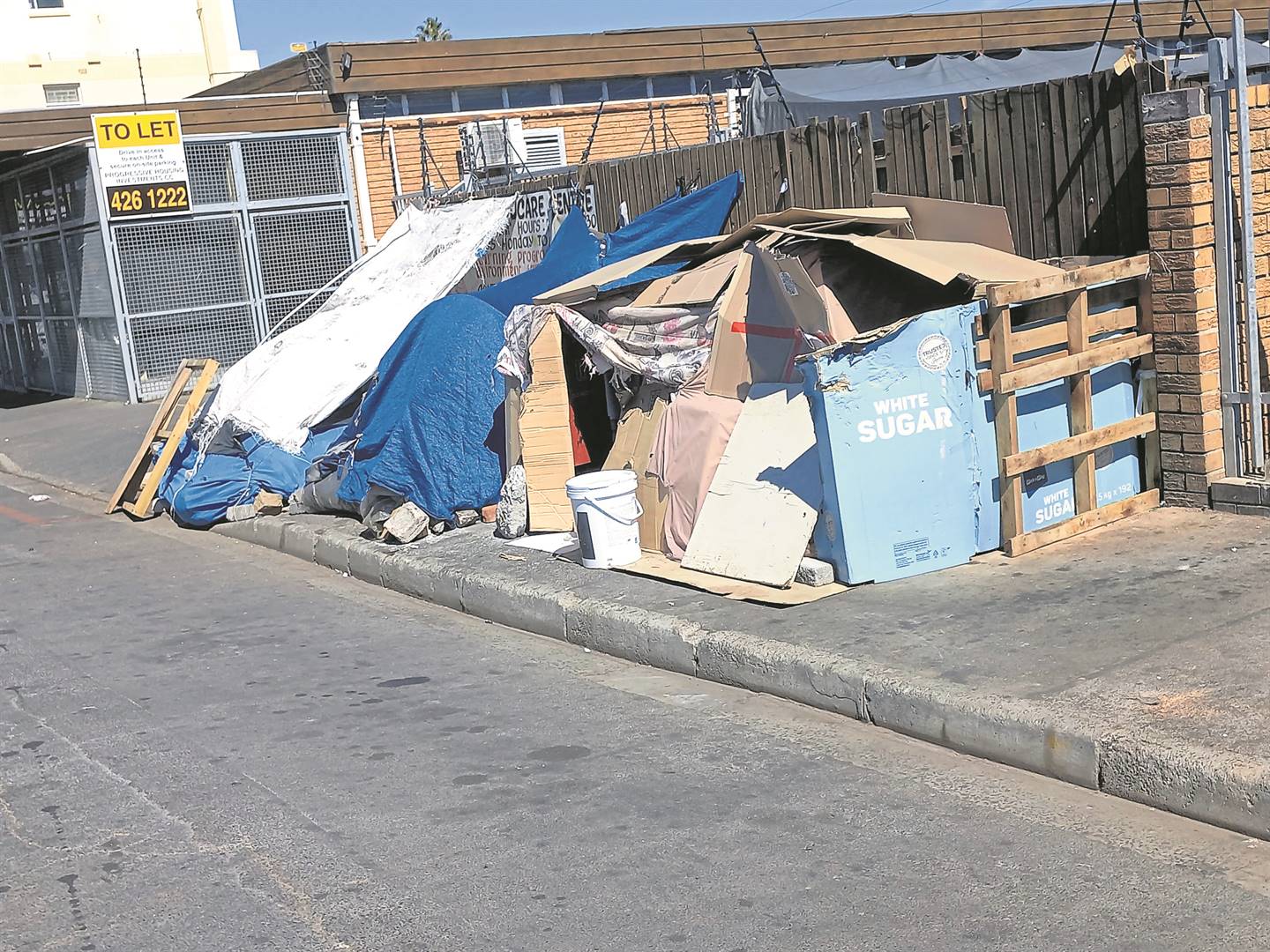
Goodwood residents are outraged about homeless residents setting up their tents and huts on sidewalks in residential areas.
According to residents who expressed their anger on Facebook, no one wants to walk with their children anymore due to the smells on the sidewalk.
The biggest concern is that the huts are obstructing the pavement.
School kids use this pavement every morning and afternoon. They are now walking in the street putting them in danger of being knocked over.
“Law enforcement comes and lets them break down their shelters and tells them to go, but tomorrow they are back again. Vasco station the same story. On the sidewalk and along the side of the pet shop too and it is unsafe and unbearable to walk there. It feels like you are walking through a sewer plant,” said Christina Shepard.
“You are on your way to the store, but it stinks so badly that you get nauseous and when you are in the grocery store you do not even want to buy food.
“It’s an absolute disgrace to say I live in Goodwood which was once a well-regarded area and is now compared to areas where there is rubbish and toilet facilities outside where the children should actually be able to play. But even that has been taken away from our younger generation.
Antoinette Steenkamp said “never have you heard of such a thing and to expose all our children to it, even in the parks. What should our offspring build if everything smells like a sewer tank”?
According to the City of Cape Town, the two-year national state of disaster and related economic impact has led to unmatched levels of homelessness in the city – with many people sleeping in public places, including sidewalks, parks, road reserves and under bridges.
Given this situation, only a unique and unprecedented response will help people off the streets in Cape Town and ensure that public places are available for wider public use.
The City of Cape Town is proactively dealing with this situation by:
- Expanding City-run safe spaces beyond the central business district and Bellville: A total of R142 million is allocated to operate and expand these facilities over the next three years. A further R10 million is allocated for this winter to expand shelter beds at NGO-run shelters.
- Stepping up efforts to assess the circumstances of those on the streets, and offer shelter or social assistance:
City social development staff are currently busy with a city-wide process of conducting social assessments of those who are homeless. This includes the reasons for homelessness, physical and mental health, living conditions, sources of income. This will result in a referral for social assistance, which can include accommodation at a shelter or City-run safe space.
Due to the termination of the national state of disaster, the courts are no longer required by regulation to consider suspending evictions.
However, the City’s streets by-law does not circumvent the need for a court order where a structure is considered a dwelling under the Prevention of Illegal Eviction and Unauthorized Occupation of Land (PIE) Act.
In those instances, the City will acquire the necessary court order, and ensure alternative accommodation at shelters or safe spaces has been offered, where this is just and equitable.
The City will follow these five guiding principles in helping people off the streets:
- Cape Town must be, primarily, a caring city, that always tries first to help people off the streets.
- No person should be homeless. This is unsafe, unhealthy, and undignified. Accepting sustainable solutions off the streets is the best choice for dignity, health, and well-being.
- Our city’s public places serve important social, community and economic purposes and must be open and available to all. No person has the right to reserve a public space as exclusively theirs, while indefinitely refusing all offers of shelter and social assistance.
- It is not an offence to sleep on the streets if you do not have a choice. Only after refusing offers of shelter and social assistance should the law take its course as a necessary last resort deterrent for the sustainable management of public places.
- The City encourages courts and prosecutors to ensure that rehabilitation is favored over punitive fines and imprisonment, wherever it is just to do so in matters relating to prohibited conduct in public places.