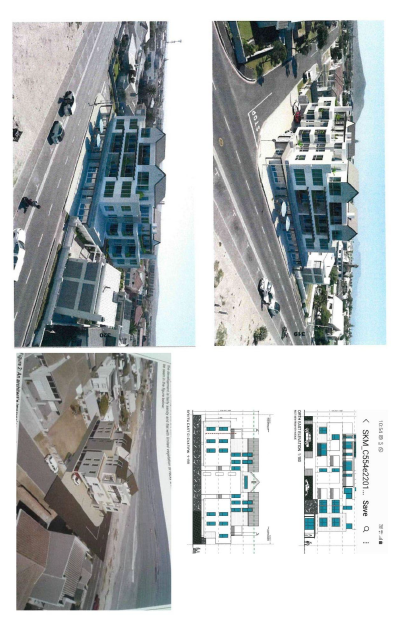

The Flandorp Family Trust is in the process of developing 21 Canary Crescent in Sunridge into a large-scale security complex with its own sewage plant, with the land use process currently in its appeal stage, according to Eddie Andrews, deputy mayor and Mayco member for spatial planning and environment.
However, local organisations such as the Greater Table View Action Forum (GTAF), as well as CapeXit, a local non-profit civic organisation, along with other residents of the area are fighting back.
The gated security complex will house 337 flats, nine semi-detached duplex units, 16 single residential erven, as well as a clubhouse, according to Andrews.
Additionally, the Flandorp Family Trust has also applied to build an on-site package plant which will treat sewage generated by the Millview development, said Andrews, who explained that this plan was proposed due to the capacity constraints at the Potsdam wastewater treatment works.
Community concerns
“This entire process from start to finish is one of the biggest concerns the Greater Table View Action Forum (GTAF) holds,” according to Karen Davis, chair of the GTAF, a non-profit organisation that acts in the interest of residents in the greater Table View area.
“Why was it earmarked for land restitution, why did the Western Cape Education Department (WCED) give this land to the Department of Public Works to dispose of in this manner, knowing there were not enough schools in our area,” asked Davis, who also explained that Sunridge Circle primary and high schools were told they would get additional infrastructure on the erven now belonging to the Flandorp Family Trust.
The City, nor the WCED have responded as to why the initial plan was diverted from, or what alternative plans are in store for the school’s infrastructure at the time of publication.
“The complete contextual disparity of this development in comparison to the neighbouring properties, the fact that there is a moratorium on development until Potsdam is up to capacity and so to bypass this, they want to put in a private sewage plant in the middle of a residential area,” Davis explained.
However, according to Andrews the land use application for the Millview development under consideration included consent to permit a sewage plant as a utility service, and if this gets final approval, the current residential zoning will change to sub-divisional area zoning.
Should the sewage plant be approved along with the rezoning of the area the Millview development will be built, it will mean that similar developments may take place — a worrying aspect for both CapeXit, and the GTAF as it will mean more densification of the area.
At a meeting on 25 August, which was attended by CapeXit’s operational manager, Des Palm, it was explained by City officials that the two biggest challenges the City currently faces with this development is over-densification, as well as wanting to place a moratorium on large developments such as Millview, to not over-populate residential areas.
According to Palm, these two statements made at the meeting by City officials were contradicting each other, as the Millview development is going through the final stages of approval, which will bring about densification.
“The City could also not provide a reason as to why there was no moratorium placed on the Millview development, and instead deflected the question,” according to Palm.
Awareness rally
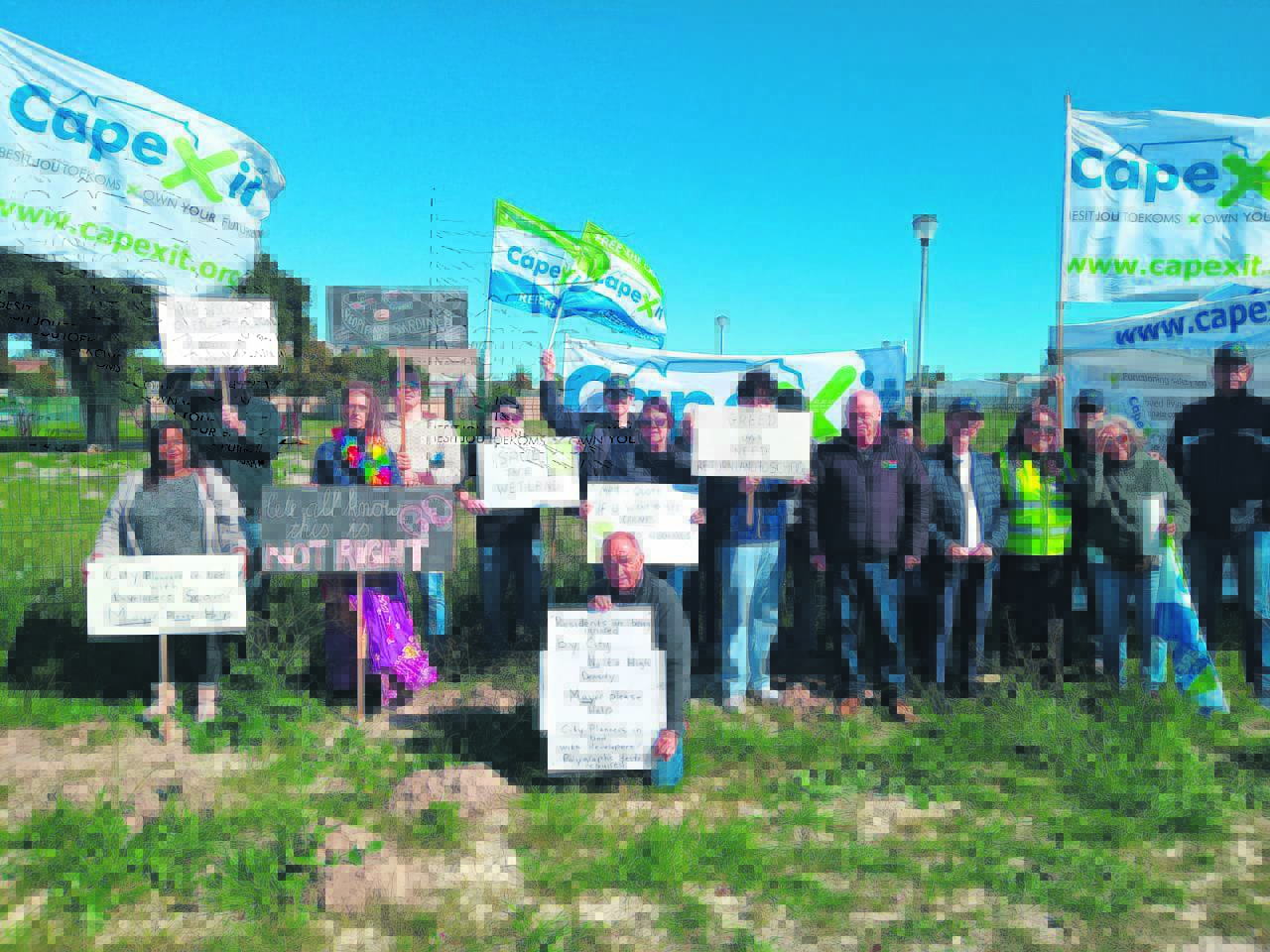
CapeXit launched an awareness on the Millview development on 6 August, and the main aim was to promote awareness and understanding of the Millview development – an aim which was happily met as a large number of people visited the gazebo to enquire about the rally, said Palm.
“Additionally, another one of CapeXit’s aims was also to make the public aware of the issues the rate paying residents faced with the provincial government,” according to Palm.
“To get the best visibility we positioned ourselves next to Gie Road in Sunridge which is quite a busy road. For safety reasons we limited the number of people attending to 35 [people],” Palm explained.