

A children’s rights activist says some of the social work organisations to which the government outsources the care of vulnerable children are failing in their mandate.
Zona Morton, an activist who has worked with police and the defence force monitoring police brutality, children in custody and children in conflict with the law, has given the TygerBurger an example when a child referred to a social work NGO ended up in a dangerous situation.
Morton, said the boy, an intellectually disabled 14-year-old, was twice referred to an non-government organisation appointed and funded by the Department of Social Development (DSD) in Macassar but on both occasions the boy was not put in safe care.
IN OTHER NEWS: No need for water restrictions in CT as study shows ‘no immediate concern’
“Two years ago, I was alerted by a community leader about a mentally and physically disabled child,” Morton said. “He was not getting his medication and was being neglected by his mother.”
Morton adds that the boy has two younger siblings. She called the DSD’s after hours social work team who went out and assessed the situation. They then transferred the boy’s case to the DSD’s designated NGO in the area. Morton says the boy was supposed to be referred to safe care.
“DSD outsources these services because they obviously can’t get to all the areas,” she said.
Situation escalates
Morton assumed that the situation had been resolved until she received a call from the community leader last week about the same boy.
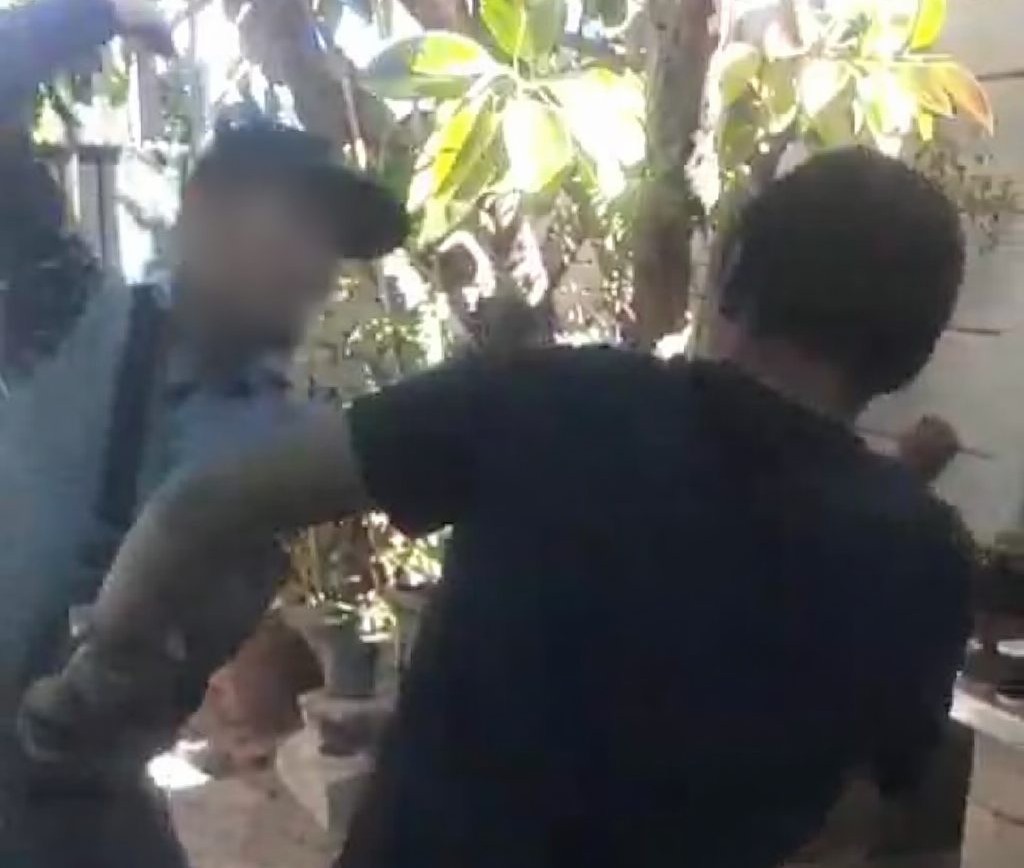
The community leader sent Zona a video of the boy being slapped by a man after he had entered a stranger’s house. Zona discovered that the boy had been returned to his mother’s care, was still not receiving his medication and was allowed to roam the community unsupervised.
Morton once again called the DSD’s after hours social work team, whom she commended for always responding immediately to emergency call-outs.
“They found all three children at risk due to the condition of the house, and they also said to me that the mother is a substance user,” Morton said. “They took him to Helderberg Hospital and because he’s a minor, they had to take his mother with. But they left the other two children in the safe care of a neighbour.”
This time the team referred all the children to the same NGO. Morton said she followed up with DSD after the boy was discharged and was assured that his safety had been secured.
Third call-out
Later that evening however, Morton received a third call from the community leader.
“So I repeated the process,” Morton said. “I called social development again and I asked ‘How is it possible that the NGO made a statement that the children are safe if they are still at home?”
The after-hours team went out to the house again but by this time the youngest child, a 12-year-old, had run away.
“So they took the 16-year-old mentally and physically disabled boy and the 14-year-old girl, and placed them with safety parents. They then gave me the commitment that the next morning they would go back and open a case of child abuse and neglect, which they did,” Morton said.
The 12-year-old child was found two days later and also taken to safety, Morton said.
She says she is concerned that the NGO’s DSD are outsourcing to don’t have sufficient oversight.
DSD responds
DSD spokesperson Esther Lewis said the department does have oversight mechanisms which includes quarterly reporting and on agreed upon indicators.
“NGOs also submit audited financial statements to the department to ensure the funding provided is being used for the intended purposes, as set out in their business plans,” Lewis said.
Additionally, each NGO has a complaints mechanism with and escalation process for people to follow if they are unhappy with the service they received.
“Activists should please report any specific issues they encounter with individual funded social sector NGOs to the department. We fund over 1000 organisations and most are rendering excellent services,” she said.
She said that until very recently, social work relied heavily on a paper-based system to track and report progress on cases.
“The introduction of the Social Work Integration Management System (SWIMS) app, and ongoing rollout to NGOs – and training on how to use the system – will contribute to better supervision of cases and caseloads, and to address instances where cases may fall through the cracks,” she said. “Where an NGO is consistently underperforming in spite of efforts to assist them, or if an NGO declares it is unable to continue rendering services, we stop funding them and either find another suitably capable organisation to step in or we take over the area with our own social workers, which usually requires appointing additional personnel.”
Service delivery issues can be reported to the Department for investigation via the call centre on 0800 220 250 or email to SD.CustomerCare@westerncape.gov.za