


United States President Donald Trump ordered the deployment of two nuclear submarines on Friday in an extraordinary escalation of what had previously been an online war of words with a Russian official concerning Ukraine and tariffs.
Trump and Dmitry Medvedev, the deputy chairman of Russia’s security council, have been sparring on social media for several days.
Trump’s post on his Truth Social platform abruptly elevated that dispute into the very real—and rarely publicised—sphere of nuclear forces.
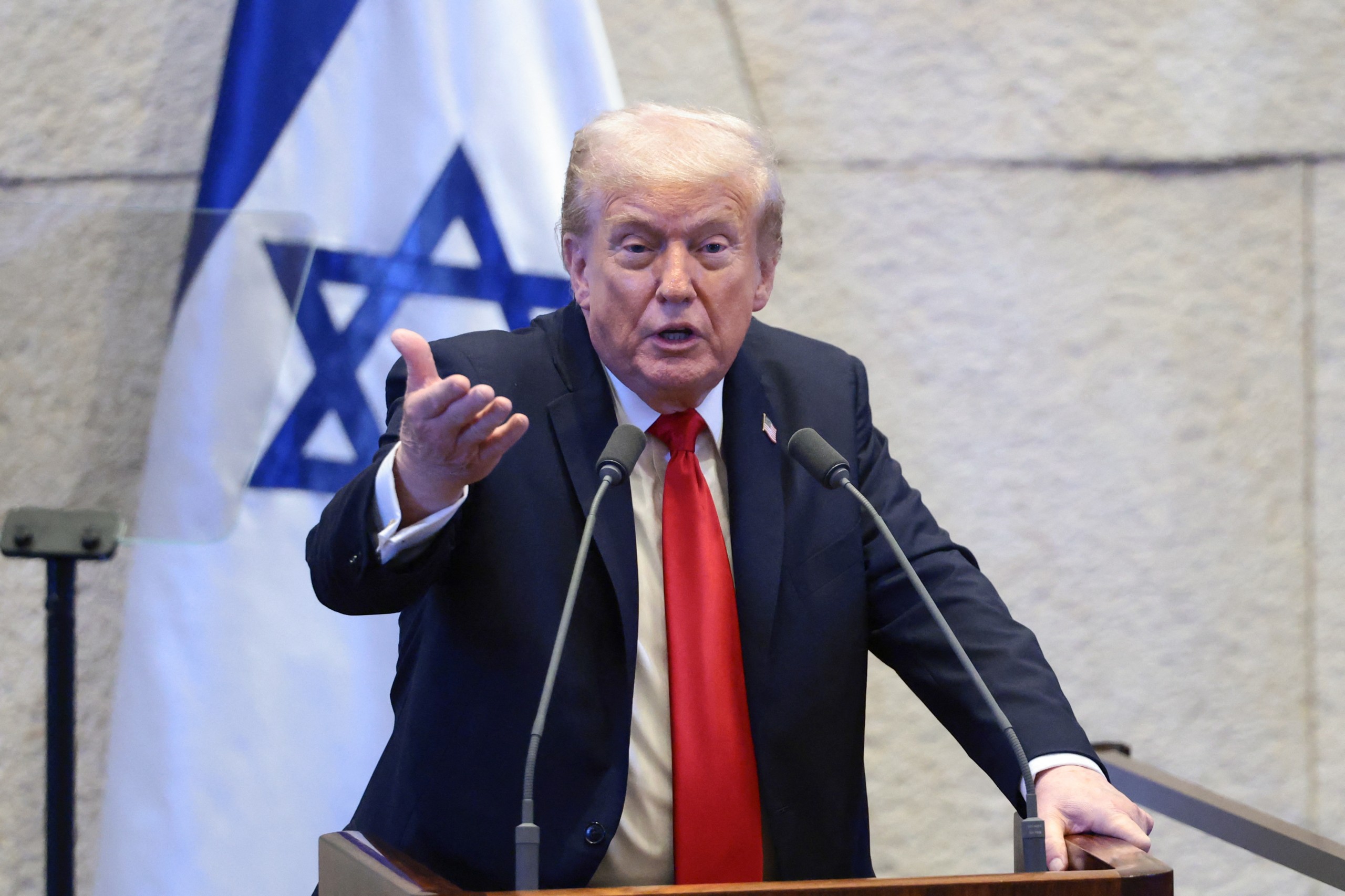
‘Based on the highly provocative statements,’ Trump said he had ‘ordered two Nuclear Submarines to be positioned in the appropriate regions, just in case these foolish and inflammatory statements are more than just that.’
‘Words are very important, and can often lead to unintended consequences. I hope this will not be one of those instances,’ the 79-year-old Republican posted.
Trump did not specify in his post whether he meant nuclear-powered or nuclear-armed submarines. He also did not elaborate on the exact deployment locations, which are kept secret by the US military.
However, in an interview with Newsmax that aired on Friday evening, Trump said the submarines were ‘closer to Russia.’
‘We always want to be ready. And so I have sent to the region two nuclear submarines,’ he said.
‘I just want to make sure that his words are only words and nothing more than that.’
Hypersonic missile production
Trump’s remarks came hours after Russian President Vladimir Putin announced that Moscow had begun mass production of its hypersonic nuclear-capable Oreshnik missile, and could deploy them to Belarus, a close Russian ally neighbouring Ukraine, by year’s end.
The nuclear sabre-rattling came against the backdrop of a deadline set by Trump for the end of next week for Russia to take steps towards ending the Ukraine war or face unspecified new sanctions.
Despite the pressure from Washington, Russia’s onslaught against its pro-Western neighbour continues to unfold at full intensity.
An AFP analysis on Friday showed that Russian forces had launched a record number of drones at Ukraine in July.
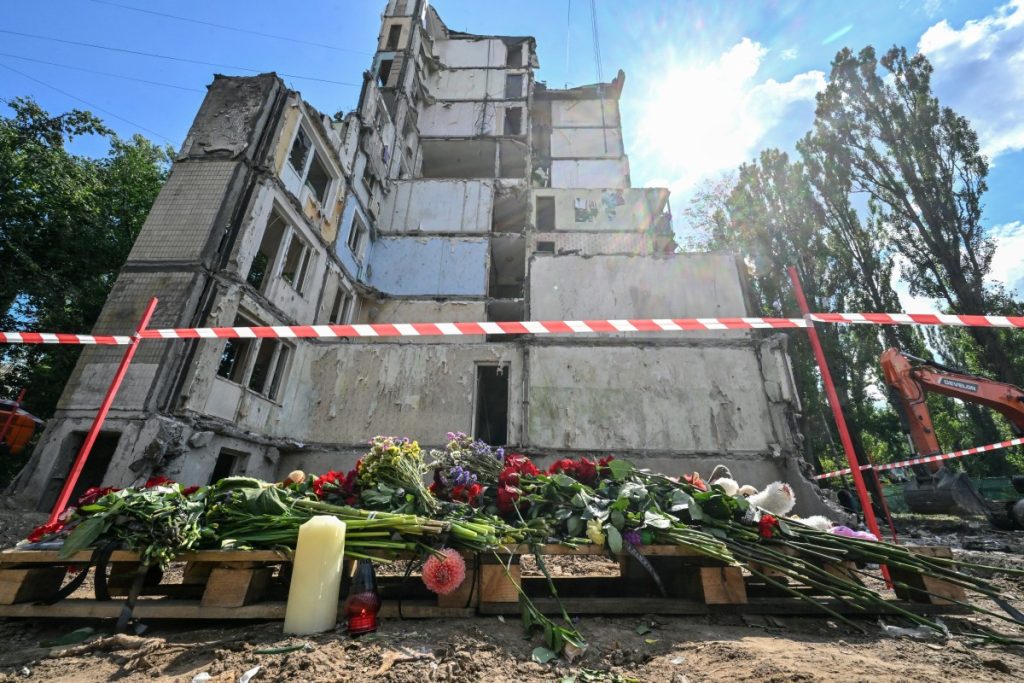
Russian attacks have killed hundreds of Ukrainian civilians since June. A combined missile and drone attack on the Ukrainian capital Kyiv early on Thursday killed 31 people, rescuers said.
Putin, who has consistently rejected calls for a ceasefire, said on Friday that he wants peace but that his demands for ending his nearly three-and-a-half-year invasion were ‘unchanged’.
Those demands include that Ukraine abandon territory and end ambitions to join NATO.
Putin, speaking alongside Belarusian President Alexander Lukashenko, said Belarusian and Russian specialists ‘have chosen a place for future positions’ of the Oreshnik missiles.
‘Work is now underway to prepare these positions. So, most likely, we will close this issue by the end of the year,’ he added.
Nuclear rhetoric and diplomatic tensions
The United States and Russia control the vast majority of the world’s nuclear weaponry, and Washington maintains nuclear-armed submarines on permanent patrol as part of its so-called nuclear triad of land, sea and air-launched weapons.
Trump told Newsmax that Medvedev’s ‘nuclear’ reference prompted him to reposition US nuclear submarines.
‘When you mention the word “nuclear”… my eyes light up. And I say, we better be careful, because it’s the ultimate threat,’ Trump said in the interview.
Medvedev had criticised Trump on his Telegram account on Thursday and alluded to the ‘fabled “Dead Hand”‘—a reference to a highly secret automated system put in place during the Cold War to control the country’s nuclear weapons.
This came after Mr Trump had lashed out at what he called the ‘dead economies’ of Russia and India.
Medvedev had also harshly criticised Mr Trump’s threat of new sanctions against Russia over its war in Ukraine.
Accusing Trump of ‘playing the ultimatum game,’ he posted on Monday on X that Mr Trump ‘should remember’ that Russia is a formidable force.
Trump responded by calling Mr Medvedev ‘the failed former President of Russia, who thinks he’s still President.’
Medvedev should ‘watch his words,’ Trump posted at midnight in Washington on Wednesday. ‘He’s entering very dangerous territory!’
Political context
Medvedev is a vocal proponent of Russia’s war and generally antagonistic towards relations with the West.
He served as president between 2008-2012, effectively acting as a placeholder for Putin, who was able to circumvent constitutional term limits and remain in de facto power.
The one-time reformer has rebranded over the years as an avid online provocateur, touting often extreme versions of official Kremlin nationalist messaging.
However, his influence within the Russian political system remains limited.
Mourning in Kyiv
In Kyiv on Friday, residents held a day of mourning for the 31 people, including five children, killed the day before, most of whom were in a nine-storey apartment block torn open by a missile.
Ukrainian President Volodymyr Zelensky said only Putin could end the war and renewed his call for a meeting between the two leaders.
‘The United States has proposed this. Ukraine has supported it. What is needed is Russia’s readiness,’ he wrote on X.


You must be logged in to post a comment.