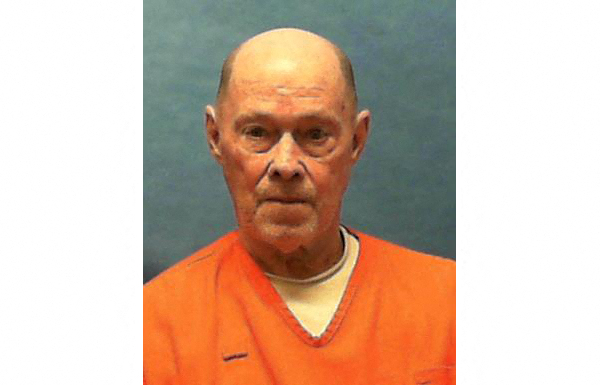
Tennessee has suspended all remaining executions this year after a convicted murderer survived two doses of lethal injection drugs on Wednesday night, in what a leading death penalty expert called an unprecedented failure and the state’s second botched execution in months.
Christa Pike, 50, was taken to a hospital after the failed execution at the Riverbend Maximum Security Institution in Nashville. Her attorneys said she was receiving “life-saving measures” but that they had not been informed of her condition as of Thursday morning.
Governor Bill Lee ordered a “comprehensive, third-party review to determine exactly what occurred” and said the year’s last remaining execution – that of Gary Wayne Sutton, scheduled for 3 December – would not be carried out.
A day of legal wrangling, then a failed procedure
Pike had been scheduled for execution at 10:00 on Wednesday. An hour before the scheduled time, the US Court of Appeals for the Sixth Circuit granted a temporary stay, prompting Tennessee’s attorney general to appeal to the US Supreme Court. Just before 18:00, the high court overturned the stay in a 6-3 decision, clearing the way for the execution to proceed.
The state then administered two syringes of pentobarbital, the single-drug protocol Tennessee adopted in 2024. Media witnesses reported that Pike remained visibly alive throughout.
“After the blinds of the execution chamber closed for the final time, Pike could be heard loudly snoring, clearly very alive in the chamber until media witnesses were told to leave the area,” said Kim Chandler, an Associated Press media witness, speaking to CBS News. Witnesses were ordered to leave at approximately 20:53.
An ambulance with flashing lights was seen leaving the prison grounds during a livestream of the event.
Attorneys and state officials respond
“Tonight the State of Tennessee once again failed to carry out a lawful execution,” Pike’s legal team said in a statement. They cited “difficult vein access, blown veins, degraded pentobarbital, no emergency medical care available when things inevitably go wrong, all under a protocol that remains veiled in secrecy.”
The Tennessee Department of Correction said in a statement that it “followed every step of the State’s lawful, established execution protocol approved by the Attorney General’s Office,” adding that “the lethal injection chemical in the protocol has consistently been effective” and that “the protocol does not allow for additional procedures beyond what was carried out this evening.”
Pike was subsequently transported to an “off-site medical facility,” the department said.
Robin Maher, executive director of the Death Penalty Information Center, told the New York Times: “This event is the worst we’ve seen and unlike any other botched execution in the modern era. There is no precedent.”
Supreme Court dissent and international concern
The Supreme Court’s three liberal justices – Sonia Sotomayor, Elena Kagan, and Ketanji Brown Jackson – dissented from the decision to lift the stay.
“The Court grants such extraordinary relief solely to allow the State to execute Pike before litigation over her conviction has properly run its course in the lower courts,” the dissenting justices wrote.
Independent UN human rights experts had urged the US government and Tennessee authorities to “immediately halt” the execution and commute Pike’s death sentence.
A second failure this year
The attempted execution was Tennessee’s second failed lethal injection this year. In May, the state halted the execution of Tony Carruthers after medical staff were unable to find a vein to administer the drug. Carruthers was granted a one-year reprieve.
Tennessee had previously paused executions in 2022 after acknowledging it had failed to properly test its lethal injection drugs.
Background: the crime and the clemency plea
Pike was 18 years old in 1995 when she and her boyfriend beat and killed Colleen Slemmer, 19, at a Job Corps training camp for young people. Slemmer’s body was found with a pentagram carved in her chest and the case gained national attention.
Pike’s lawyers argued for clemency, citing her young age at the time of the crime and her history of mental illness, childhood sexual abuse, post-traumatic stress disorder and a blood condition they said would cause “needless suffering” during lethal injection.
“She was 18 when she committed her crime and she was deeply mentally ill,” they wrote in a clemency petition to Governor Lee, who declined to intervene.
Had the execution succeeded, Pike would have been the first woman executed in Tennessee in more than 200 years. According to the Death Penalty Information Center, only 18 women have been executed in the United States since 1976.
Authorities have not said whether they will attempt to execute Pike again. Her execution warrant was set to expire at midnight on Wednesday.