
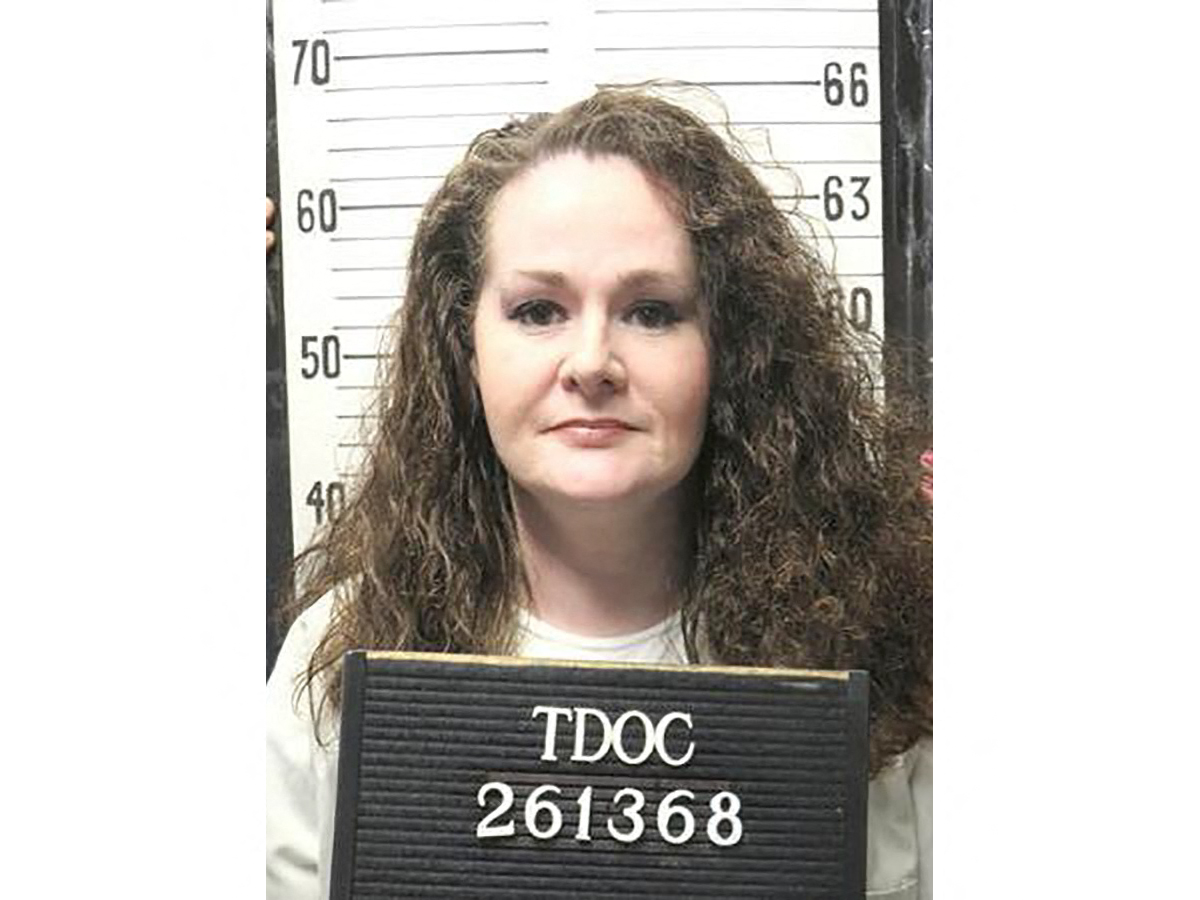
Tennessee state officials are seeking to block legal counsel for death row inmate Christa Pike from inspecting or testing pentobarbital samples recovered from her failed execution attempt, claiming that allowing access would expose the state’s confidential drug supplier.
Pike (50) survived an execution attempt on 30 September at the Riverbend Maximum Security Institution in Nashville after receiving two doses of pentobarbital. The procedure was aborted when the lethal substance failed to take effect, leaving witnesses to report her snoring before she was rushed to an off-site hospital.
In a recent motion filed with the Davidson County Chancery Court, the state requested that Chancery Court Judge I’Ashea Myles rescind an order permitting Pike’s defense team to collect, inspect, and test leftover chemical residue and drug vials.
State cites legal protections for drug vendors
In court filings, Tennessee Attorney General Jonathan Skrmetti argued that allowing Pike’s legal team or external experts to handle or examine the execution materials would violate state confidentiality laws, which shield the identities of individuals and entities involved in procuring lethal injection drugs.
A sworn affidavit submitted by a Tennessee Department of Correction (TDOC) official asserted that the state’s pentobarbital supplier would be easily identifiable if the defense examined the packaging or remaining vials. The official warned that compromising the vendor’s identity could cause the state to lose access to pentobarbital permanently, effectively halting future executions due to the difficulty of securing alternative suppliers.
Defense seeks answers on botched procedure
Pike’s defense team maintains that examining the drug samples is essential to determining why the execution failed. Defense attorney Luke Ihnen clarified that unmasking the supplier is not the objective, but rather understanding whether the pentobarbital was improperly compounded, mislabeled, stored incorrectly, or expired.
According to execution logs and witness statements, the prison’s IV team spent nearly an hour attempting to establish viable IV lines across both of Pike’s arms, utilising roughly ten needles and noting multiple potential vein ruptures. Shortly before losing consciousness, Pike reported severe burning sensations in her arm.
Medical expert Dr. Joel Zivot, an anaesthesiologist consulting for the defence, noted that the pentobarbital likely pooled in Pike’s surrounding tissue rather than circulating through her bloodstream – a failure compounded by small veins and a pre-existing blood-clotting condition (thrombocytosis).
An ambulance was dispatched to the facility roughly one hour and 45 minutes after the procedure began.
Condition, legal status, and executive pause
Pike was discharged from hospital on 9 October and returned to the Debra K. Johnson Rehabilitation Centre, where she remains in the prison infirmary under daily medical observation. While TDOC Chief Medical Officer Dr. Eduardo Ortiz stated in a declaration that Pike requires ongoing care, her attorneys recently filed an emergency motion requesting her transfer out of isolation, which the state is actively opposing.
In her first statement following the attempt, issued on 30 October, Pike described enduring continuous physical pain and severe trauma, while expressing ongoing remorse for the family of her victim.
Pike was convicted alongside a co-defendant in 1995 for the torture and murder of 19-year-old Colleen Slemmer. Sentenced at age 18, Pike became one of the youngest women placed on death row in modern U.S. history, and is the first person in the nation to survive an administered lethal injection.
Following the incident, Tennessee Governor Bill Lee suspended all scheduled executions through the end of 2026, appointed a former U.S. attorney to conduct an independent investigation, and accepted the resignation of the state prison chief. Judge Myles has not yet ruled on the state’s motion regarding the drug vials.
Sources: CBS News, WPLN News, TN.gov, Death Penalty Information Center