

NEUCHATEL, Switzerland — A Swiss municipality has returned three sacred artifacts to South Africa after more than a century, marking a significant gesture of cultural reconciliation ahead of a high-profile diplomatic visit.
The town of Neuchatel on Tuesday formally handed over a collection of divining bones in a woven basket, a bull’s foot bone amulet, and a ceremonial walking staff that had been housed in the local Ethnographic Museum since the early 1900s.
The artifacts were originally acquired by Swiss missionary and ethnographer Henri-Alexandre Junod, who purchased them from the regent of the Nkuna chiefdom’s Shilubana royal family during his time in South Africa. Junod had developed a close friendship with the royal family during his missionary work.
The repatriation comes just a day before South African President Cyril Ramaphosa began his state visit to Switzerland, underscoring the diplomatic significance of the gesture.
“The return of these artefacts to their country of origin attests to the excellent state of relations between Switzerland and South Africa,” Neuchatel officials said in a statement Tuesday.
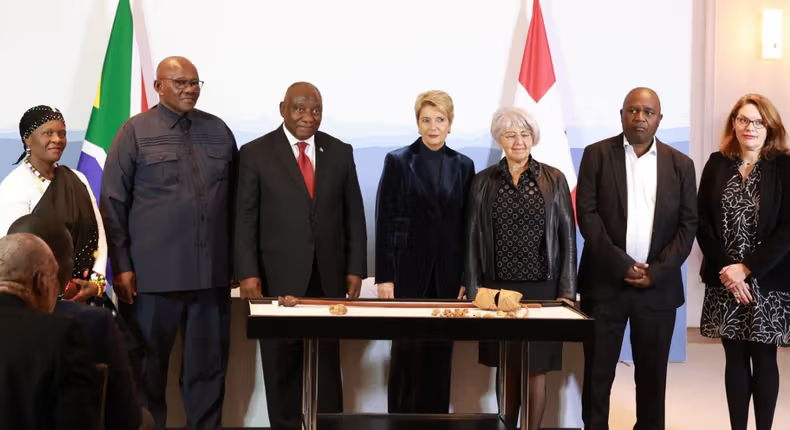
The ceremony was attended by South Africa’s ambassador to the Democratic Republic of Congo, Abel Mxolisi Shilubane, who is himself a descendant of the Shilubana family. According to Swiss news agency Keystone-ATS, Shilubane welcomed the gesture and thanked Neuchatel authorities for the handover.
The artifacts originated in Shiluvane, located in South Africa’s northeastern Limpopo Province, where Swiss missionaries first established a presence in 1886. The friendship between Junod and regent Mugevisa Mankhelu Shilubana led to the establishment of educational and medical institutions that remain operational today, including a primary school, secondary school, hospital, and Swiss missionary church.
Junod, who spent decades in Africa before returning to Switzerland in 1920, made significant contributions to African ethnography. His seminal work “The Life of a South African Tribe,” which documented the Tsonga people and codified their language, remains a major reference in the field. He died in 1934 at age 70.
The three items had not been displayed as part of the museum’s permanent exhibition since the 1950s. Discussions about their voluntary return began in 2016, culminating in Tuesday’s formal transfer ceremony at Neuchatel’s town hall.
“It is a moving moment to see these artefacts return to their country and family of origin, where they will be able to regain their symbolic and religious function,” said Nicole Baur, the town council leader, during the signing ceremony.
The repatriation reflects growing international efforts by museums and cultural institutions to return artifacts to their countries of origin, particularly items with sacred or cultural significance that were acquired during the colonial era.






You must be logged in to post a comment.