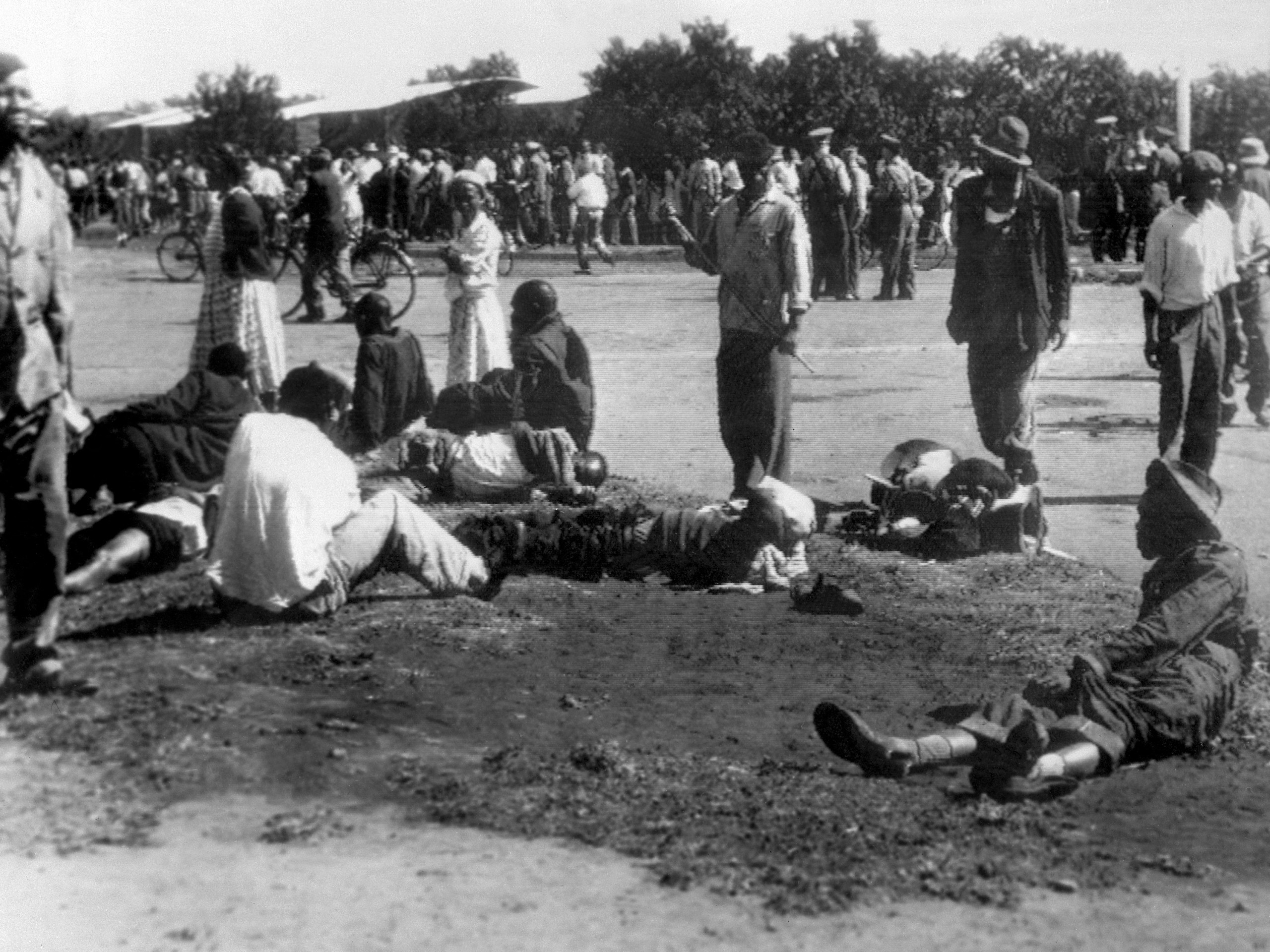
Lawyers representing survivors and relatives of victims killed when apartheid police opened fire on a peaceful protest in Sharpeville have announced legal action against the South African government.
The Sharpeville massacre on 21 March 1960 marked a defining moment in the struggle against white-minority rule, exposing the brutality of the apartheid regime to international scrutiny.
Lawyers for Human Rights announced it would seek to overturn legislation passed a year after the massacre that prohibited legal action by survivors and dependents of those killed.
“The plaintiffs will argue that the Indemnity Act should be struck from the statute book,” the organisation said in a statement.
The law effectively extinguished all legal claims arising from the massacre and infringed the plaintiffs’ constitutional right to access courts.
Background to the massacre
The protest was part of a national campaign organised by the Pan-Africanist Congress (PAC) against pass laws, which the apartheid government used to control and restrict Black South Africans.
Under these laws, all Black people over 16 were required to carry a passbook documenting their personal history, employment status and authorisation to be in specific urban areas. Failure to produce the document could result in arrest or deportation to a homeland.
The PAC, formed in 1959 under Robert Sobukwe’s leadership, called on members to leave their passbooks at home and voluntarily present themselves at police stations for arrest.
The shooting
On the morning of 21 March 1960, between 5 000 and 20 000 people gathered outside the Sharpeville police station, near Vereeniging in Gauteng. Witnesses described the atmosphere as largely peaceful.
At approximately 13:30, police opened fire on the crowd without warning, discharging 1 344 rounds.
While apartheid-era police records indicate 69 people were killed and at least 180 wounded, subsequent research found at least 91 people died and more than 238 were injured. Many were shot in the back as they tried to flee.
Lasting impact
The massacre prompted the government to declare the country’s first state of emergency and ban both the PAC and the African National Congress.
The event marked a shift from passive resistance to armed struggle and brought international condemnation of apartheid. The date is now observed annually as the International Day for the Elimination of Racial Discrimination.
Apartheid officially ended with the first all-race election in 1994.
ALSO READ: No criminal charges in 1993 Highgate Hotel massacre after 30-year investigation