

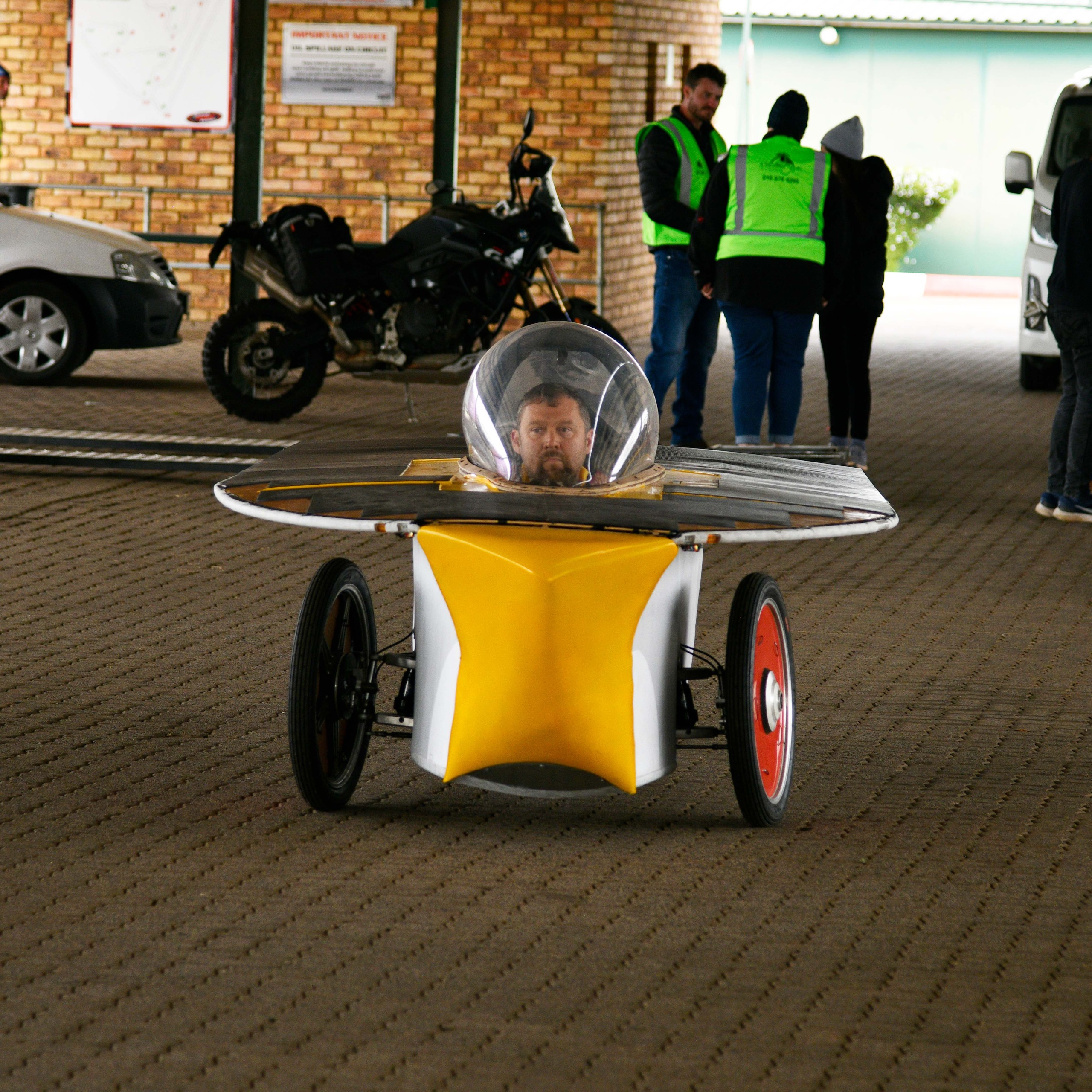
A fleet of solar-powered vehicles is tackling a journey of more than 2 500 kilometres across South Africa, and not one of them will use a drop of petrol.
In this 2026 Sasol Solar Challenge, where the futuristic vehicles will be seen on roads in Gauteng, North West, Northern Cape and Western Cape, the real test is not who crosses the finish line first, but who can keep a sun-powered car running, day after day, amidst unpredictable weather conditions.
Dr Bruce Crossey, public relations and communications lead, says what makes the event so extraordinary is not just the distance that needs to be covered, but who is behind the wheel and who built the cars in the first place. Homegrown teams from South African universities and independent innovators will take on the challenge alongside crews coming in from abroad.
Rigorous pre-race inspections
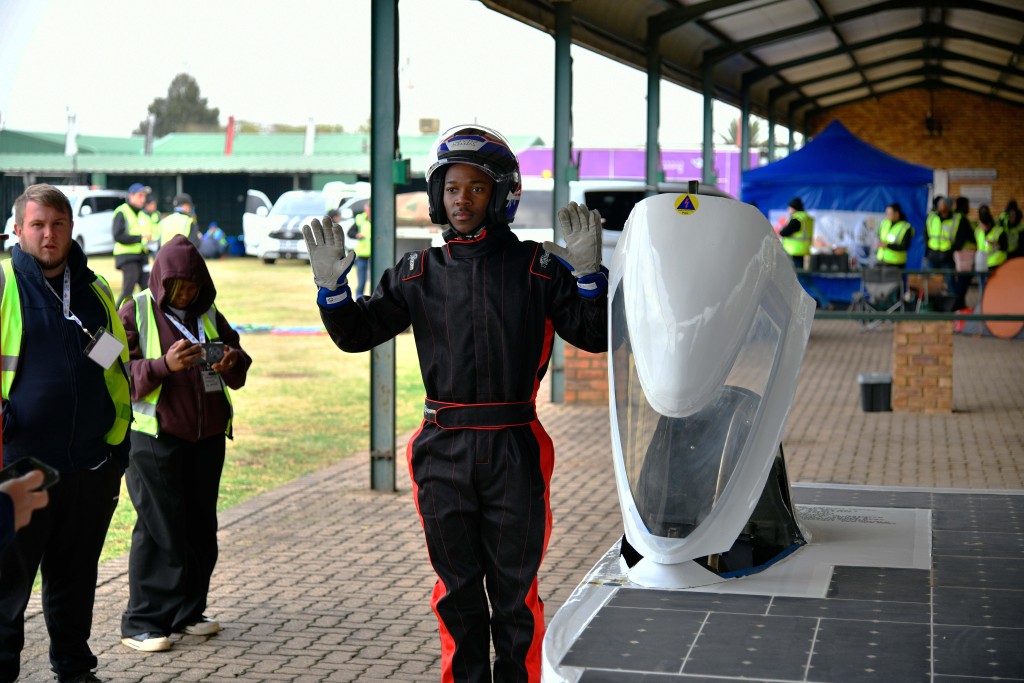
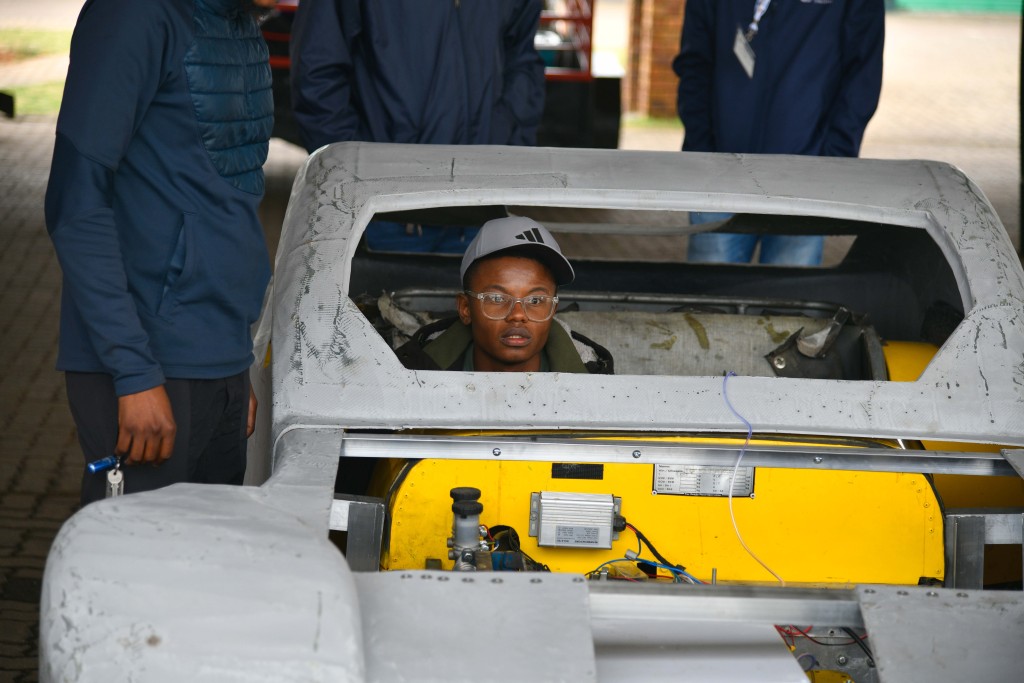
Before the commencement of the journey, static scrutineering was undertaken at Red Star Raceway. During this process, crews put their hand-built solar vehicles through a rigorous set of checks whilst conditions on site have been anything but forgiving. Cold temperatures, biting wind and intermittent rain have tested both the vehicles and their crews.
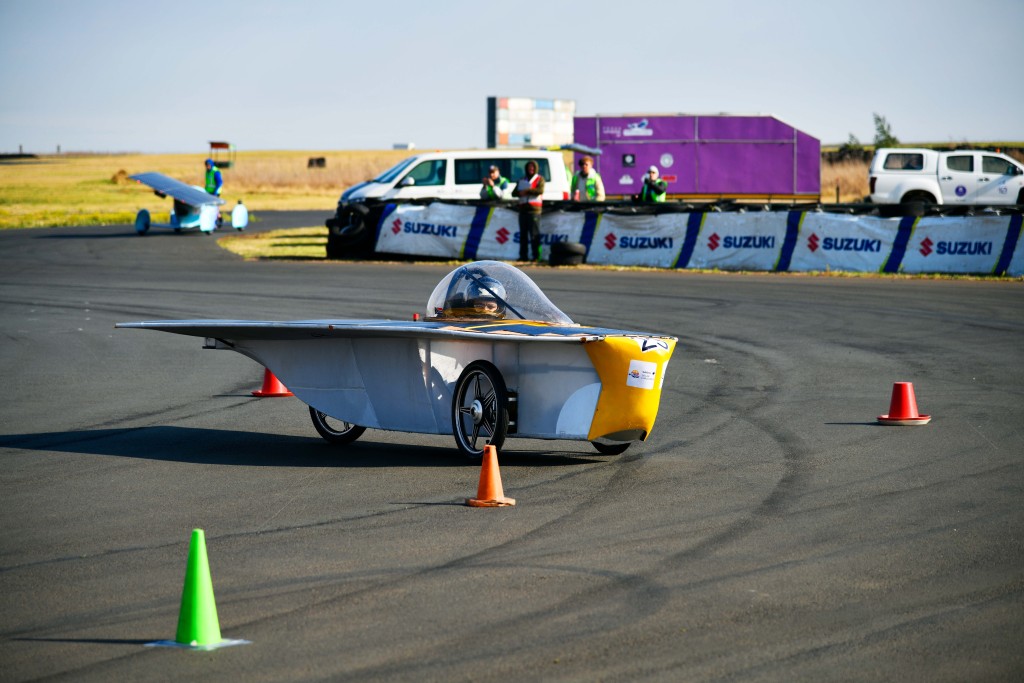
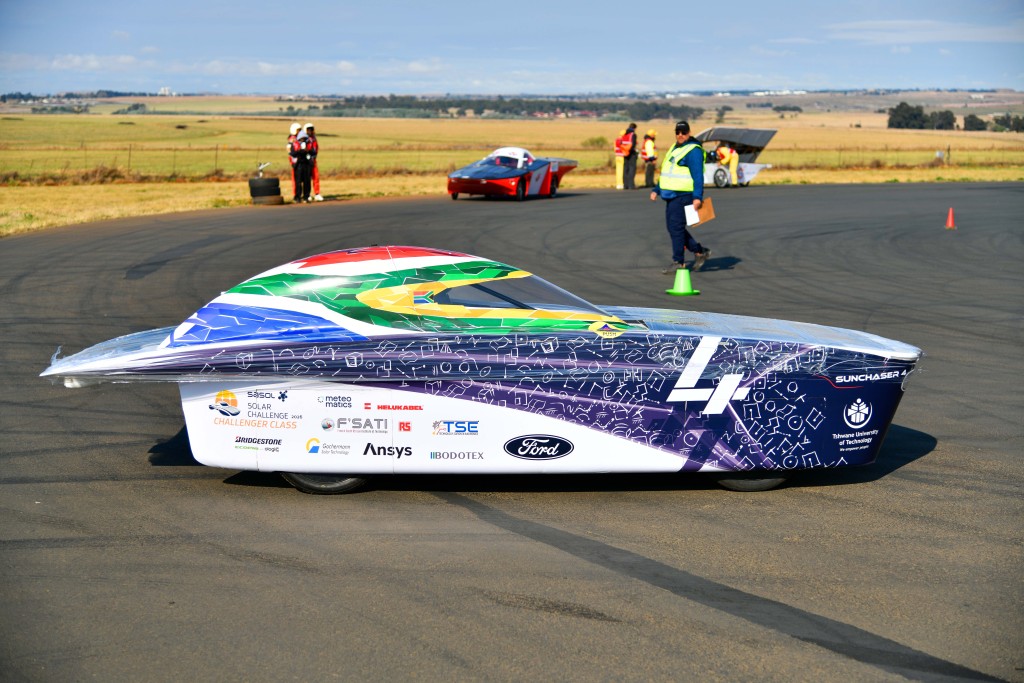
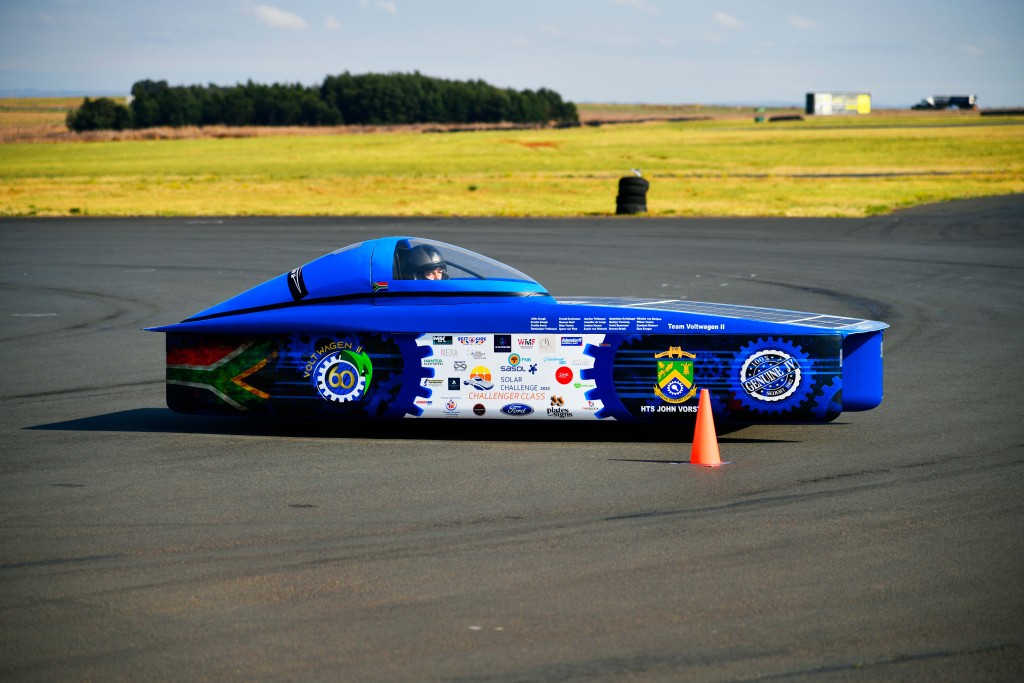
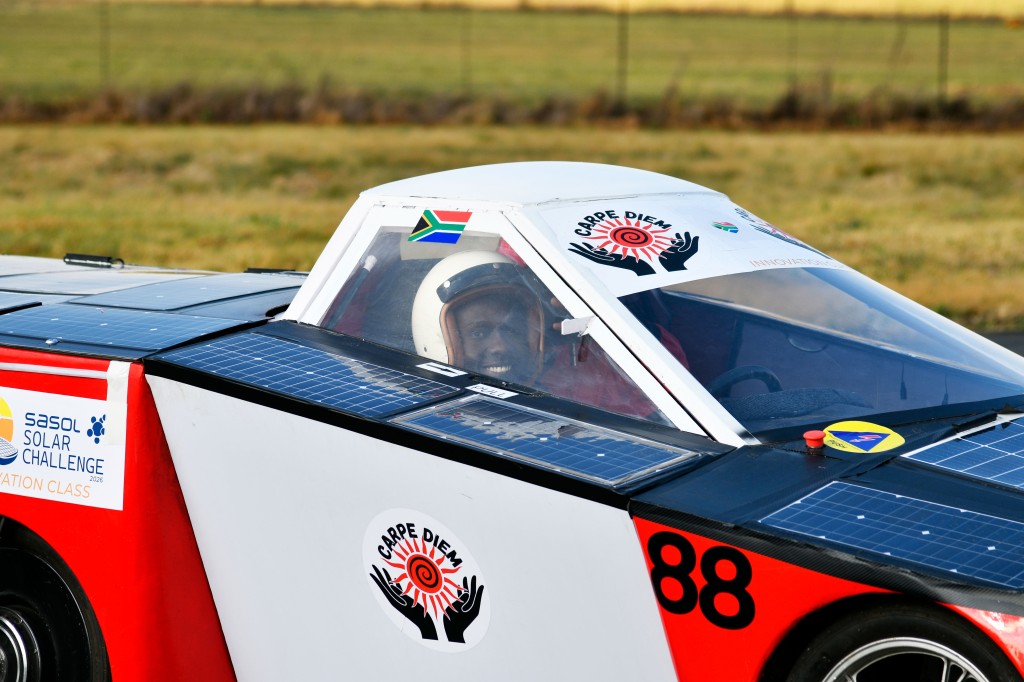
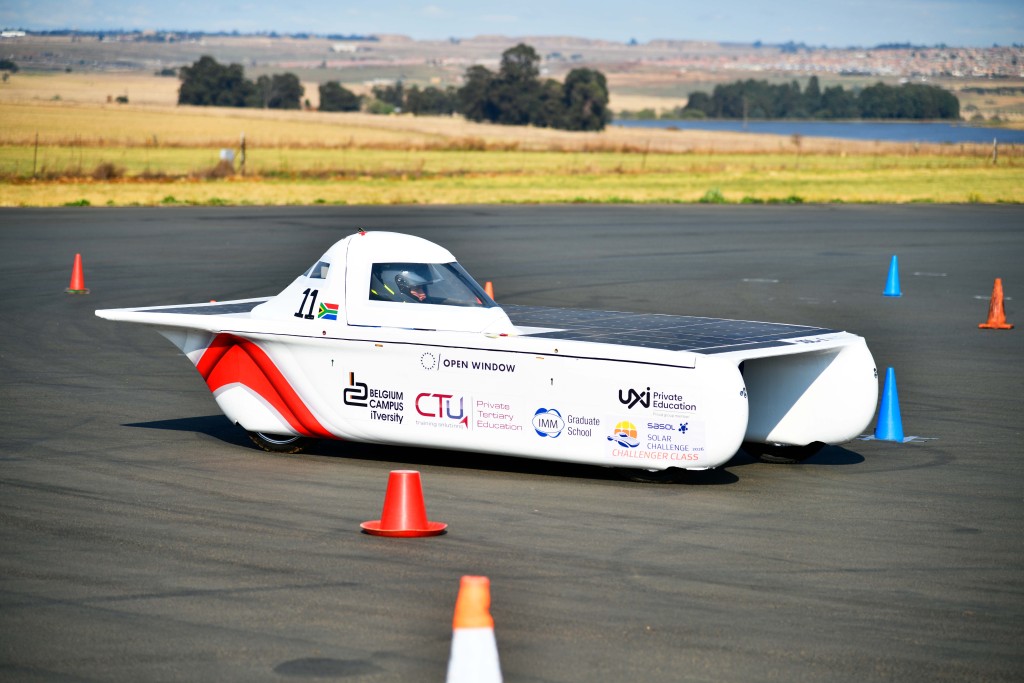
For many, it has been a preview of the unpredictable weather they can expect to contend with once their cars make their way onto South Africa’s open roads. This serves as a stark reminder that in the Sasol Solar Challenge, the elements are as much a competitor as the odometer.
Static scrutineering is a detailed, stationary inspection of each vehicle. Challenge officials examine the chassis, electrical systems, battery enclosures, braking systems, driver visibility and overall build quality of each and every solar car against the event’s technical regulations. This stage of inspection is essential because every solar car in the Sasol Solar Challenge is designed and built from scratch by the team that drives it, and no two vehicles are alike.
Ensuring safety and fairness
The purpose of this process is twofold. First, safety: with vehicles set to share public roads with everyday traffic across multiple provinces, organisers must be confident that every car meets the structural and electrical standards required to operate safely for eight days straight. Second, fairness: scrutineering ensures every team is competing under the same technical rules, so that the final results reflect strategy, engineering and endurance rather than teams potentially taking “shortcuts” around the published rules and regulations.
Vehicles that pass static scrutineering then move on to dynamic scrutineering, where cars are tested in motion. Here, more mobile aspects such as handling, braking response and the on-road behaviour of each car are assessed before teams are formally cleared to take their place on the start grid.
To compete, every car on the grid must have been designed and built from the ground up by the team driving it, meaning that no two vehicles are the same.
Each day a challenge
“Each solar car acts as a rolling engineering thesis, the physical manifestation of years of late nights, failed prototypes and stubborn optimism distilled into a vehicle that runs on sunlight alone,” Crossey remarks.
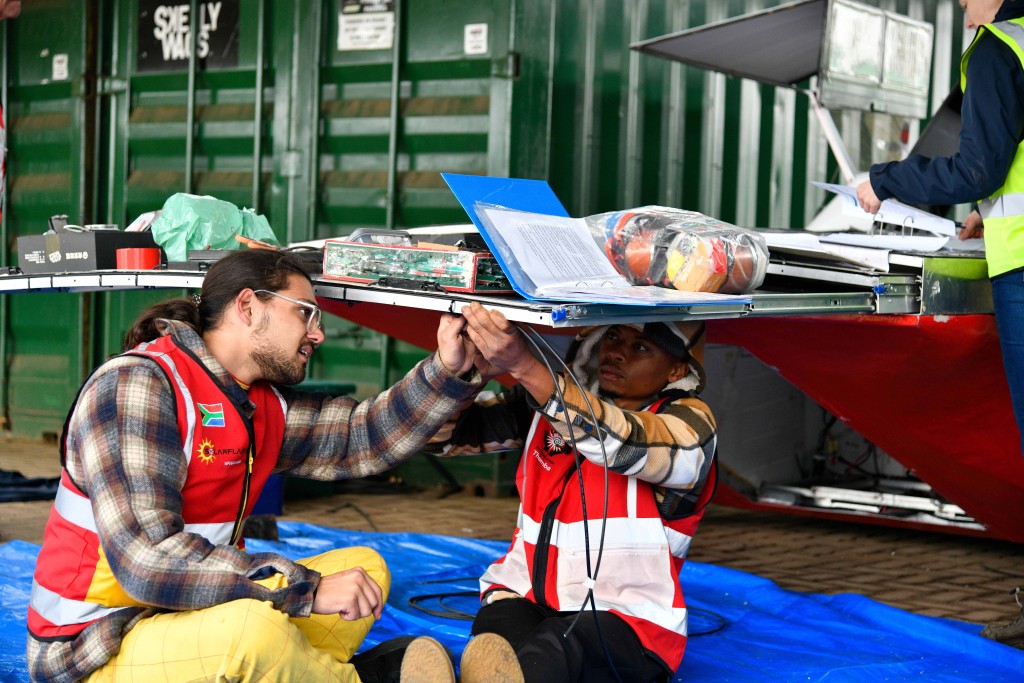
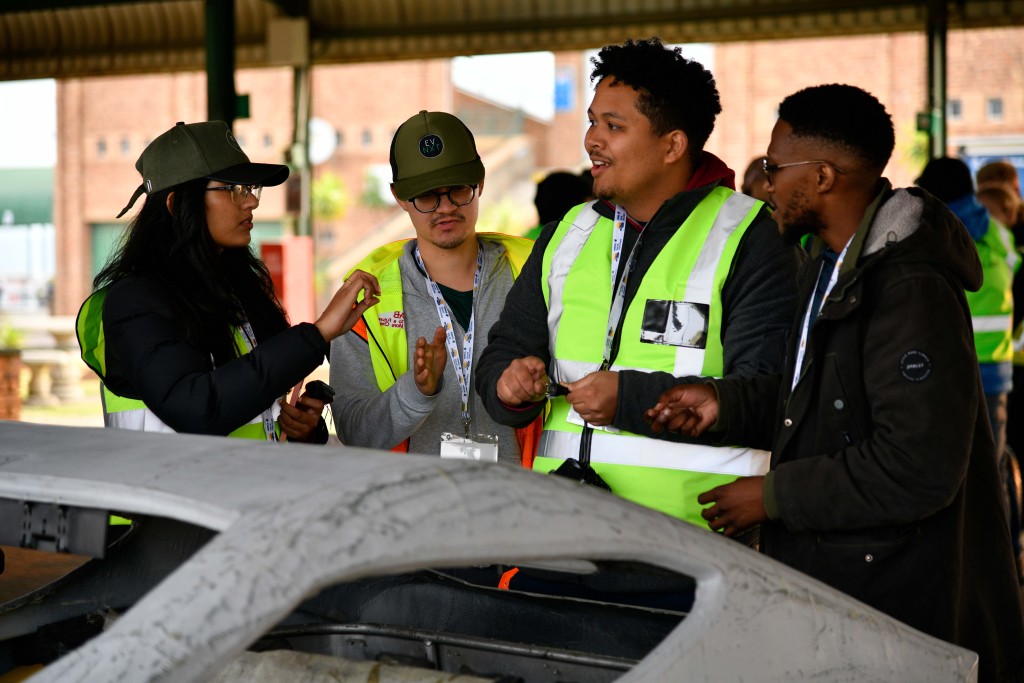
Each day of the challenge, teams need to cover between 250 kilometres and 300 kilometres.
Inspiring the next generation
Running alongside the Sasol Solar Challenge is the Schools Programme, an initiative designed to spark awareness, excitement and opportunity for school learners in science, technology, engineering and mathematics (STEM).
As the solar cars pass through designated control stop towns (compulsory checkpoints teams must reach along the route), the Schools Programme rolls out hands-on activations. Learners have the opportunity to rotate through stations covering solar technology, e-mobility and robotics, using real toolkits to get a genuine, practical taste of STEM in action, and members of the public are welcome to join.
Route and control stops
- day 1 (10 September): Departing from Sasolburg, visit the Rustenburg High School, finish line at Swartruggens Dam;
- day 2 (11 September): finish line at Kameelboom Lodge outside Vryburg;
- day 3 (12 September): finish line at the Kimberley Technical High School;
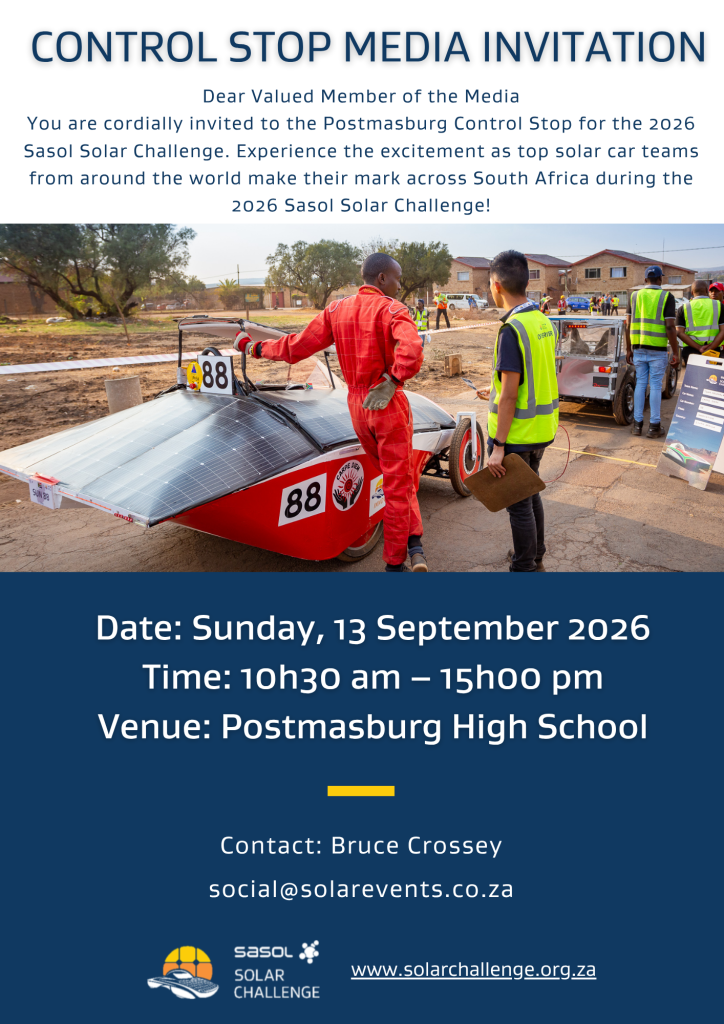
- day 4 (13 September): control stop at the Postmasburg High School, with finish line at The Ranch Chalets, Olifantshoek;
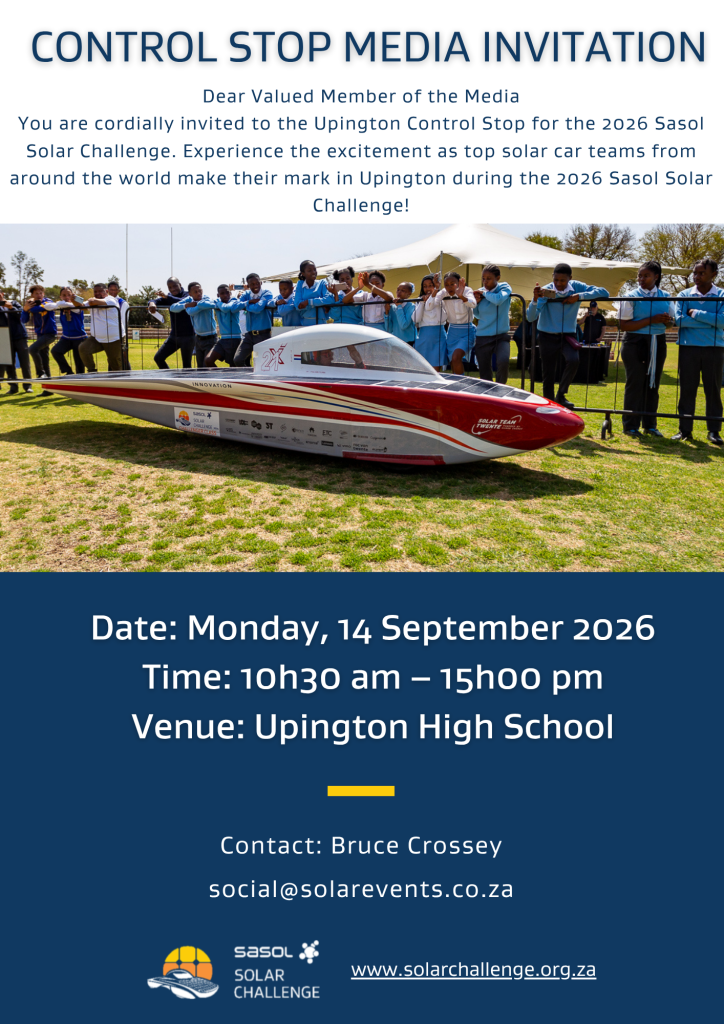
- day 5 (14 September): control stop at the Upington High School, with finish line at Kameeldoring Camping, Augrabies;
- day 6 (15 September): control stop and finish line at the Namakwaland High School in Springbok;
- day 7 (16 September): control stop at the Vanrhynsdorp High School, finish line at the Augsburg Landbougimnasium in Clanwilliam;
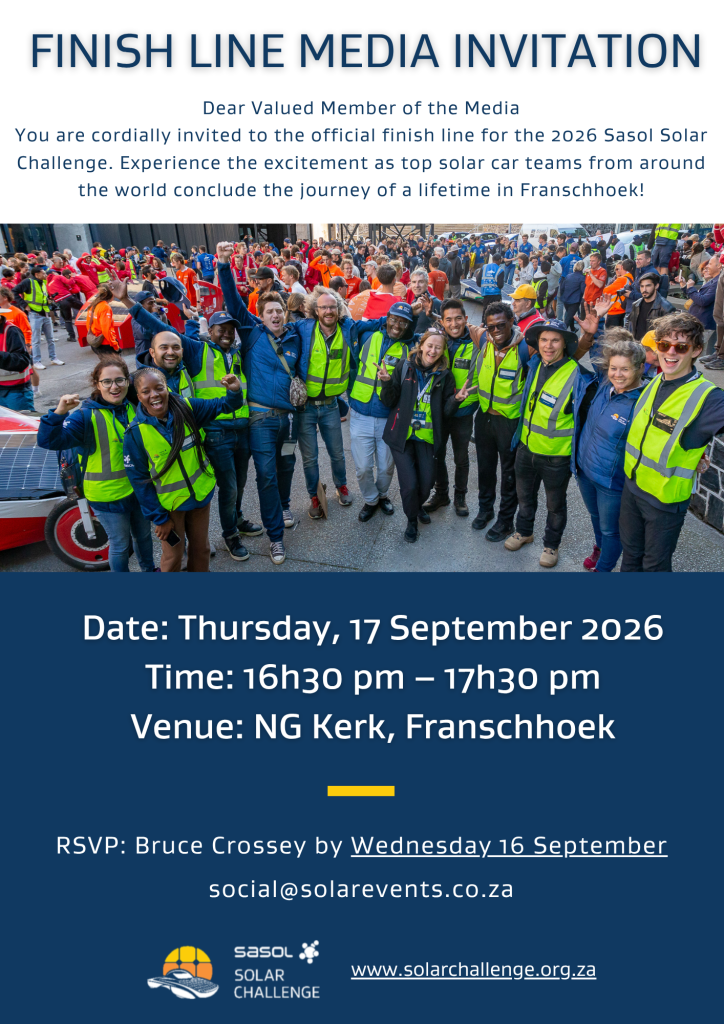
- day 8 (17 September): control stop at Charlie Hofmeyr High School in Ceres, with finish line at 16:30 at the Dutch Reformed Church in Franschhoek.
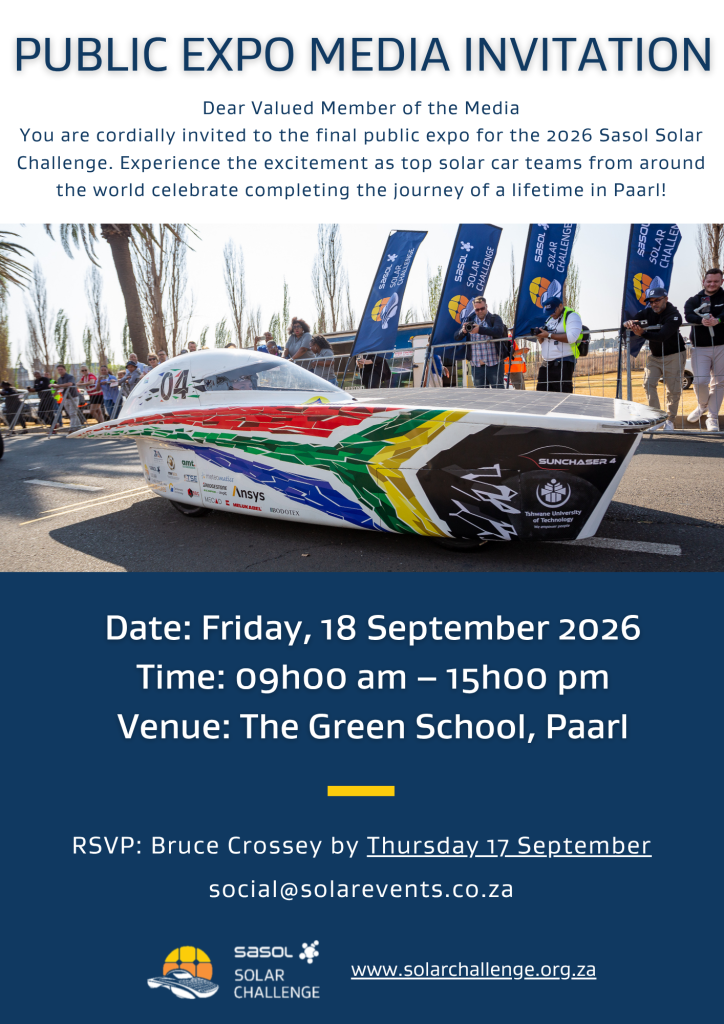
- on Friday 18 September the final public expo for 2026 takes place from 09:00 to 15:00 at the Green School, Paarl, where solar car teams will be celebrating the conclusion of the journey of a lifetime.
Visit Sasol Solar Challenge on Facebook for more information.



You must be logged in to post a comment.