Stocks rocketed on Thursday as a relief rally spread through markets. Concerns over new tariffs seemed to subside, boosting investor confidence.
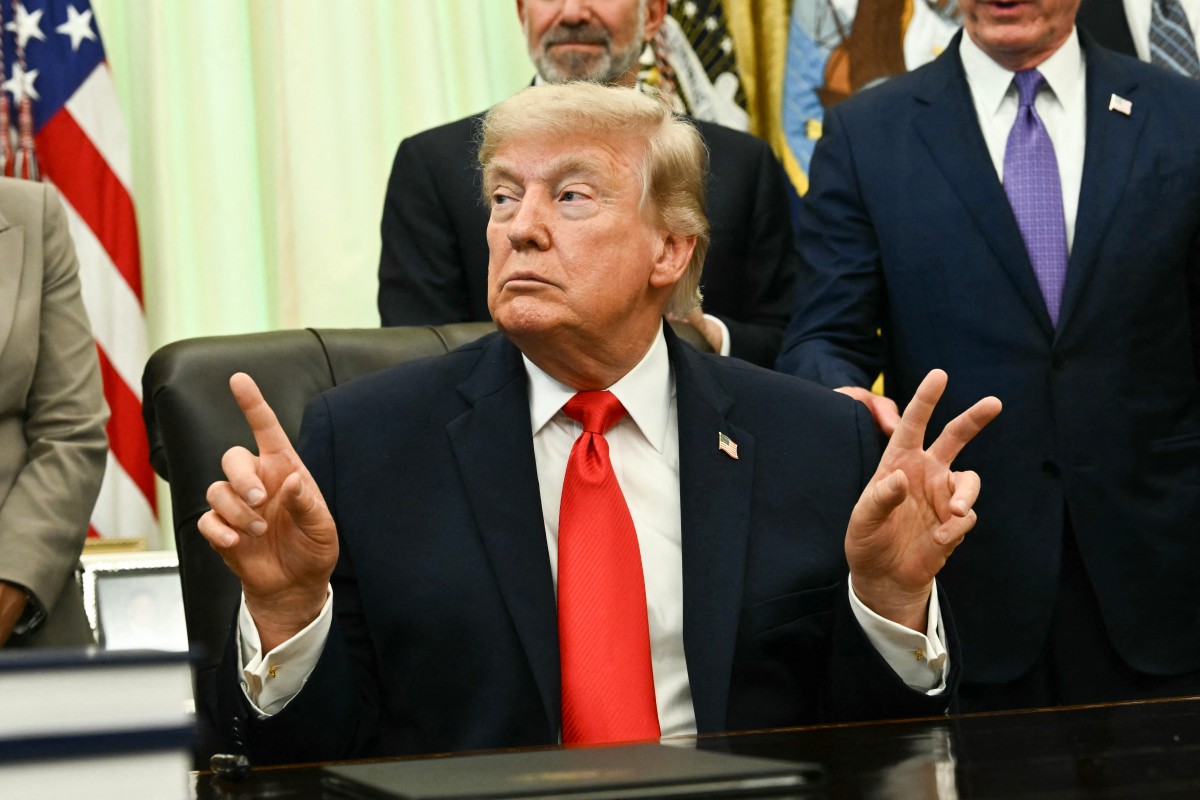
This happened after Donald Trump paused crippling tariffs on US partners. Chinese investors even brushed off his decision to ramp up duties on Beijing to 125%.
The across-the-board gains tracked a blistering performance on Wall Street. The US president said he would delay for 90 days measures announced last week. Those measures had set off a firestorm on trading floors and sparked global recession fears.
Trump said he would keep in place a basic levy of 10% on dozens of countries. However, he upped the ante in his brutal trade war with superpower rival China. He did this by hitting it even harder after it retaliated with more tariffs.
China’s own 84% retaliatory measures kicked in at 04:01 (GMT) on Thursday. Later, they said that the United States “goes against the whole world” with the measures. They called on Washington to “meet halfway”.
Trump decided to delay because investors were “jumping a little bit out of line”, he said. This came after markets collapsed. Additionally, US Treasuries – considered the safest option in times of crisis – showed signs of cracking.
People “were getting yippy, a little bit afraid”, he added. He was referring to a term in sports used to describe a loss of nerves.
The extra tariffs on Beijing, however, were “based on the lack of respect that China has shown to the world’s markets”, Trump said.
Trump denies tariff U-turn
The president denied he had made a U-turn, telling reporters that “you have to be flexible”.
And his top trade advisor Peter Navarro said: “This will go down in American history as the greatest trade negotiating day we have ever had.”
“We’re in a beautiful position for the next 90 days. We’ve got over 75 countries that are going to come in and negotiate with us. What they’re going to have to do, without fail, is they’re going to have to lower their non-tariff barriers to avoid additional tariffs.”
Trump’s shock announcement on his Truth Social network sparked a buying frenzy as Asian and European investors chased beaten-down stocks.
“Asia markets are flipping the switch – from fear to euphoria – as Trump throws a 90-day lifeline, pausing the reciprocal tariff barrage,” said Stephen Innes at SPI Asset Management.
“We just witnessed one of the all-time bouncebacks. Now, we look for Asia investors, much like their North American counterparts, to step in and buy the ‘yips’.”
Tokyo’s Nikkei surged more than nine per cent, while Taipei’s 9.3 per cent gain was its best rise on record. This came after Monday’s 9.7 per cent drop represented its worst fall.
‘Fear to euphoria’
Hong Kong rallied more than two per cent. This marked a third day of gains after collapsing more than 13 per cent on Monday in its worst day since 1997 during the Asian financial crisis. Shanghai gained more than one per cent.
The two markets have been given extra support by optimism that China will unveil fresh stimulus to support its economy, despite new tariffs.
Seoul, Singapore, Jakarta, Sydney, Saigon and Bangkok climbed between four and 6.6 per cent. Manila and Wellington were also well in the positive territory.
In early trade, Paris and Frankfurt cruised more than six per cent higher. London rallied more than four per cent.
Tech firms were the standout performers, with Sony, Sharp, Panasonic, and SoftBank chalking up double-digit gains. Airlines, car makers, and casinos also enjoyed strong buying.
Gold surges
Gold surged almost three per cent around $3 120. This is around $50 short of its record touched last month. This rise was thanks to the weaker dollar and as the uncertainty saw investors rush into the safe haven.
Chihiro Ota, at SMBC Nikko Securities, said: “What happens now? If the US takes a hardline stance (in negotiations), then the market would be disappointed. If it turns out that they can engage in talks, then it may create a room for (an upswing).”
US Treasury yields also edged down, after a successful auction of $38 billion in notes, said Briefing.com.
That eased pressure on the bond market, which had fanned worries investors were losing confidence in the United States.
However, observers warn the China-US standoff could mark a step towards a disengagement between the world’s top two economies because of tariffs.
“The escalation of the trade war between the US and China suggests that a full trade decoupling is increasingly likely,” said Mali Chivakul, emerging markets economist at J. Safra Sarasin Bank.
“Even if we may see a de-escalation later, a decoupling could still be the result.”
Trade war causing headaches
Trump’s trade war is also causing a headache for the Federal Reserve. They must weigh cutting interest rates to protect the economy or holding them to ward off the inflation many say tariffs will fuel.
Minutes from its March meeting, released on Wednesday, showed members felt they “may face difficult trade-offs if inflation proved to be more persistent. This comes while the outlook for growth and employment weakened”.
Oil prices dropped after bouncing more than four per cent on Wednesday. However, they remain under pressure amid concerns about the global economy and its impact on demand.