


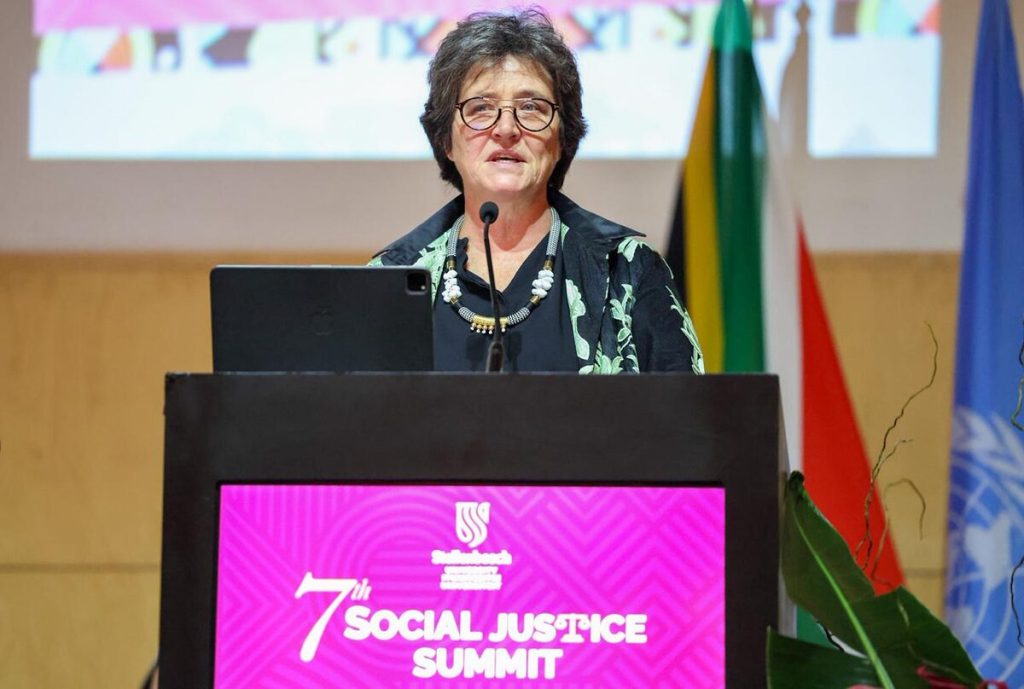
STELLENBOSCH – The Stellenbosch University Council will elect a new chairperson on Monday 13 April following former chair Dr Nicky Newton-King’s decision not to seek re-election, bringing to an end a controversial tenure.
Newton-King, whose term as chair of Stellenbosch University (SU) Council ended on Wednesday 1 April, informed the university that she would not stand for re-election either as chairperson or as a member of the council.
The decision comes after sustained pressure from various stakeholders, including the SU donor constituency that originally nominated her to the position.
New leadership calls
In March, former SU chancellors Johann Rupert and retired Constitutional Court judge Edward Cameron issued a joint statement advocating for “new leadership and renewed stewardship” ahead of the 13 April election.
“The SU community deserves new and transparent leadership with integrity. Our sincere hope is that it will receive this,” the pair said, noting that Newton-King’s acknowledgment that the donor constituency “no longer want her to represent them” indicated “a breach of trust between her and those she represented”.
Central to the criticism of Newton-King’s tenure was the Kriegler Report of December 2024, which investigated the controversial Wilgenhof Residence matter.
The independent panel, comprising retired Constitutional Court Justice Johann Kriegler, Prof Themba Mosia and Advocate Karrisha Pillay SC, made damning findings about Newton-King’s conduct.
ALSO READ: Stellenbosch University donors call for fresh leadership to take the reins
According to Rupert and Cameron, the commissioners “unanimously found” that she actively helped secretly change an independent panel report on the Wilgenhof Residence. She and then-rector Prof Wim de Villiers wanted to remove an alternative to closing the residence, which they found “troublesome”.
The panel found that Newton-King knew her actions were wrong and that she obtained these changes through a process that was “fatally flawed”. Most seriously, she was required to inform the SU Council about these changes but failed to do so, thereby hiding important information that could have changed the council’s decisions.
When asked to explain her failure to disclose this information, the panel found Newton-King’s reasons to be “palpably illogical,” highlighting both her manipulation of the report and her failure to inform the governing body.
In response to the criticism, Newton-King maintained that she had always regarded her “responsibility as a council member to act in the best interests of the university and all its stakeholders”.
She claimed that her discussions with donors had “indicated strong support” for her, but acknowledged that “there are however also some donors who would prefer to be represented by someone else”. “It has been a privilege to serve my alma mater and to be part of council guiding SU to this position,” she said.
ALSO READ: Wilgenhof saga: US, alumni find common ground
The Wilgenhof controversy
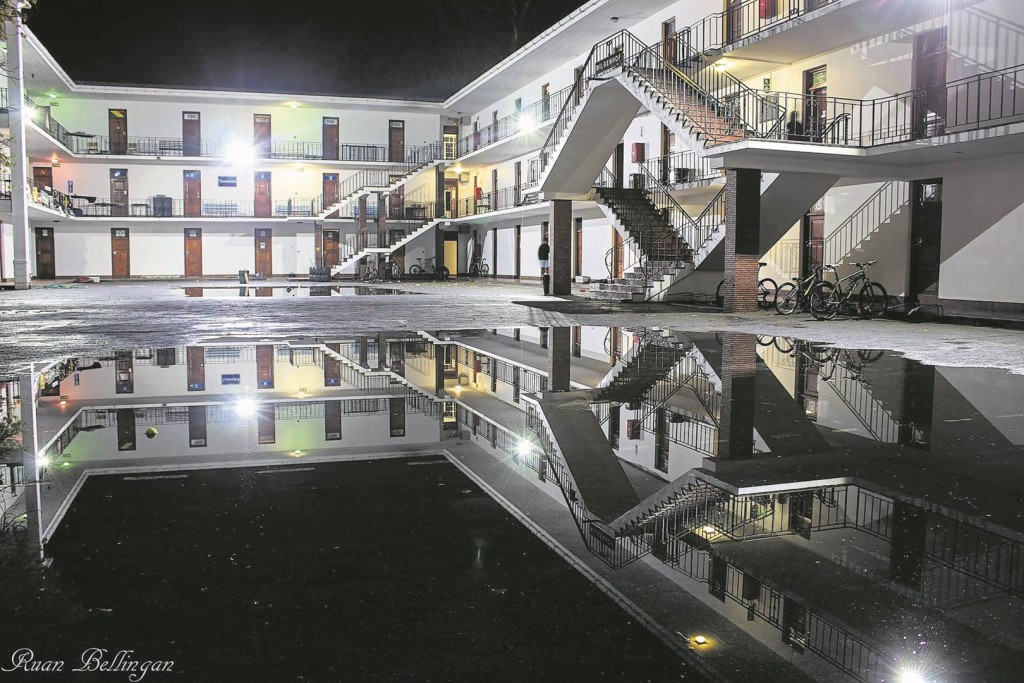
The controversy began when officials of SU discovered two abandoned, locked rooms at the Wilgenhof men’s residence containing what the university described as “unacceptable and secretive practices” that were “inconsistent with SU’s values and expectations”.
An investigation found that the rooms were archival in nature, spanning more than 100 years of history, with practices that had been either discontinued or significantly reformed over the years.
In September 2024, the Wilgenhof Alumni Association turned to the courts in a bid to halt the SU Council’s decision to temporarily close the residence.
In February 2025, both parties issued unprecedented apologies, agreed to end the litigation and established a facilitated renewal process for the residence.
Departure welcomed
Last month, the Wilgenhof Alumni Association welcomed Newton-King’s decision not to seek re-election, describing it as “a responsible step taken in the best interests of the university”.
Jaco Rabie, spokesperson for the association, said the decision offers “an important opportunity for strengthening the process of renewal which is currently underway within the institution”.
The association had been critical of how Newton-King and De Villiers handled the Wilgenhof matter, but expressed support for current rector and vice-chancellor Prof Deresh Ramjugernath’s leadership.
Looking to the future
The SU donor constituency has already replaced Newton-King as its representative, nominating Louis du Preez, a lawyer and former non-executive director of Pepkor. As the sole nominee, he was unanimously elected on Friday 6 March to serve a four-year term on the SU Council from Thursday 2 April.
The election of a new chairperson on 13 April will mark the beginning of a new chapter in university governance.
SU spokesperson Martin Viljoen said the process will follow procedures prescribed in the University Statute, with SU emphasising that all processes will be “implemented in line with the university’s governance framework to ensure transparency, accountability and appropriate stakeholder representation”.
With Newton-King’s departure and the said governance failures of her tenure now in the past, SU appears positioned for what Rupert and Cameron called the “renewed stewardship” necessary for the institution’s future well-being and stature.
The upcoming election represents a crucial opportunity for the university to restore trust in its governance and continue the transformation process that emerged from the Wilgenhof controversy.



You must be logged in to post a comment.