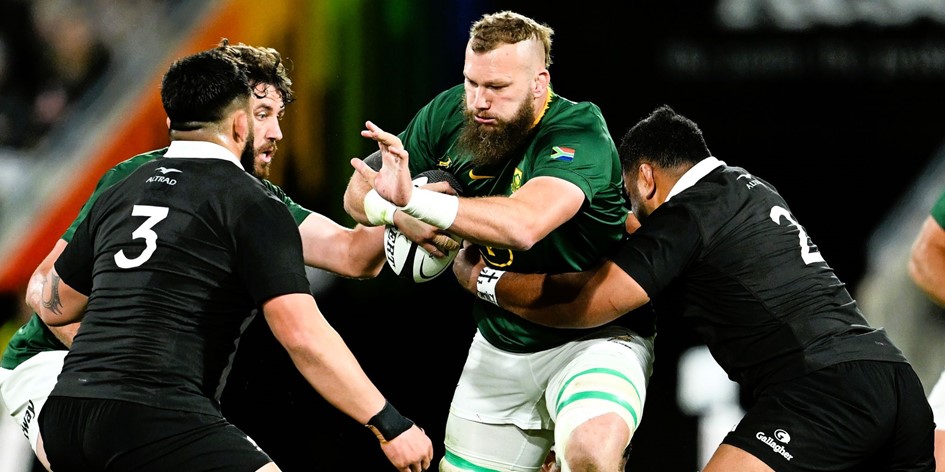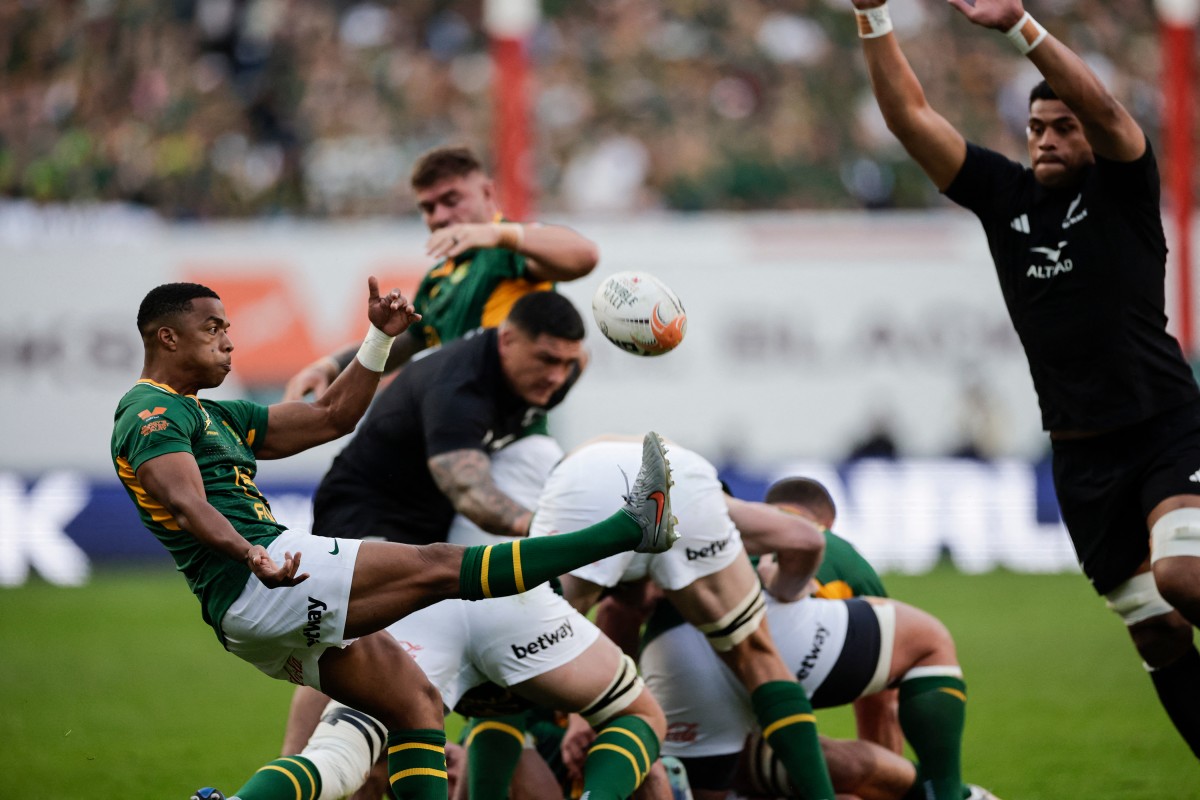
Sometimes, one number tells you everything you need to know about a rugby match. Sometimes, that number is so damning, so utterly devastating, that no amount of analysis or excuse-making can soften its brutal truth.
Twenty-three.
That’s how many times the Springboks turned the ball over during Saturday’s 33-16 defeat to the All Blacks at Ellis Park. Twenty-three moments where possession was surrendered, momentum was killed, and attacking opportunities died before they could breathe.
Also read: ‘The right call’: Rennie praises ref after Savea’s hit on Bok No 8
The All Blacks? Thirteen turnovers. Almost half the South African total.
When the gap is that stark, when the execution differential is that pronounced, the scoreboard becomes inevitable. And so it proved, as New Zealand ruthlessly exploited Springbok sloppiness to claim a comprehensive victory that the statistics reveal was even more one-sided than the 17-point margin suggests.
The execution crisis
At times during the first half, New Zealand looked like they were barely holding on, absorbing South African pressure and defending desperately on their own line. Yet somehow, inexplicably, the All Blacks still led 13-12 at the break.
How? Because whilst the Springboks created opportunities, they butchered them with alarming regularity.
Knock-ons. Inaccurate passes. A litany of errors that make coaches weep. And most painfully, Malcolm Marx losing the ball in a dominant maul metres from the tryline just before half-time, the kind of gift-wrapped turnover that demoralises teams and energises opponents.
On a night when they had plenty of opportunities, the Springboks were their own worst enemies. New Zealand didn’t have to be brilliant, they just had to be competent and clinical. Against opposition handing them the ball 23 times, competence was more than sufficient.
Rassie Erasmus acknowledged the harsh reality in his post-match assessment.
“We didn’t play well. Against a class team like New Zealand, if you don’t convert, they give you a proper hiding,” Erasmus told reporters on Saturday night.
“With hindsight, there were a lot of things we didn’t convert; I think there were two or three big moments when we let the game go away from us. Not because we wanted to or because we wanted to make those errors but because New Zealand forced those on to us by being really intense and sharp.”
Some turnovers resulted from poor execution, but others came from All Black pressure forcing mistakes. New Zealand won 14 turnovers through active defence, almost matching South Africa’s entire total of self-inflicted errors.
The red zone disaster
If the turnover statistic told one story, the red zone efficiency numbers tell another, and it’s equally damning.
The Springboks had 10 entries into the New Zealand 22-metre area and averaged just 0.7 points per entry. Less than one point per visit to prime scoring territory.
New Zealand, by contrast, had nine entries for an average of 3.6 points. More than five times South Africa’s conversion rate.
It’s easy to see where the game was won and lost. Territory and possession mean nothing if you can’t turn pressure into points. The Springboks failed that fundamental test repeatedly, leaving points on the field that would have kept them competitive even with their handling issues.
The paradoxical statistics
Here’s where the numbers become truly fascinating, and frustrating for South African fans.
The Springboks made more line breaks (7 vs 6), generated significantly more post-contact metres (298m vs 197m), and produced more dominant tackles (11 vs 6).
On paper, those statistics suggest South Africa won the physical battle and created more attacking opportunities. In reality, they lost by 17 points.
Why? Because rugby isn’t won on potential or promising statistics, it’s won on execution, accuracy and converting pressure into points.
The tackle completion rates tell another story. The All Blacks completed 87% of their tackles compared to South Africa’s 77%. That 10% gap meant New Zealand defenders were more reliable, more consistent, and less likely to miss the crucial tackle that creates line breaks.
The full statistical autopsy
Turnovers won
Springboks: 5
All Blacks: 14
Turnovers lost
Springboks: 23
All Blacks: 13
Penalties conceded
Springboks: 10
All Blacks: 14
Tackles made
Springboks: 86
All Blacks: 132
Tackles missed
Springboks: 26
All Blacks: 20
Tackle completion rate
Springboks: 77%
All Blacks: 87%
Post-contact metres
Springboks: 298m
All Blacks: 197m
Line breaks
Springboks: 7
All Blacks: 6
Dominant tackles
Springboks: 11 from 89
All Blacks: 6 from 129
Red zone entries
Springboks: 10 (0.7 points per entry)
All Blacks: 9 (3.6 points per entry)
Cape Town reckoning awaits
The second Test at Cape Town Stadium looms large, and these statistics provide a brutal roadmap for what the Springboks must improve.
Ball retention is non-negotiable. You cannot turn the ball over 23 times against quality opposition and expect anything but a hiding. Handling accuracy must improve dramatically.
Red zone execution requires urgent attention. Creating opportunities means nothing if you can’t convert them. The Springboks must find ways to turn pressure into points rather than squandering possession metres from the tryline.
Tackle completion rates need tightening. That 77% figure simply isn’t good enough at Test level, where one missed tackle can prove decisive.
The encouraging news? South Africa generated more line breaks, more post-contact metres, and more dominant tackles. The foundations exist. The physicality is there. The problem is execution, not effort or ability.
Fix the handling. Improve red zone efficiency. Tighten tackle completion. Do those three things, and the series remains alive.
Fail to address them, and Cape Town could deliver another comprehensive All Black victory that puts the Greatest Rivalry series beyond South African reach.
The numbers don’t lie. Now the Springboks must prove they can learn from them.