

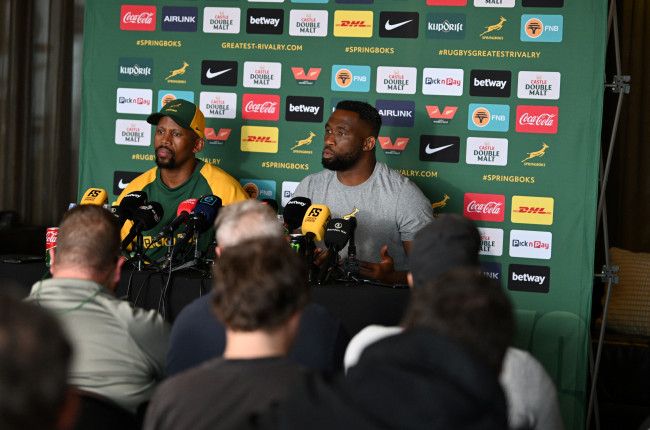
The stage is set, the stakes are sky-high, and South African rugby history is about to be written on hallowed ground. When the Springboks lock horns with the All Blacks at FNB Stadium on Saturday, they won’t just be playing for a 2-1 series lead, they’ll be honouring the legacy of Soweto, a township that shaped a nation through struggle, sacrifice, and the unbreakable spirit of its people.
Captain Siya Kolisi and assistant coach Mzwandile Stick know exactly what’s at stake. This isn’t just another Test match in the Greatest Rivalry, it’s the final home fixture of 2026, a chance to board that aeroplane to the United States with momentum in their kitbag and hope in their hearts.
“So many things that happened in Soweto helped shape the South Africa we have today,” Kolisi said, his words carrying the weight of generations. “So many heroes have come from there, and a lot of the football history of this country is from Soweto, so we know how special that is.”
Playing for more than points
The Springbok skipper isn’t downplaying the significance of the venue. FNB Stadium, a stone’s throw from one of South Africa’s most iconic townships, represents far more than just a patch of grass and goalposts. It’s a symbol of transformation, resilience, and the power of sport to unite a fractured nation.
Also read: Siya backs Bok Women ahead of historic Black Ferns clash: ‘It’s special and exciting’
“We’re not going to act like it’s not a special ground in a significant area,” Kolisi continued. “All of that gives us more to play for. We are also thankful for the people who came from there and fought for people like me and Stick to be sitting here today. They fought for the freedom we have now and never got to experience it, and giving our best tomorrow is part of us saying thank you. Hopefully we can do that with a win and change the history between the two teams there.”
Those words hit differently when you consider Kolisi’s journey, from the townships of Zwide to lifting the Webb Ellis Cup, from poverty to becoming the first Black captain of the Springboks. This match, on this ground, in this moment, is the culmination of everything those freedom fighters dreamed of.
Thanking the faithful through performance
The Boks didn’t start this series on the front foot. The opening Test slipped through their fingers, but the South African public responded with unwavering support. Kolisi hasn’t forgotten.
“Obviously what we’d like to achieve is to win. We’d like to say thank you to the people of South Africa,” the captain explained. “It hasn’t always been easy. We didn’t win the first Test, but the numbers that showed up at the stadium and the vibe was fantastic, and we felt it and saw it. Even the people who can’t come to the stadium, see us while we are driving on the bus to the ground and get up and scream, which has been very special.”
It’s that connection between team and nation that makes South African rugby so potent. The Green and Gold don’t just represent a sporting code, they carry the hopes, dreams, and identity of an entire rainbow nation on their shoulders every time they take the field.
“This is the memory the people of South Africa will remember, and hopefully we can give them a good one because we want to say thank you, not just in words but through our efforts tomorrow,” Kolisi added.
Creating new legends
For assistant coach Mzwandile Stick, Saturday represents an opportunity for the current generation to carve their names into South African sporting folklore.
“Personally, I see this game as an opportunity for the players to create their own history,” Stick said. “Every stadium in South Africa has its own unique history and we try to protect that. Ellis Park and the DHL Stadium are two of them, and now we are playing at the FNB Stadium.”
FNB might be better known as a football cathedral, the iconic venue that hosted the 2010 FIFA World Cup fina, – but Stick sees that as an advantage, not an obstacle.
“It’s a football stadium, but can you imagine getting South Africans from all around the country together in Soweto. Driving past the tents and seeing how they are preparing for the game is something else. For the guys playing now, almost none of them have played there before, so it’s an opportunity to create their own history, and that excites me.”
The pressure cooker
Make no mistake, this is a must-win encounter for the Springboks.
The tactical battle will be fierce, the physicality brutal, the margins razor-thin. But beyond the lineouts, scrums, and breakdown battles, there’s a deeper narrative at play. This is about honouring a legacy, repaying the faith of a nation, and proving that the sacrifices of previous generations weren’t in vain.

