What was meant to provide viewers with exclusive behind-the-scenes access turned into an awkward broadcasting blunder during the Springboks’ clash with the Wallabies in Perth on Sunday. An unexpected camera angle inside the South African changing room captured a moment that has ignited fierce debate about privacy boundaries in modern sports coverage.
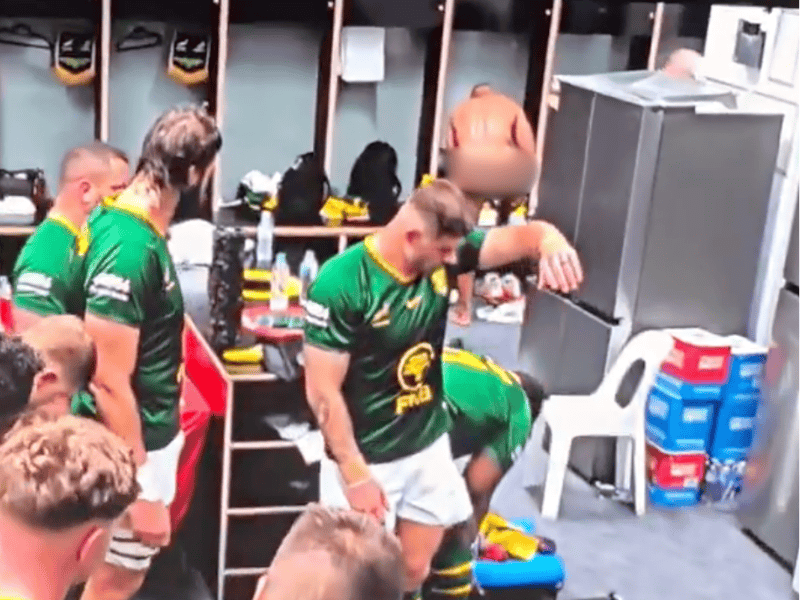
The incident unfolded at Optus Stadium during Australia’s 42-38 victory over the Springboks. Australian broadcaster Stan Sport had positioned cameras inside the visitors’ dressing room to capture the non-playing reserves as they prepared during the match. What they didn’t anticipate was one player being caught stark naked from behind as teammates went about their half-time routine.
The footage, which aired during live coverage, showed several Springbok reserves milling about the change room before one player was briefly exposed with his bare backside visible to viewers. The camera mercifully panned away, but the damage was done, the clip had already been broadcast to thousands of households.
Social media erupts
According to IOL the footage had made its way onto X, where rugby supporters across the globe weighed in with reactions ranging from amusement to outrage. The clip circulated rapidly, sparking one of the more unusual talking points from what was already a dramatic Test match.
IOL quotes, Australian rugby account @BMcSport “Someone forgot to tell the Boks non-playing reserves that there’s a camera in the changeroom…”
Another user expressed relief that at least the player’s back was facing the camera.
Privacy concerns raised
But not everyone saw the funny side. The incident prompted serious questions about broadcasting ethics and player privacy, with many supporters questioning why cameras should be permitted in areas where athletes are changing clothes.
“That exact reason they shouldn’t have cameras in change rooms. It’s ridiculous,” one social media user commented, cutting straight to the heart of the matter.
Another echoed the sentiment: “That’s why cameras shouldn’t be there in the first place. It’s called a changeroom for a reason.”
The debate highlights the tension between broadcasters’ desire for unprecedented access and the basic privacy rights of athletes. Whilst behind-the-scenes content has become increasingly popular with fans hungry for insider perspectives, this incident demonstrates the potential pitfalls when cameras are granted access to traditionally private spaces.
Broader implications for sports broadcasting
This isn’t the first time dressing room cameras have caused controversy in professional sport, and it almost certainly won’t be the last. Broadcasters worldwide have increasingly sought to provide viewers with all-access coverage, positioning cameras in areas that were once strictly off-limits.
The arrangement between Stan Sport and the teams presumably included protocols about when cameras would be active and where players should be aware of being filmed. However, this incident suggests those protocols either weren’t followed or weren’t clearly communicated to all squad members.
For players, the modern media landscape requires constant vigilance. What was once a sanctuary where they could decompress, receive tactical instructions and prepare mentally has become potential content for broadcast. The professionalism expected of elite athletes now extends to being camera-aware even in their own changing facilities.
The unnamed Springbok player involved will no doubt face plenty of banter from teammates over the incident, though it’s worth noting he did nothing wrong.
What remains unclear is whether this moment will prompt broadcasters to reconsider their access arrangements. Will Stan Sport and other networks continue to position cameras in dressing rooms? Will teams demand greater control over when footage can be filmed? And will players receive clearer guidance about camera locations during matches?