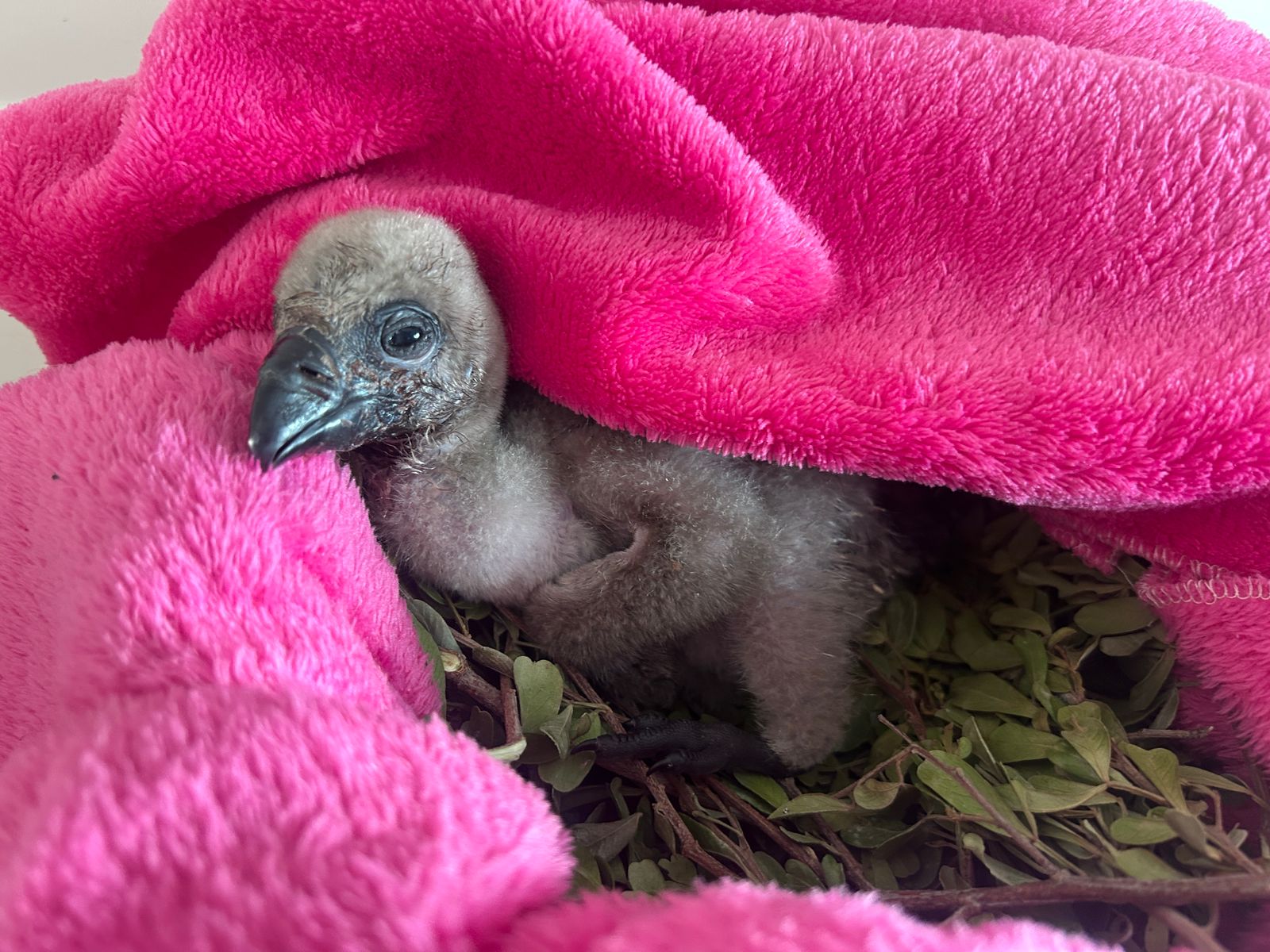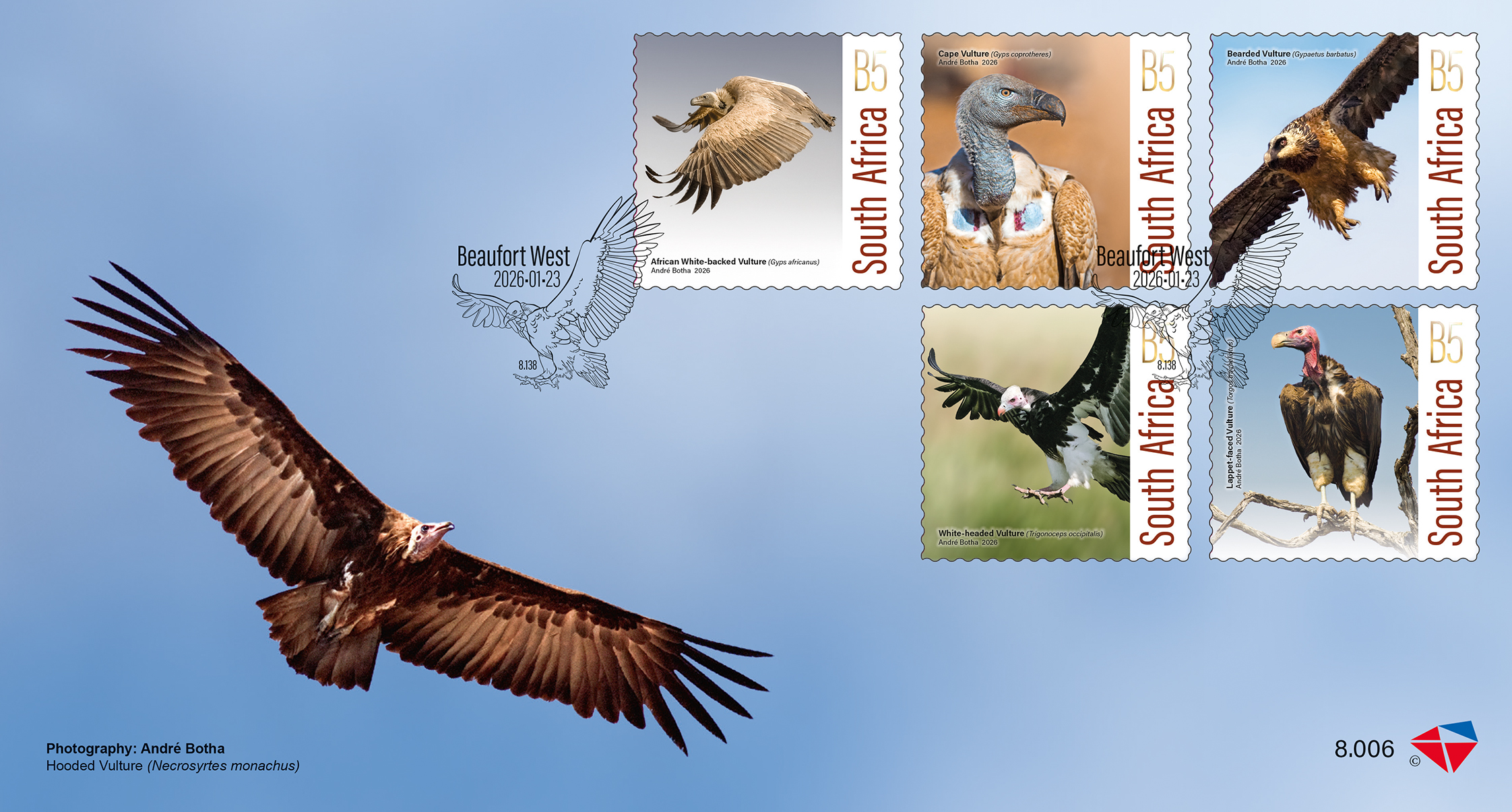
The South African Post Office has released a special collection of stamps featuring six critically endangered vulture species, aimed at raising awareness of the dramatic decline in African vulture populations over the past three decades.
The B5 rate stamps, accompanied by a commemorative display card, showcase images captured by André Botha, co-chair of the IUCN SSC Vulture Specialist Group. The collection highlights species including the Bearded Vulture, African White-backed Vulture, White-headed Vulture, Cape Vulture, Lappet-faced Vulture and Hooded Vulture.
The stamp issue comes as wildlife poisoning continues to pose the greatest threat to vulture populations across Africa. Since 2013, more than 3,000 vultures have been killed in poisoning incidents in the Greater Kruger National Park and surrounding areas alone. The victims include African White-backed, Hooded, White-headed and Lappet-faced Vultures.
South Africa has maintained vulture conservation programmes for over 50 years, with current efforts coordinated through the National Biodiversity Management Plan for Vultures. The initiative brings together government agencies, non-governmental organisations and local communities to address threats including wildlife poisoning, dangerous energy infrastructure and habitat loss.
Conservation work has yielded some success. The near-endemic Cape Vulture was down listed from Endangered to Vulnerable in 2021 following sustained conservation efforts. The species’ population is now stable to increasing, with several previously abandoned breeding colonies re-established.
However, challenges remain. Beyond poisoning, vultures face threats from belief-based trade, loss of nesting trees, human disturbance and habitat fragmentation.
ALSO READ: Mass vulture rescue in Kruger National Park: 84 saved from poisoning
Vultures serve a crucial ecological function by removing carcasses and organic waste, helping to prevent disease spread. No other species can perform this role with comparable efficiency.
Joint BR Practitioner Anoosh Rooplal welcomed the Post Office’s contribution to raising awareness of vulture conservation, noting strong international response from the philatelic community and postal museums. The Smithsonian National Postal Museum in Washington, DC has given the collection special recognition.
The stamps and commemorative display cards are available at selected post office branches and through Philatelic Services at sa.stamps@postoffice.co.za. Orders can also be placed via email to Proof.manganyi@postoffice.co.za or Mmama.Phalatse@postoffice.co.za.
The international Multi-species Action Plan for African-Eurasian Vultures was developed in 2017 to reverse population losses through targeted interventions across the vultures’ range.