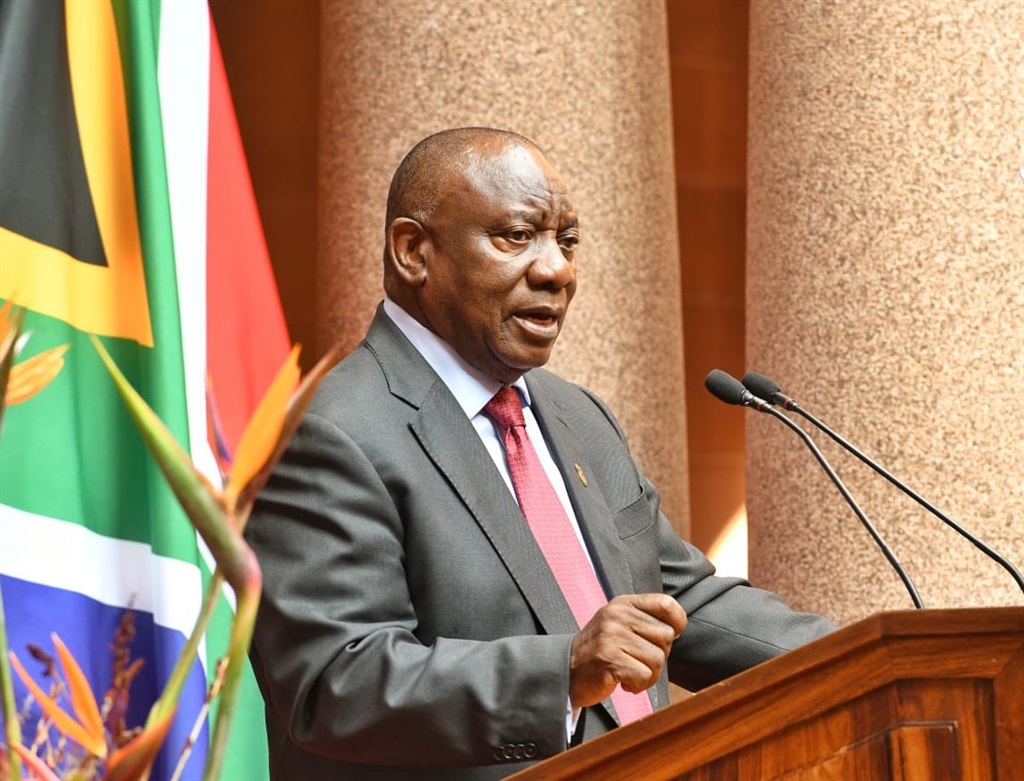
While President Cyril Ramaphosa spoke of a strengthening rand, falling inflation, and renewed investor confidence during the State of the Nation Address (SONA) at Cape Town City Hall on Thursday 12 February, many of us woke up the next morning to a far less reassuring reality
Dry taps, rising living costs, unemployment queues, and neighbourhoods where safety cannot be taken for granted.
A gap between economic indicators and lived reality
This contrast captures the central tension of this year’s address. On one hand, the President painted a picture of an economy gradually stabilising after years of crisis. On the other, we know from our own daily experiences that life for millions of South Africans remains uncertain and difficult.
His admission that “life remains hard” may have been the most honest and important line of the speech. It reflected something we already understand: national progress measured in statistics does not always translate into relief felt in our homes and communities.
Why economic stability still matters
Economic stability matters, and we should acknowledge that. A stronger currency signals confidence, helps government manage debt, and can encourage investment. Lower inflation protects purchasing power over time. These are necessary foundations for long-term growth.
But for many of us struggling to afford food, transport, electricity, and housing, macro-economic indicators often feel distant and abstract. Recovery only becomes meaningful when we see it reflected in secure jobs, stable services, and safer streets.
This is where the President’s message invites both hope and scrutiny.
Crime as an economic and social barrier
To his credit, the speech did not avoid the country’s most pressing challenges. Organised crime, he said, remains one of the greatest threats to economic development and social stability. This recognition is important because we know crime is not only a policing issue, it is an economic barrier that affects how we live and work.
Communities affected by gang violence, extortion, and illegal activity struggle to attract businesses and opportunities. We see how unsafe environments limit where young people can move freely, where small businesses can operate, and how confident we feel walking in our own neighbourhoods.
Yet we have heard strong commitments to tackling crime before. Tactical plans and enforcement strategies often sound decisive when announced, but our confidence depends on consistent implementation and visible results.
Governance, accountability and trust
The same pattern applies to corruption and governance failures. The President’s emphasis on strengthening institutions and restoring accountability signals an understanding that economic reform cannot succeed without credible leadership and functioning systems.
However, we are likely to judge progress not by the number of investigations announced or policies drafted, but by concrete outcomes, successful prosecutions, transparent governance, and improved service delivery that we can experience firsthand.
Service delivery remains the most immediate concern
Perhaps the most immediate concerns raised in the address relate to municipal services. Water shortages, failing infrastructure, and inconsistent service delivery affect our daily lives in ways that national economic indicators cannot capture.
Unlike growth figures or currency performance, these issues are tangible. They shape how we experience our communities every day whether our taps run, roads remain usable, refuse is collected, and electricity supply is stable.
The President’s warning that failing municipalities could lose service delivery powers suggests a willingness to act more decisively. But it also raises uncomfortable questions for all of us. If government has long known which municipalities are struggling, why has intervention often appeared slow or reactive? And will stronger oversight now translate into quicker, measurable improvements?
These questions point to a deeper challenge, restoring public trust.
From promises to outcomes
State of the Nation addresses traditionally aim to inspire confidence and set a national agenda. This year’s speech did so, offering a vision of recovery, reform, and unity. It sought to reassure both citizens and investors that progress is possible and that the country is moving in the right direction.
But we know that public expectations have shifted. Years of economic pressure, service delivery failures, and governance challenges have changed how we evaluate leadership.
Today, we measure progress not by promises, but by outcomes. We want to see unemployment decline meaningfully, not merely stabilise. We want crime rates to fall in ways that make our communities feel safer. We want municipalities to provide consistent, reliable basic services.
We want visible, sustained improvement in our daily lives.
The real test beyond SONA 2026
The President’s speech outlined a direction and acknowledged many realities. It highlighted progress while recognising ongoing challenges. But the true test lies beyond the chamber in which it was delivered.
Will economic gains translate into broader employment opportunities for our young people? Will governance reforms restore our confidence in public institutions? Will local service delivery stabilise in the communities where we live?
These are the questions that will ultimately define whether the optimism expressed in this year’s address becomes more than rhetoric.
Because in South Africa today, hope is no longer built on speeches alone, it is built on delivery, accountability, and change that we can see and feel in our everyday lives.
And until that change becomes consistently visible, our optimism will remain cautious, shaped as much by our lived realities as by the promises we hear.